

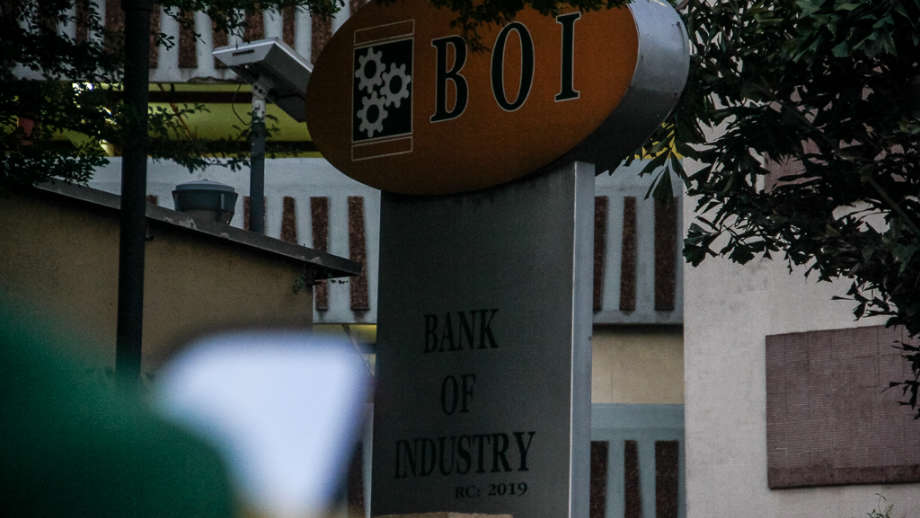
The Bank of Industry is calling for greater mobilisation of long-term capital to finance Nigeria’s industrial growth as it launches a digital platform designed to make access to its financing faster and less dependent on manual processes.
BOI Managing Director Olasupo Olusi made the call in Abuja at the bank’s 2026 Annual Public Lecture, where he said financing must reach more underserved businesses and translate into measurable economic impact.
Olusi said the bank disbursed N645 billion in 2025 to more than 12,000 businesses, with the interventions estimated to have impacted 1.68 million jobs.
He said more capital would still be required to support inclusive economic transformation, particularly as Nigeria seeks to expand productive activity and attract private investment.
“Our focus is on how capital can be mobilised, structured and deployed more effectively to deliver measurable development outcomes,” Olusi said.
The call coincided with the launch of **MyBOI**, an end-to-end digital portal designed to simplify how businesses and other eligible customers apply for and access BOI financing.
Through the platform, customers can complete onboarding, carry out impact and sustainability assessments, submit financing applications and track the progress of their requests online.
The platform is available to micro, small and medium enterprises, large businesses, cooperatives, associations and other eligible customers.
BOI said the digital system is expected to reduce some of the delays associated with manual and branch-based applications, while improving transparency for applicants and providing the bank with better data to support credit decisions.
Olusi said the initiative was part of efforts to make development finance more accessible and responsive, stressing that the process of obtaining funding was as important as the availability of the funds.
“Access to finance is not only about the availability of funding; it is also about making the journey to that funding simpler and more efficient,” he said.
The bank is targeting a reduction of at least 40% in front-end application initiation time within nine months. It also expects a 30% increase in qualified digital financing applications within 12 months and at least 60% self-service adoption for new applications over the same period.
Speaking at the lecture, former World Bank Director and Georgetown University Adjunct Professor Asad Alam said Nigeria’s development challenge should not be viewed solely through the availability of capital.
Alam said productivity becomes increasingly important as economies develop, with technology, human capital and strong institutions complementing physical capital.
However, Special Adviser to the President on Economic Affairs Tope Fasua said capital remains critical for sectors such as power, logistics and infrastructure, which require significant investment.
Fasua also called for technology, information, knowledge and artificial intelligence to be more explicitly recognised in measuring productivity and human capital.
The discussions highlighted the need for increased financing for businesses and industrial activity, while participants commended BOI’s support for small and medium-sized enterprises and the wider industrial sector.
They also called for greater funding capacity for the development finance institution to enable it to expand its interventions across the economy.

Comments
Add a comment