
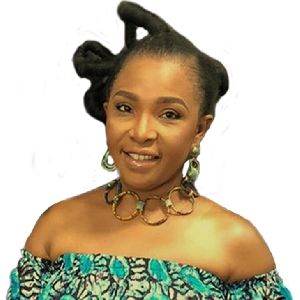

Education advocate Similoluwa Adekoye has urged the Federal Government to address poverty, insecurity, teacher shortages and poor school infrastructure as it moves to replace Nigeria's current primary, junior secondary and senior secondary school structure with a continuous 12-year basic education system.
The proposal was announced by Education Minister Dr. Tunji Alausa during the inauguration of the Universal Basic Education Commission Ministerial Implementation and Monitoring Committee in Abuja.
The minister said the government wants to phase out the separation between Junior Secondary School and Senior Secondary School after data showed that more than 20 million pupils drop out before reaching senior secondary education.
He said Nigeria has about 80,000 public primary schools but only about 15,000 junior secondary schools, creating overcrowded JSS facilities while many senior secondary schools remain underused.
The proposal will be presented to the National Council on Education for approval.
Nigerian Democratic Congress (NDC) presidential candidate for the 2027 general elections, Peter Obi, also reacted to the announcement.
"This admission is tragic because education is the most vital contributor to human capital development, which forms the foundation for growth and economic development of any society," he posted on X.
"We cannot overcome economic stagnation without prioritising education, healthcare, and job creation to lift millions of unemployed youths out of poverty."
Education Crisis: Calls for Fundamental Change, Not Just Policy
— Peter Obi (@PeterObi) July 3, 2026
The Federal Government has finally admitted to its poor management of the education sector. Recently, the Minister of Education acknowledged that the policy separating junior and senior secondary schools has failed…
Reacting to the announcement, Adekoye said the government's intention is understandable because Nigeria has one of the world's largest populations of out-of-school children.
However, she argued that changing the school structure alone would not solve the country's education crisis.
According to her, poverty remains one of the biggest reasons children stay out of school because many families struggle to meet even their basic needs.
She added that insecurity in parts of the country continues to keep many children away from classrooms.
Adekoye also questioned how the proposed reform would be implemented.
She noted that Nigeria only recently revised its curriculum to include more 21st-century learning skills and asked whether another curriculum review would now be required.
She further raised concerns about the country's shortage of qualified teachers, asking how educators would be prepared for the new system and whether additional training or certification would be necessary.
She also warned that many rural and underserved communities still lack the infrastructure needed to support such a reform.
Drawing comparisons with countries that operate successful K-12 education systems, Adekoye said their success comes not only from a continuous school structure but from sustained investment in teachers, curriculum, school facilities and funding.
Education experts have also linked Nigeria's learning crisis to inadequate infrastructure, teacher shortages and weak transition rates between primary and secondary education.
The minister recently disclosed that about three in every four Nigerian children cannot read and understand an age-appropriate text by age 10, underscoring the scale of the challenge.
Adekoye said the true measure of the reform should be whether more children remain in school, gain relevant skills, receive quality education and enjoy equal learning opportunities regardless of where they live.

Comments
Add a comment