

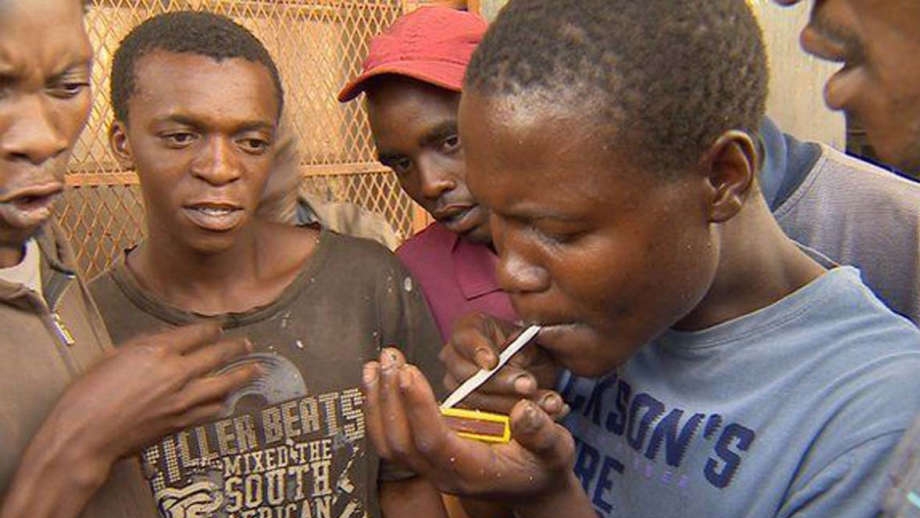
The Executive Director of the Freedom Foundation, Chidi Koldsweat, has called for stronger government support, increased funding and wider partnerships to address Nigeria's growing substance abuse crisis, saying rehabilitation efforts must be scaled up alongside stronger prevention programmes.
Speaking to Nigeria Info on the International Day Against Drug Abuse and Illicit Trafficking, Koldsweat said the foundation is repositioning its operations to reach more people affected by drug abuse through expanded collaborations with government agencies, civil society organisations and other stakeholders.
She said no single organisation can tackle Nigeria's drug problem alone.
"You cannot implement the work of rehabilitation alone. You need partners from all the different sectors and all the different angles where leadership and support are supposed to come from," she said.
Koldsweat said the Freedom Foundation is increasing advocacy for additional financial support to enable it to expand treatment services through its House of Refuge rehabilitation programme.
According to her, the rehabilitation centre currently has 19 bed spaces but plans are underway to increase that capacity to 100 beds to meet the growing demand for treatment.
She noted that the current capacity represents only a fraction of the country's rehabilitation needs.
"If you can only meet less than one percent of the need out there, then it is no longer just a House of Refuge conversation or a Freedom Foundation conversation. It requires partnerships with government entities to roll out these interventions on a much larger scale," she said.
Koldsweat urged governments at all levels to redirect more resources toward addressing substance abuse, arguing that investments in prevention and treatment would have a greater impact on society than programmes that deliver little value to citizens.
She stressed that while rehabilitation remains critical, greater emphasis should be placed on preventing young people from becoming involved in substance abuse.
"There should be a reorientation and a reinvestment in prevention over rehabilitation," she said.
On the growing concern over synthetic drugs, Koldsweat said the major threat is not necessarily the emergence of new substances but Nigeria's transition from being a transit route for illicit drugs to becoming a production centre.
According to her, the development poses significant risks because locally produced synthetic drugs are often cheaper, more accessible and highly addictive.
"Our biggest worry should be that Nigeria is evolving from being a transient point where drugs pass through to becoming a location where the drugs are actually produced. That is the real danger," she said.
She cited recent enforcement operations by the National Drug Law Enforcement Agency (NDLEA), noting that more than 113,000 kilograms of illicit drugs were seized while 3,913 suspects were arrested within the first two months of 2026, describing the figures as evidence of increasing activity around the production and distribution of synthetic drugs.
Koldsweat said the Freedom Foundation is working with the NDLEA to strengthen community-based prevention efforts through a new nationwide awareness campaign targeted at high-risk communities.
She explained that the initiative will go beyond public awareness by equipping parents and families with practical information to identify early warning signs of substance abuse and intervene before addiction develops.
"Our focus is prevention. We want to increase advocacy and conversations around the importance of prevention, but beyond that, we also want to design systems that empower families with the technical information they need to know exactly what to do," she said.
Koldsweat expressed optimism that stronger collaboration between government agencies, civil society organisations and development partners would help expand rehabilitation services while reducing the number of young Nigerians exposed to substance abuse through sustained prevention campaigns.

Comments
Add a comment