

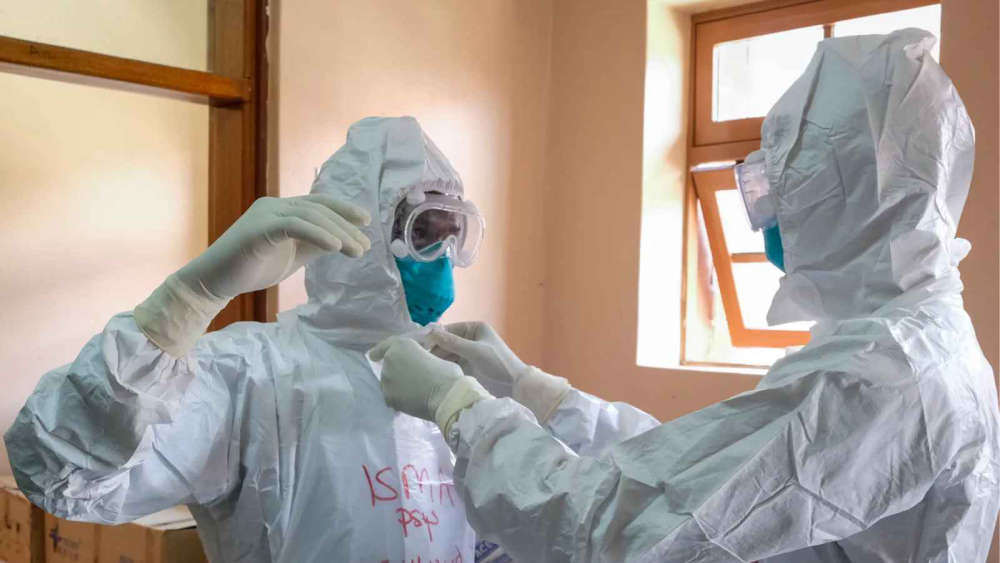
The World Health Organisation (WHO) has declared the Ebola outbreak in the Democratic Republic of Congo and Uganda a global public health emergency as health authorities in Nigeria moved to tighten surveillance against the deadly virus.
The outbreak, linked to the rare Bundibugyo strain of Ebola, has already caused dozens of deaths in Congo and spread into Uganda, raising fears of wider transmission across the region.
Health officials say there are currently no approved vaccines or treatments for the strain involved in the outbreak.
In response, the Nigeria Centre for Disease Control and Prevention (NCDC) said there is “no confirmed case of Ebola Virus Disease in Nigeria” but warned that the country remains on alert because of growing movement across African borders.
NCDC Director-General Jide Idris said the agency was “closely monitoring the situation” and working with the Port Health Services and other health agencies to strengthen preparedness nationwide.
He added that surveillance has been increased at entry points and within Nigeria’s health system.
According to the WHO, the outbreak has recorded more than 240 suspected cases and about 80 suspected deaths in Congo’s Ituri province, while imported cases have also been confirmed in Uganda’s capital, Kampala.
The WHO said the outbreak is “extraordinary” because of uncertainty around the true number of infections and the lack of approved medical countermeasures for the Bundibugyo strain.
Health authorities advised Nigerians to maintain proper hygiene, avoid contact with infected persons and report symptoms such as fever, weakness, vomiting and bleeding to the nearest health facility immediately.
Nigeria was declared Ebola-free in 2014 after successfully containing an outbreak brought into the country by an infected traveler from Liberia.

Comments
Add a comment