

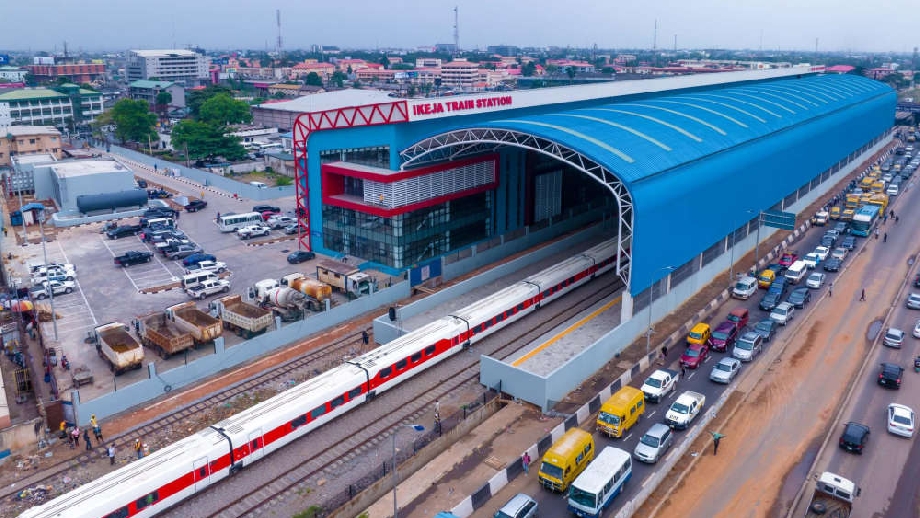
Lagos State Governor Babajide Sanwo-Olu says the Lagos Red Line is expected to move up to 500,000 commuters daily once it reaches full capacity, as the government steps up efforts to tackle traffic congestion in the city.
Sanwo-Olu made the projection while highlighting ongoing improvements to the rail system, describing it as a key part of the state’s long-term transport plan.
“The Red Line is designed to carry about 500,000 passengers daily at full capacity,” he said, adding that the system will help ease movement across Lagos.
The Red Line runs from Agbado in Ogun State to Oyingbo in Lagos and is part of the Lagos Rail Mass Transit network.

The first phase covers about 27 kilometres and includes major stops such as Ikeja, Oshodi, Mushin and Yaba.
Officials say the rail line is expected to significantly reduce travel time and take pressure off busy roads.
Sanwo-Olu said the project will “improve the quality of life for residents” by offering a faster and more reliable way to commute.
He added that the service will run more frequently as demand grows.
“We will continue to increase the frequency of train services to meet demand,” the governor said during the launch of commercial operations.
The Red Line is one of several rail projects under the state’s Strategic Transport Master Plan, which aims to integrate rail, road and water transport systems.
We have received a new set of 24-car trains to strengthen the Lagos Red Line fleet.
— Babajide Sanwo-Olu (@jidesanwoolu) April 16, 2026
This will improve capacity, reduce wait times and make daily commuting easier for Lagosians.
We remain focused on building a transport system that is efficient and reliable for everyone. That is… pic.twitter.com/tMJZPiKNCC
The government says the broader network will help connect communities and support economic activity across Lagos.
Transport experts say the success of the project will depend on sustained investment, maintenance and seamless links with other transport systems.
For many commuters, the promise of a system capable of moving hundreds of thousands daily offers hope for shorter travel times in a city known for heavy traffic.

Comments
Add a comment