

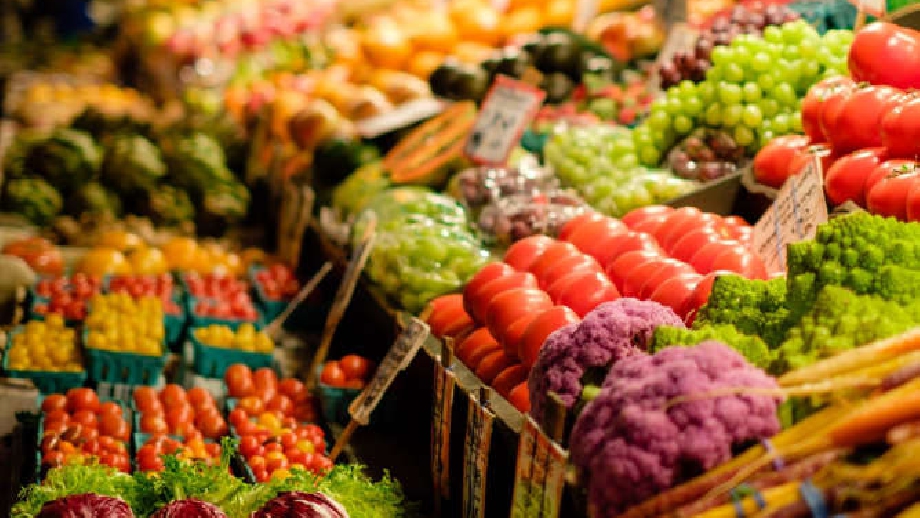
Nigeria may be producing more food, but the cost of getting that food from farms to markets is keeping prices high for consumers.
Food industry stakeholder Victoria Mamza told Nigeria Info that seasonality, storage and transportation remain major challenges across the food supply chain.
She said the price and availability of agricultural produce depend heavily on whether the products are in season.
“When the season ends, however, the cost of preserving and storing the produce is added to the price,” Mamza said.
“The problem is actually not in how expensive or how hard it is. It’s more in preserving – storage, to be exact.”
Her comments come amid renewed concerns about food availability and rising prices across the country.
In July, President of the Organisation for Technology Advancement of Cold Chain in West Africa, Alexander Isong, warned that Nigeria could face shortages of rice, tomatoes and other staples within three months.
Isong said rice production was projected to fall by six per cent to about 8.3 million tonnes, while cultivated rice land could decline by seven per cent.
He also said the cost of moving a tonne of grain from Kano to Lagos had risen from about 45-thousand Naira to 70-thousand Naira.
But Agriculture and Food Security Minister Abubakar Kyari has said the government has made progress in reducing production costs.
Speaking on ARISE NEWS on September 18, Kyari said production costs had come down and farm gate prices had also dropped considerably.
He acknowledged, however, that processing and other gaps between farms and consumers still needed attention.
For Mamza, those gaps are a major reason consumers continue to pay more for food.

She said the final price of food must cover farming, storage, warehousing and transportation.
“If you go to the farms in the north, in the south-south, in the south, you know, in all the places where food items are being cultivated, you find out that food items are relatively cheap up there,” she said.
“But before you bring it to this part of the country, you factor in your cost of logistics, the price does increase significantly.”
She is calling for more financing across the entire food value chain, with different funding models for farmers, processors, logistics operators and storage businesses.
The need is significant because Nigeria continues to lose large quantities of food after harvest.
OTACCWA estimates that between 30 million and 40 million metric tonnes of food were lost in Nigeria in 2025, with the losses valued at between 3.5 trillion and five trillion Naira.
Market women also point to rain, fuel costs, transportation challenges and the activities of middlemen as factors pushing up prices.
One trader said some distributors sell preferentially to certain middlemen, who then add significant markups before the food reaches consumers.
Another said transportation difficulties faced by farmers and the seasonal nature of agricultural production were contributing to the current pressure on prices.
The pressure remains significant despite a recent slowdown in food inflation.
The National Bureau of Statistics said food inflation fell to 19.57 per cent year on year in August from 20.31 per cent in July.
Monthly food inflation also fell sharply from 5.56 per cent to 1.02 per cent.
For Mamza, increasing production alone will not solve Nigeria’s food price problem.
“We already have the infrastructure. We’re a producing nation, a country with arable land,” she said.
“We just need more financing.”
As the country moves towards another major harvest period, the challenge is increasingly about what happens after food leaves the farm — whether it can be stored, processed and transported efficiently enough to reach consumers at affordable prices.

Comments
Add a comment