

More than 150,000 babies are born with sickle cell disorder in Nigeria every year, and over 100,000 of them die before reaching their fifth birthday.
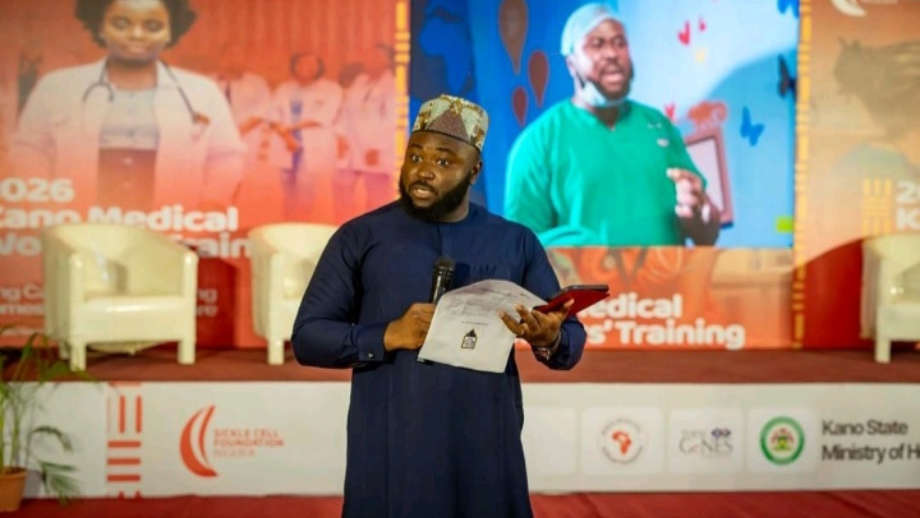
Those figures were highlighted by Caleb Anthony Audu, Senior Manager of the Sickle Cell Foundation Nigeria, during an interview with our correspondent marking World Sickle Cell Day.
He described the disease as a national health emergency that requires stronger government action.
“In Nigeria, over 150,000 babies are still born every year with this condition.
"And over 100,000 die before their fifth birthday,” Audu said.
“We have to go to the basics if we want to solve this problem in a very strategic and comprehensive way.”
Nigeria carries the world's highest burden of sickle cell disorder.
Health experts estimate that about 40 million Nigerians carry the sickle cell gene, while roughly a quarter of the adult population has the sickle cell trait.
The Federal Government says sickle cell disease contributes significantly to infant deaths in the country and remains one of the most common inherited blood disorders in Africa.
Research published in The Lancet Haematology found that children living with sickle cell disease in Nigeria are about four times more likely to die before age five than children without the condition.
The study estimated that tens of thousands of under-five deaths every year are linked to sickle cell disease.
Audu said one of the biggest problems facing people living with the condition is access to quality healthcare.
“The biggest gap for persons living with sickle cell disorder is access to quality healthcare,” he said.
According to him, many patients depend on routine medications but cannot afford them because of their cost.
He also noted that many health insurance packages do not adequately cover the treatments needed by sickle cell patients.
“There’s a huge disadvantage and access-to-care gap that needs to be closed,” Audu said.
He stressed that sickle cell disorder is no longer a condition that automatically shortens a person's life if properly managed.
“People with this condition can live to 90, 70, 80 if they are properly managed.
"We have living testimonials of this fact,” he said.
Over the years, the Federal Government has introduced genotype awareness campaigns, premarital counselling programmes, newborn screening initiatives in some states and national guidelines for the management of sickle cell disease.
Health authorities have also repeatedly called for wider screening, early diagnosis and improved access to treatment.
However, Audu believes awareness efforts must go much deeper, especially in rural and underserved communities where myths and misconceptions about the condition remain common.

“We cannot limit information sharing and education to social media,” he said.
“Well over 70% of Nigerians don’t even have access to internet.”
The Sickle Cell Foundation Nigeria has been working with the National Youth Service Corps (NYSC) to train corps members to carry sickle cell education into communities, schools and local centres.
The programme covered the Southwest last year and is expanding to the South-South region before moving across all six geopolitical zones, according to Audu.
Rather than seeing these as only foundation projects, Audu said they offer a model that government can adopt nationwide.
He urged authorities to strengthen health insurance coverage for sickle cell patients, establish a dedicated national agency to coordinate sickle cell programmes, expand community-based education through structures such as the NYSC, translate awareness materials into local languages and include sickle cell education in school curricula.
“We need to educate the younger generation to see that they’re making informed decisions,” he said.
“This way, we’re able to reduce the death rate of sickle cell disorder in Nigeria.”

Comments
Add a comment