

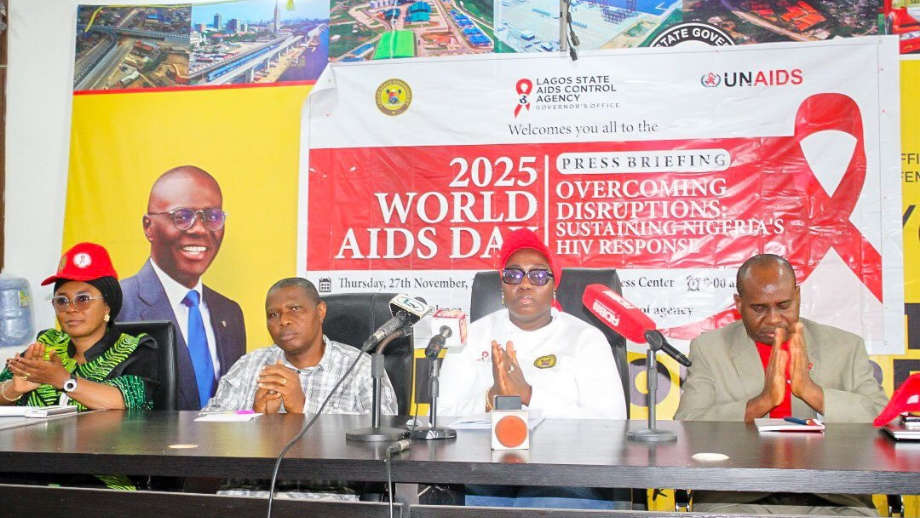
As Lagosians prepare to commemorate the 2025 World AIDS Day on 1 December, we recognise the struggles of the 160,000 Nigerian citizens living in Lagos with HIV.
These figures have been confirmed by the Lagos State AIDS Control Agency (LSACA).
Here’s a more vivid picture of the numbers cited:
One of Lagos’s most iconic football venues, the Teslim Balogun Stadium, seats 24,000 people. Imagine seven Teslim Balogun Stadiums, filled to the brim, with a few seats left in the seventh one. That picture paints the number of people living with HIV in Lagos State.
This is a community of resilient people. This World AIDS Day, the Lagos State government is renewing its commitment to making sure that they live well, regardless.
The Big Picture: A National Challenge
This year, the globally accepted theme for the commemoration of World AIDS Day is “Overcoming disruption, transforming the AIDS response”. Nigeria — and by extension, Lagos — has adapted the theme to “Overcoming Disruptions: Sustaining Nigeria’s HIV Response”.
The theme asks everyone to fix the problems that slowed HIV work in recent months. It asks leaders, health workers and communities to make sure testing, medicines and care keep going, even when money or outside help stops for a while.
To understand the weight of the situation in Lagos, we must look at the entire country. Nigeria has a population of over 200 million people, and the HIV statistics tell a story of a large nation fighting a big battle.
Nationally, about 1.9 million people are living with HIV. To visualise this, that is roughly the entire population of a small country like Gabon or Latvia living within our borders with the virus.
The virus does not affect every part of Nigeria equally. The numbers show different realities in different zones. The South South has the highest concentration, where about 3.1% of the population lives with the virus. The North West has the lowest population, with roughly 0.6%.
The South West, where Lagos is, has only about 1.1% of its population living with the disease. Lagos also happens to be Nigeria’s most crowded state, but the stats show that the percentage of people infected is actually lower than in many other parts of the country. But this presents another worry.
A Year of Unexpected Pauses and the Battle Against Stigma
In the teeming urban centres of Lagos, where quite a number of these HIV-positive people live, fewer people are coming to test for HIV. Available data shows that Lagos tested over 200,000 people in the state in 2025 (so far), which is a big drop from the testing numbers of previous years.
Testing tells people if they have the virus. Without testing, people who need help cannot get it. One reason for this fall was a pause in some funding and programmes earlier in the year. The pause made it harder for community teams to do testing and outreach work. This, in turn, has caused a setback in the battle against stigma.
Many young people worry about what friends or neighbours will say if they see them at a testing centre. This is because there are now fewer education and outreach programmes to reorient the people. Myths and wrong ideas are spreading even faster.
Dr Folakemi Animashaun, the Chief Executive Officer of LSACA, pointed out all these challenges at the press briefing with the media at Lagos State’s unveiling of their activities for the 2025 World AIDS Day. She went on to inform the media on the steps taken by the state to bridge that gap.
Per Dr Animashaun, government and local organisations stepped in to fill the gaps, proving that the system could survive even when external help was delayed. They ran more outreach events, partnered with faith groups and youth clubs, and pushed mobile testing into busy markets and neighbourhoods. These steps helped many people learn their status and start medicine.
Lagos has also focused on reaching young people in areas where people need help most. Towns like Ikorodu, Badagry and Mushin have had special testing drives and youth-friendly services.
Lagos Forges Ahead to Transform the HIV Response
With World AIDS Day on the horizon, Lagos will hold awareness walks, public talks, and free testing at health centres. The aim is to remind people that HIV is manageable and that help is near. The state’s message is simple: test early, start treatment quickly, and keep taking your medicine every day.
For a person who tests positive, treatment means hope. It means staying in school, keeping a job, having a family, and living a long life. For a community, it means fewer new infections and stronger families. For Lagos, it means a chance to lead by example in Nigeria’s national fight against HIV.
LSACA is issuing a clarion call to all Lagosians. The fight against a poor HIV response and against the disease needs everyone. The 160,000 people with HIV in the state are our neighbours, our family members, and our friends. They deserve care, respect, and support. With more testing, steady treatment, and less stigma, Lagos can help lead Nigeria to a future where the virus no longer harms lives the way it once did.