

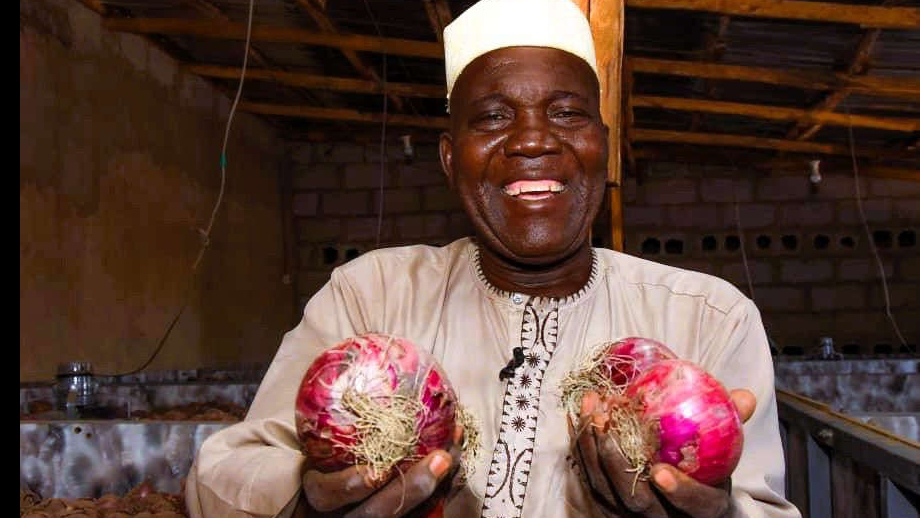
Aminu Alhaji Magaji is a smallholder farmer in Danamale, a quiet farming community in Gwarzo Local Government Area of Kano State.
For many years, onion farming was his only source of income. Yet, every harvest season came with fear rather than joy.
“Out of every 100 bags of onions I harvest, I used to lose more than half," he said. "Sometimes, everything would rot before I could sell. I went into debt many times.”
Like Alhaji Magaji, Nura Saleh, another smallholder farmer in the community, faced the same struggle. Out of his usual 50 bags of onions, at least 15 bags would spoil due to a lack of proper storage.
“We work for months under the sun and rain, but after harvest, we watch our effort waste away. It is painful.”
For decades, this was the reality for onion farmers in Sabon Gidan Danamale and many other parts of Kano - a high production, but huge losses after harvest.
The Bigger Picture: Onion Farming and the Loss Crisis
Globally, onion production stands at about 100–110 million metric tons annually, with India and China leading producers. In Africa, Nigeria, Egypt, Algeria, and Morocco are the top onion-producing countries.
Nigeria alone produces about two million tons of onions annually, with Kano, Kaduna, Jigawa, and Sokoto as key producing states.
Yet, despite this huge production, farmers continue to suffer shortages, price crashes, and massive post-harvest losses.
Experts estimate that over 50 percent of onions produced in Nigeria are lost after harvest, due to poor storage, pests, heat, and lack of processing facilities.
The Response: A Solar-Powered Solution in Danamale
The Kano State government, through the Kano State Agro-Pastoral Development Project (KSADP), introduced a modern Aerated Onion Storage Facility in Danamale to tackle the long-standing problem.
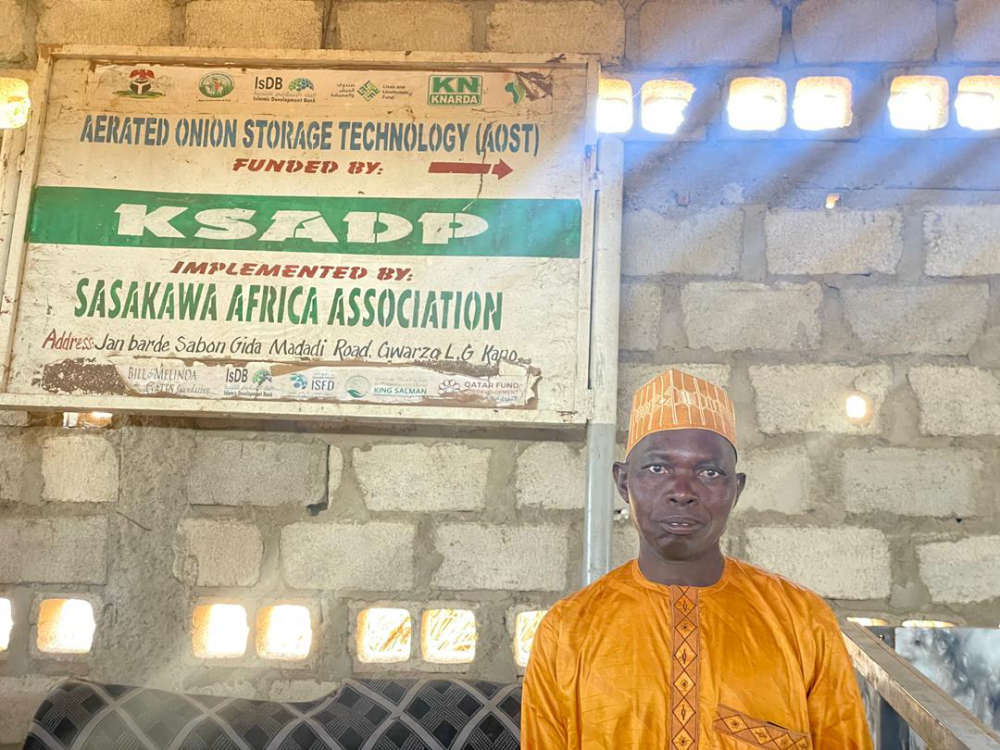
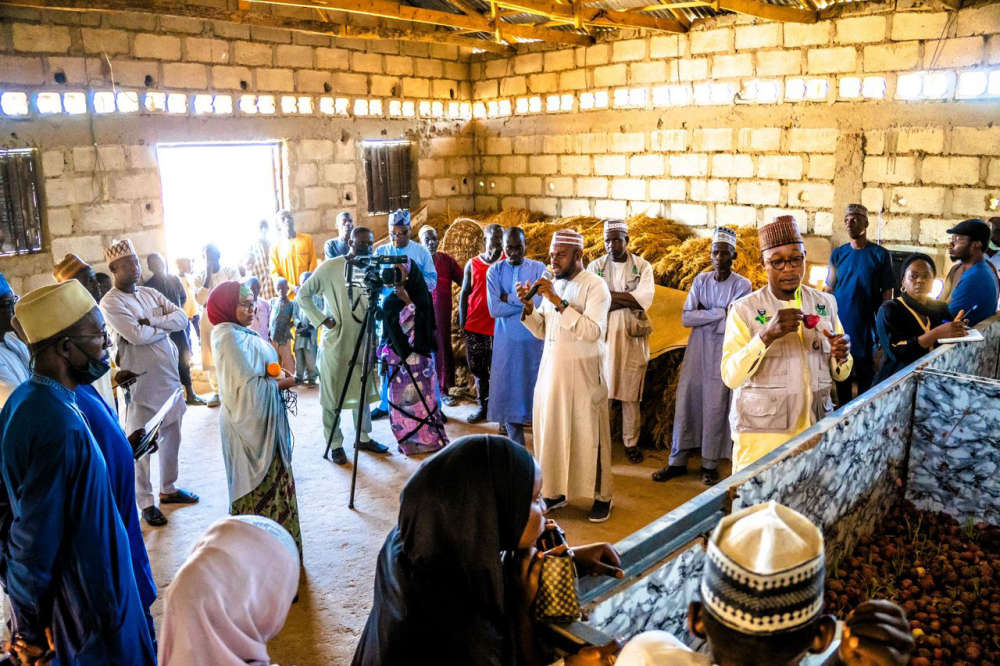
The programme is implemented by the Sasakawa Africa Association (SAA) and funded by the Kano State Government, the Islamic Development Bank (IsDB), and the Lives and Livelihoods Fund (LLF) to support smallholder farmers and boost agricultural production.
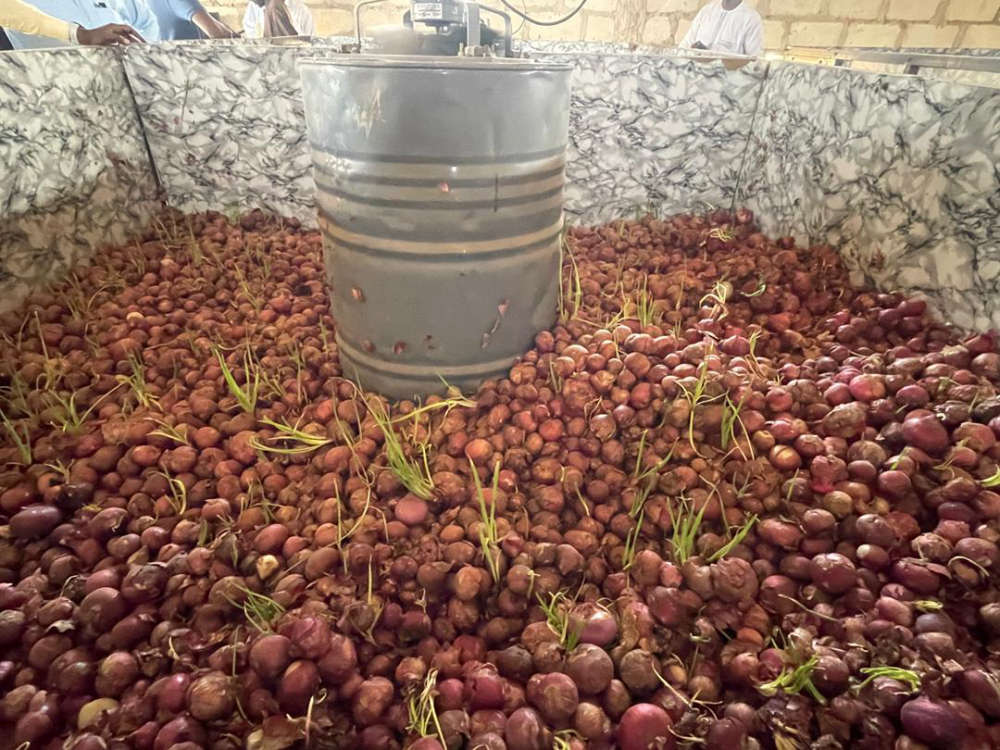
The facility is solar-powered and designed to store onions for three to six months without spoilage. It works by providing proper ventilation, controlled temperature, and reduced moisture, which slows down the ageing process of onions and prevents rot.
While the farmers provided the land and the structure, KSADP and SAA provided the technology, training, and technical support.
Speaking more on the facility, the Program Officer for Nutrition-Sensitive Agriculture at Sasakawa Africa Association (SAA), Engr. Sadiq Yakubu Hamman said that “61 similar facilities have been installed across Kano.”
According to him, “the facilities store over 300 tons of onions at a time.”
He also says “the facilities are designed to reduce losses and increase farmers’ income” with their solar power energy which ensures constant operation without dependence on the national grid.
Evidence of Impact: From 50 Per Cent Loss to Almost Zero
Ibrahim Na Uwani, the owner of the storage facility and a member of the Magaga Fadama Multi-Purpose Association, said over 200 smallholder farmers now benefit from the facility every farming season.
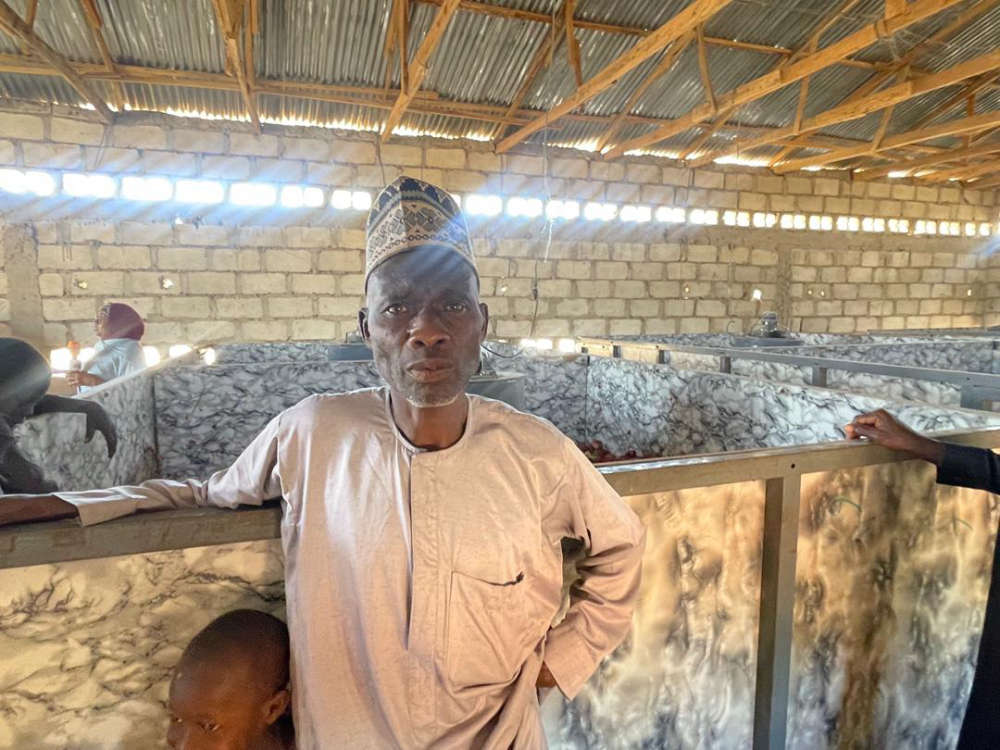
Ibrahim Na Uwani, storage facility owner
“We store 150 bags at a time for three to six months. Post-harvest losses have dropped by almost 99 per cent,” he said.
He said “Farmers pay between N20,000 and N40,000 to store their onions, depending on quantity and duration. The money is used to maintain the facility and keep it running.”
For farmers like Aminu Magaji, the impact has been life-changing.
“Since I started using this storage, I barely lose one bag now. Before, it was more than half of my harvest,” he said with a smile.
Nura Saleh also said the facility encouraged him to expand his farm because he now has confidence that his onions will not spoil.
“We now double our income when we store and sell later instead of rushing to the market at harvest time,” he said.
“I was once buried in debt,” he said. “Now, I can pay my children’s school fees and plan for the next farming season.”
He said he “expanded his farm” after making extra cash for storing his onions and selling them later.
According to KSADP and SAA, farmers using the facility now experience minimal spoilage, enjoy better market prices, avoid panic selling and have a steady income throughout the year.
How the Solution Works
When I visited the onion storage facility in Danamale, I observed that the solution works because the facility uses aeration and solar power, which suits rural communities with limited electricity.
Also, the ventilation system reduces heat and moisture, the main causes of onion spoilage.
Apart from that, Farmers provided the land and managed the facility through their cooperative. This gives them a sense of ownership and responsibility.
Furthermore, while Farmers no longer rush to sell at low prices during harvest they store their onions and sell when prices rise during scarcity. The project works through farmer associations, making it easier to coordinate, monitor, and sustain.
Also speaking, the Project Coordinator of KSADP in SAA, Abdulrashid Kofarmata says “investing in storage during surplus season helps farmers take advantage of off-season scarcity, when onion prices rise sharply.”
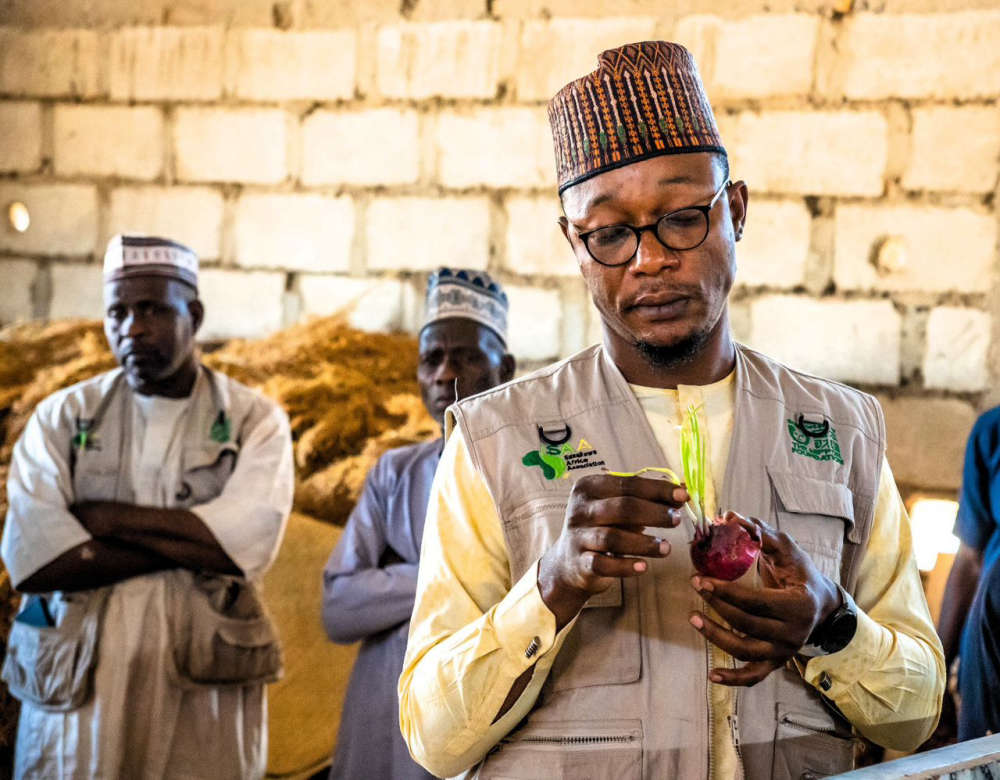
Abdulrashid Kofarmata, Project Coordinator of KSADP in SAA
“Many farmers in the State have started making moves to replicate the storage in a move to have more storage in the State," he said.
Limits and Challenges
Despite its success, the solution has limits. There is only one similar onion storage facility in the entire Gwarzo LGA, meaning many farmers still cannot access it.
Those who fail to secure space are forced to sell cheaply or lose their produce. Farmers also face other challenges, including inadequate fertiliser, pesticides, and water for irrigation.
Apart from that, the maintenance of the facility depends solely on user fees, which could become a problem if handling costs rise.
Commenting, the Chairman of the National Onion Producers, Processors and Marketers Association of Nigeria (NOPPMAN), Shu’iabu Lamin Alhassan, said poor storage remains a major barrier to expanding the onion industry.
According to him, “Storage alone is not enough. Farmers need total support from production to processing to marketing.”
Alhassan expressed optimism that “With proper government support, farmers in Kano and Jigawa can supply onions to the entire West African sub-region.”
Government’s Role and the Push for Sustainability
The Kano State Government says donor support through KSADP has improved productivity, modernised extension services, and increased rural incomes. However, sustainability is now the major focus.
But Commissioner for Agriculture, Dr Danjuma Mahmud, said farmers must adopt modern tools, climate-smart seeds, high-yield varieties, and improved farming practices to remain competitive.

Dr. Danjuma Mahmud, Kano State Commissioner for Agriculture
“Government cannot continue to manage scattered assets forever. So, the private sector must play a stronger role in agricultural infrastructure, innovation, and mechanisation.”
He added that the state is developing a new strategy that places more responsibility in the hands of private investors and farmers’ cooperatives.
A National Push to Tackle Onion Losses
At the federal level, efforts are also emerging. In April 2025, the Federal Government commissioned a N10 billion ultra-modern onion storage facility, described as Africa’s largest, at Gadar Tamburawa in Dawakin Kudu Local Government Area of Kano State.
The facility, owned by PRISM Foods Limited, has a storage capacity of 10,000 metric tons and is expected to significantly reduce post-harvest losses while creating over 200 jobs.
The Minister of State for Industry, Trade and Investment, Senator John Owan Enoh, described it as “a game-changer for Nigeria’s agro-industrial landscape.”
What This Solution Shows
The solar-powered onion storage facility in Danamale shows that post-harvest losses are not inevitable. With the right technology, community ownership, and training, smallholder farmers can protect their produce, stabilise prices, and increase income.
However, the story also shows that one successful facility is not enough. To fully solve the problem, farmers need more storage centres, better access to farm inputs, irrigation support, and stronger government-private sector collaboration.
Lessons for Other Communities
The Danamale experience offers important lessons for agricultural development as it shows that community involvement is key to success, that storage is just as important as seeds and fertiliser, and that solar-powered solutions work well in rural communities.
However, with proper funding and strong partnerships, this model can be replicated across Kano State, Jigawa State, and even beyond, helping more farmers reduce losses, increase income, and strengthen food security
Meanwhile, for Magaji, Saleh, and hundreds of other smallholder farmers like them, the solution has already changed their story. For many others across Kano and northern Nigeria, the opportunity is just beginning.