


The Centre for Journalism Innovation and Development (CJID) has raised concern over Nigeria’s rising maternal mortality rate, saying the country now accounts for nearly 20 per cent of global maternal deaths.
The organisation said the situation reflects deep problems in Nigeria’s health system, including poor funding, weak accountability, and failures in service delivery at the primary healthcare level.
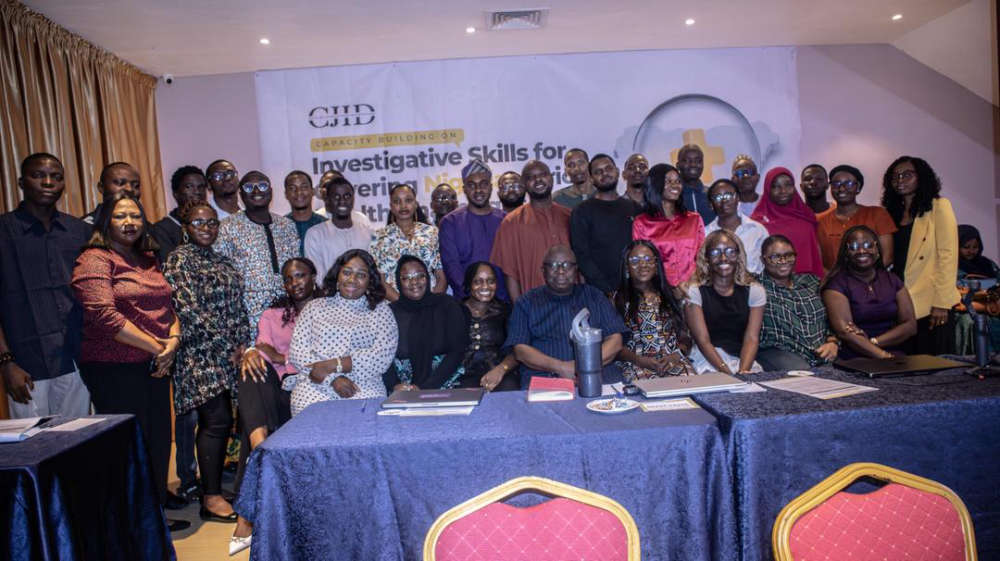
Programme Manager of CJID, Felicia Dairo, disclosed in Abuja on Wednesday during a two-day training workshop for journalists from across the country.
The workshop, titled “Investigative Skills for Covering Nigeria’s Priority Health Challenges,” brought together early-career reporters, mid-level journalists, experienced media professionals, and campus journalists.
She said Nigeria is facing what she described as a “quiet structural emergency” in the health sector, worsened by weak oversight and poor investigative reporting.
“Nigeria accounts for nearly 20 per cent of global maternal deaths, with a maternal mortality ratio that remains terrifyingly high,” she said.
She lamented that despite repeated government commitments, the health sector continues to receive funding below the 15 per cent benchmark agreed under the Abuja Declaration.
According to her, many Primary Health Care (PHC) facilities across the country still lack necessities such as clean water, electricity, and essential medicines, even though large sums are allocated to the sector annually.
She also accused public institutions of hiding systemic failures through fragmented health data, complex bureaucracy, and limited access to budget information.
“Every day, our headlines chronicle individual tragedies — a mother who bled to death during childbirth in a rural clinic or a community hit by a preventable cholera outbreak — yet most times we rely on official government press releases that claim everything is under control,” she said.
She said overdependence on official statements has weakened accountability journalism and allowed persistent failures in healthcare financing and delivery to go unchecked.
“It happens because health data in Nigeria is deliberately scattered across bureaucratic silos. It happens because national budget documents are intentionally opaque,” she added.
She, however, urged journalists to go beyond emotional storytelling and focus on data-driven investigative reporting that can expose how public health funds are used or misused.
“We cannot answer these questions with emotional op-eds. We must answer them with iron-clad, data-driven journalism,” she said.
Also speaking at the workshop, Chief Executive Officer of Centre for Journalism Innovation and Development (CJID) and Publisher of Premium Times, Dapo Olorunyomi, said the quality of journalism in any society reflects the strength of its democracy.
He said journalists must embrace investigative reporting as a tool to uncover hidden problems in governance and push for reforms that improve public services.
In another presentation, Health and Development Desk Editor at Premium Times, Nike Adebowale-Tambe, urged journalists to pay closer attention to Primary Health Care centres as a key reporting area.
In her paper titled “PHC and Facility Readiness as a Reporting Beat: How to Investigate the Status of Primary Health Care Centres,” she said the condition of PHCs directly affects maternal health, child survival, immunisation, disease control, and overall community wellbeing.
Ms Adebowale-Tambe encouraged reporters to investigate infrastructure, staffing levels, availability of essential drugs, equipment functionality, and quality of services in PHC facilities.
She also advised journalists to use direct observation, interviews, budget documents, and procurement records to strengthen accountability reporting.
According to her, consistent reporting on PHCs can expose gaps in the health system, amplify community voices, and pressure authorities to implement reforms that improve health outcomes.
The workshop ended with a call for stronger collaboration between journalists and health experts to improve public understanding of Nigeria’s health challenges and promote more effective reporting on maternal and child health issues.

Comments
Add a comment