

The Nigerian government has called for urgent measures to end xenophobic and Afrophobic attacks against Africans in South Africa.
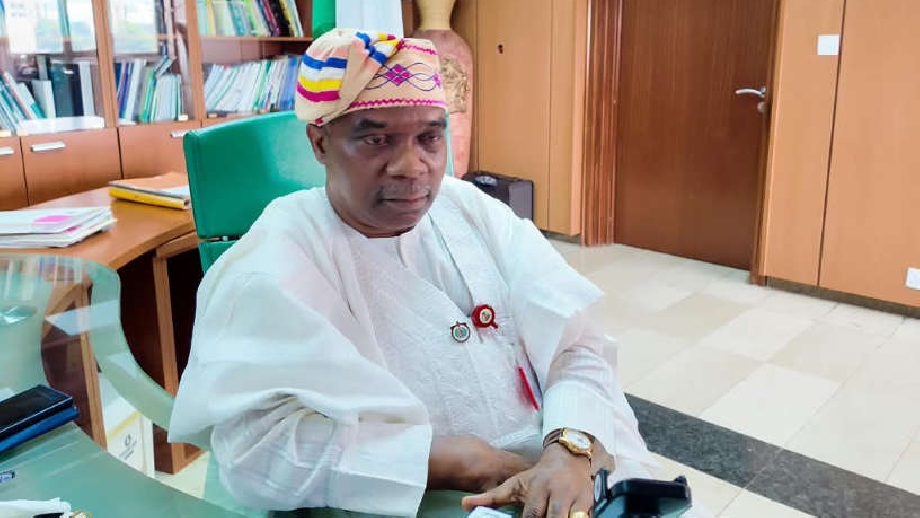
The Minister of State for Foreign Affairs, Ambassador Sola Enikanolaiye, made the call on Tuesday at a virtual roundtable on “South Africa’s Xenophobia in Comparative Perspective”, convened by the Nigerian Institute of International Affairs.
Enikanolaiye said Nigeria considered the violence a serious challenge that must be confronted without denial or exaggeration, arguing that “Afrophobia” more accurately describes attacks targeting African migrants.
He said the attacks were particularly troubling given the role played by African countries, including Nigeria, in supporting South Africa’s liberation struggle.
“The relationship between Nigeria and South Africa is not reducible to trade statistics or diplomatic communiques," he said.
"There is history in that relationship. There is blood, sacrifice and solidarity in that history."
The minister disclosed that the Ministry of Foreign Affairs had directed the Nigeria Institute of International Affairs (NIIA) to undertake a comprehensive study documenting Nigeria’s support for the anti-apartheid struggle.
According to him, Nigeria’s financial commitment to the struggle was estimated at more than $60 billion, in addition to the nationalisation of British Petroleum, scholarships and support provided to South African leaders in Nigeria.
Enikanolaiye said about 90 Nigerians had been killed in Afrophobic violence since June 2022, with further attacks and displacement recorded in 2026.
He warned that continued violence could damage South Africa’s international reputation, undermine investor confidence, threaten regional integration and erode the moral authority it earned during its liberation struggle.
The minister also called for public debate on migration to be grounded in facts and data rather than misinformation and social media rumours, and urged the full activation of existing Nigeria-South Africa early-warning and rapid-response mechanisms to prevent tensions from escalating.
He said Nigeria would work with Ghana to raise the issue at the next session of the African Union Assembly of Heads of State and Government.
While acknowledging South Africa’s willingness to discuss the “push and pull factors” behind migration, Enikanolaiye said greater priority must be given to the hate-driven violence against African nationals.
He also called for stronger people-to-people diplomacy involving businesses, universities, religious and traditional institutions, youth groups, civil society and the media.
According to him, Africa needs to move beyond tolerance towards a continent where Africans living in other African countries are treated with equal dignity.

Comments
Add a comment