

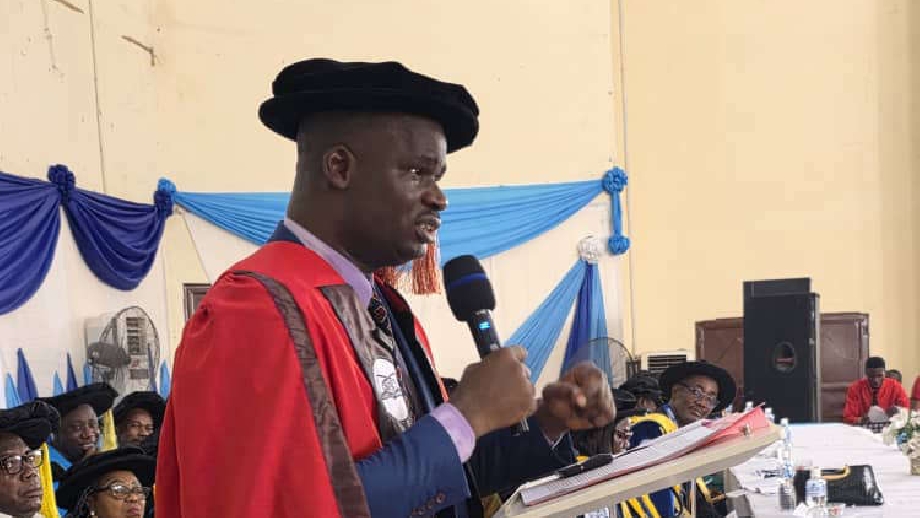
Professor of English Literature at Delta State University (DELSU), Abraka, Sunny Awhefeada, says Nigerian literature is inseparable from the country’s historical experiences, arguing that creative writing in Nigeria has always been shaped by social and political realities.
Awhefeada made the statement while delivering his inaugural lecture, the 117th in the series, at the Delta State University, Abraka, on Wednesday, January 15, 2026.
Speaking on the relationship between history and literary scholarship, the professor says Nigerian literature does not exist in isolation but develops directly from historical forces.
“As would be observed in the next few minutes, my focus on literary scholarship accentuates the impact of history on literature,” he says, adding that his work interrogates “the relevance of history to literature.”
Awhefeada, who is also the Dean of the Post Graduate School at DELSU, traces the origins of modern Nigerian literature to the colonial encounter, describing it as the foundation upon which the country’s literary tradition emerged.
“The paternity of this literature, in its present form, is the colonial encounter occasioned by the contact between Britain and the many ethnicities that make up the geographical expression known as Nigeria,” he says.
He identifies the Nigerian civil war as a major turning point in the evolution of the nation’s literature, noting that the conflict reshaped themes and styles, with writers engaging deeply with violence, loss and national disillusionment.
According to him, the post-civil war era gave rise to protest and ideological writing, as authors responded to military rule, economic hardship and social injustice.
It might interest you to know that January 15th is a very important date in Nigerian history.
The first military coup took place on this date in 1966, a landmark event that was part of the events that snowballed into the Nigerian Civil War.
Incidentally, on this date in 1970, the Nigerian Civil War officially ended with Biafra’s surrender.
Reflecting on his academic career, the lecturer at the Department of English and Literary Studies, DELSU, Abraka, says Nigerian literature has grown into a robust national tradition defined by lived experience.
Hear him: “As I taught that course, I came to realize the buoyancy of Nigerian literature and its capacity to constitute a national literature essentially conditioned by socio-historical currents.”
Professor Awhefeada also highlights the expansion of Nigerian writing into new areas, including the rise of female writers, memoirs and autobiographical narratives, eco-literature, and interdisciplinary studies linking literature with medicine and other fields.
He concludes that Nigerian literature remains a living archive of the nation’s history, insisting that as Nigeria continues to evolve, its writers will keep responding to social change through storytelling.
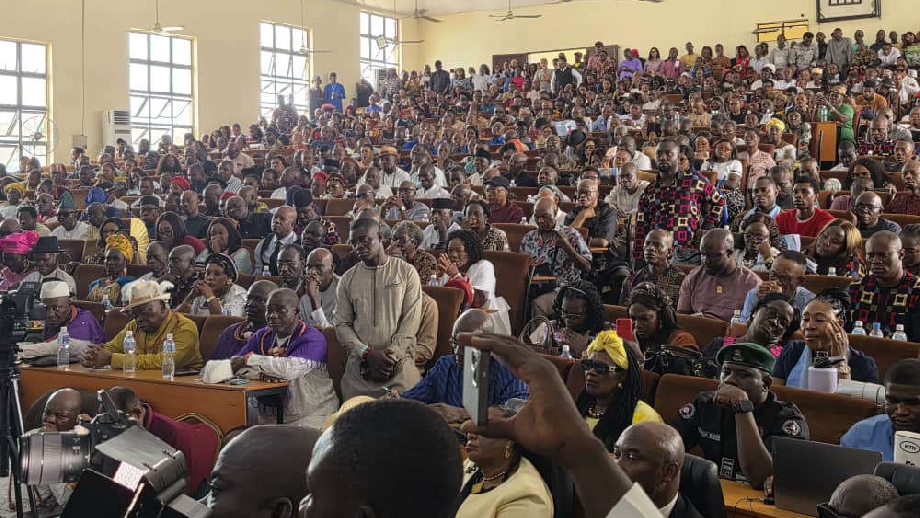
The inaugural lecture attracted academics, students and members of the university community, marking a significant milestone in the scholarly journey of Professor Awhefeada and in the intellectual life of Delta State University, Abraka.