

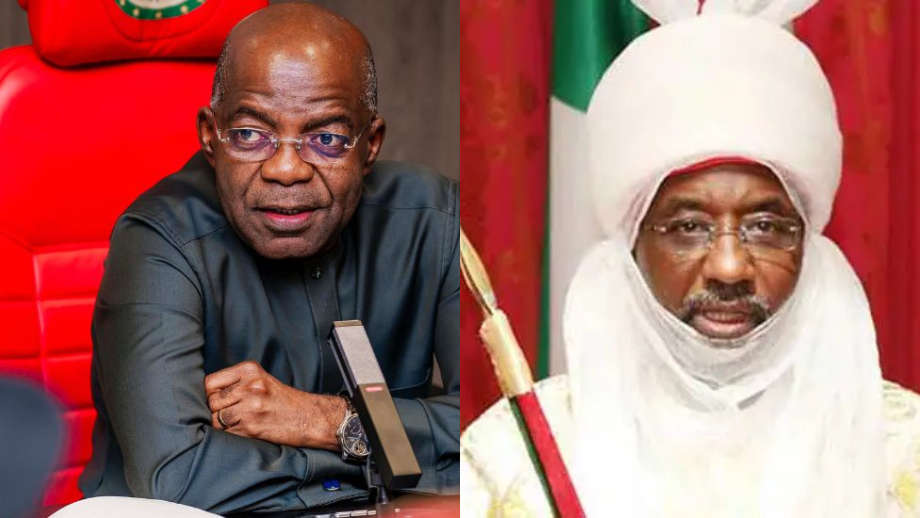
Abia State Governor Alex Otti says Nigeria’s economic challenges stem less from a lack of resources and more from repeated poor political choices, warning that the outcome of the 2027 elections will have long-term consequences for national development.
Otti spoke at the 2026 Annual Lecture of The Niche themed “Governing the Economy: Choices, Trade-Offs and National Priorities,” where he argued that nations that outperform Nigeria are not necessarily better endowed but “consistently make better political decisions.”
“Other nations are not better than Nigeria, but they consistently make better political choices,” he said. “That is the difference.”
He cautioned that Nigeria’s structural economic problems cannot be resolved quickly, stressing that decades of policy errors and governance failures require sustained, deliberate correction rather than quick fixes.
“There is no silver bullet for Nigeria’s economic challenges,” Otti said. “Economics is about cold, hard facts, not vanities or wishful thinking.”
He warned against both cynicism and excessive optimism, saying neither reflects the reality of Nigeria’s situation.
According to him, meaningful progress will depend on difficult but necessary reforms in governance, economic planning, and political accountability.
Otti also linked Nigeria’s development trajectory directly to political behaviour, arguing that economic outcomes are shaped by the quality of leadership choices made at the ballot.
He cautioned that the 2027 general elections will present Nigerians with a defining choice between “prudence and rascality,” adding that decisions made at the polls will influence the country for years.
“If you have behaved badly for over 60 years, it will take time to correct it,” he said. “But the world will not wait indefinitely for Nigeria to reach its full potential.”
The governor urged greater civic engagement, warning that voter apathy undermines governance and contributes to unemployment, poverty, and institutional weakness.
He said democracy alone is not enough unless citizens actively participate in shaping outcomes beyond election day. “Political choices directly affect economic realities,” he said. “Indifference has a cost.”
Otti added that investor confidence is closely tied to political signals, noting that both domestic and foreign investors interpret elections as indicators of future economic direction.
He called for stronger institutions, policy consistency, and investment-driven reforms focused on productivity rather than short-term consumption.
Chairman of the event, Muhammadu Sanusi II, said economic outcomes are driven by decisions, not emotions, stressing that public service should be viewed strictly as a responsibility rather than a means of personal enrichment.
He urged leaders and citizens alike to embrace accountability and discipline in governance, warning that economic stability depends on integrity in public decision-making.
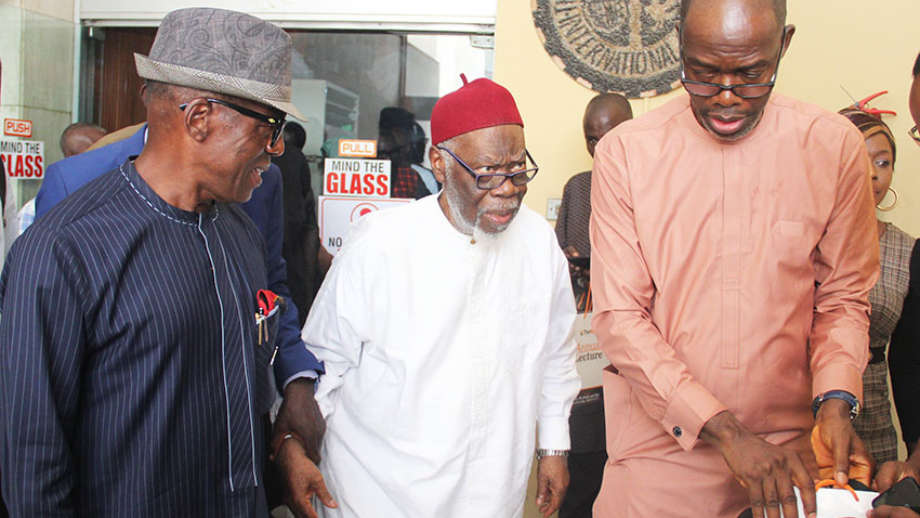
Other attendees included the Igwe Nnaemeka Alfred Achebe, NLC President Joe Ajaero, Gen. Ike Nwachukwu (rtd.), Olisa Agbakoba, a 95-year-old Elder Uma Eleazu and other senior figures from government, civil society, and traditional institutions.