

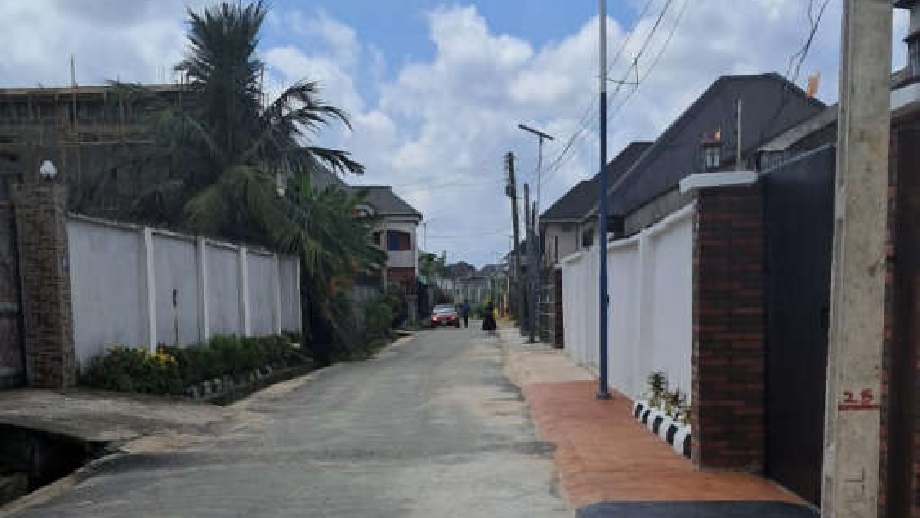
In the bustling city of Port Harcourt, the struggle to secure affordable accommodation is becoming increasingly difficult for many residents, as rising house rents continue to place pressure on households already grappling with Nigeria’s economic hardship.
Across different parts of the city, tenants say the cost of renting even the most basic apartments has climbed sharply in recent months, with many blaming housing agents, inflation and what they describe as weak regulation in the property sector.
Residents who spoke with correspondent Aerissa Georgewill accused some agents of introducing excessive charges and additional fees that significantly increase the total cost of securing accommodation.
One resident described the situation as unbearable.
“House rent is very high. Another thing that is even killing us now is the agent. The agent will start telling us to pay 20 per cent.
"After paying house rent, you will now pay an agency fee. Where are we seeing the money?
"Even the lowest house, self-contained, they will tell you N500,000. I want the government to do something for us in Rivers State, either to regulate the house prices for self-contained and one-bedroom apartments or to stop agents from collecting money. This is not fair.”
Many tenants argue that landlords have increasingly handed over control of rental negotiations to agents, who they claim now determine prices and impose extra charges such as caution fees, inspection fees, and movement fees.
Another resident said tenants are often left with little choice but to accept the conditions.
“It is not easy to get the money and pay. Even if it is 12 months, they should make it easier for tenants.
"The agent cannot control the landlord, and landlords leave their agents to do what they like, which is very bad. If an agent says otherwise, you as a landlord should say no; it is my building, and this is the price I will fix.”
For some residents, the frustration is not necessarily directed at landlords alone, but at what they describe as a growing chain of charges attached to renting property.
“I don’t blame the landlord; the people I blame are the agents. They will tell you about the caution fee and movement fee.
"If you calculate everything, the flat that the landlord put at N500,000 will go up to N700,000, and before you add caution fee and all the rest, it will become N1 million.
"I just want the government to invite the landlords because it is only the landlords that can explain what is happening.”
However, landlords insist the increases are tied to the wider economic realities facing the country.
With the rising cost of cement, building materials, labour and maintenance, property owners argue that sustaining residential buildings has become more expensive than in previous years.
One landlord defended the increases, saying, “Landlords like me can build in a very luxurious way, so with that we cannot put it at a low price. We have to increase it because of the economy. Rent was cheaper before, but now it is more than that. As a landlord, I have to calculate my losses.”
While some residents accused landlords of exploiting the situation, others acknowledged that inflation and the rising cost of living have affected both tenants and property owners alike.
“Some landlords are greedy, actually, because some of the houses where they have increased rent were built long before the hike in building materials. But we also have to consider the landlords because the cost of living is going high.”
The debate has also raised legal questions about whether there are clear regulations governing rent increases in Nigeria.
Speaking to correspondent Aerissa Georgewill, legal practitioner Barrister Max Ibikroma Alalibo said Nigerian law does not specifically define how landlords should increase rent or what percentage is acceptable.
According to him, principles of fairness and equity within the legal system should guide landlords when making decisions affecting tenants.
“The law does not provide for how a landlord should increase rent or the percentage of the increment. However, there is the intervention of equity in our legal system, which requires landlords to consider other factors such as the market situation and the present state of affairs in Nigeria.
"A landlord should not be compelled to increase rent simply because an agent said so. The landlord has to be independent-minded because the interest of the agent is his percentage.”
Meanwhile, housing agents in Port Harcourt have rejected accusations that they are responsible for the rising rental costs.
They insist that final pricing decisions are made by landlords, not agents.
One agent said, “How can it be the agent? The agent is not the owner of the house.
"The landlord is the one who decides the rent, so an agent cannot tell a landlord what to do. Even if an agent comes and says the rent should increase, the landlord should have a conscience because it is the tenants paying the money, not the agent.”
Another agent pointed to the country’s economic difficulties as the main cause of the increase.
“It is not the agent making house rent costly. Everyone knows things are hard in Nigeria. If you go to the market, prices have increased.
"The landlords also go to the market; they are human beings too. So, it is not our fault as agents. We also need money.”
As concerns continue to grow, many residents are now calling on the Rivers State Government to introduce policies that would regulate housing costs, protect tenants from excessive charges, and address the worsening accommodation crisis in the city.

Comments
Add a comment