

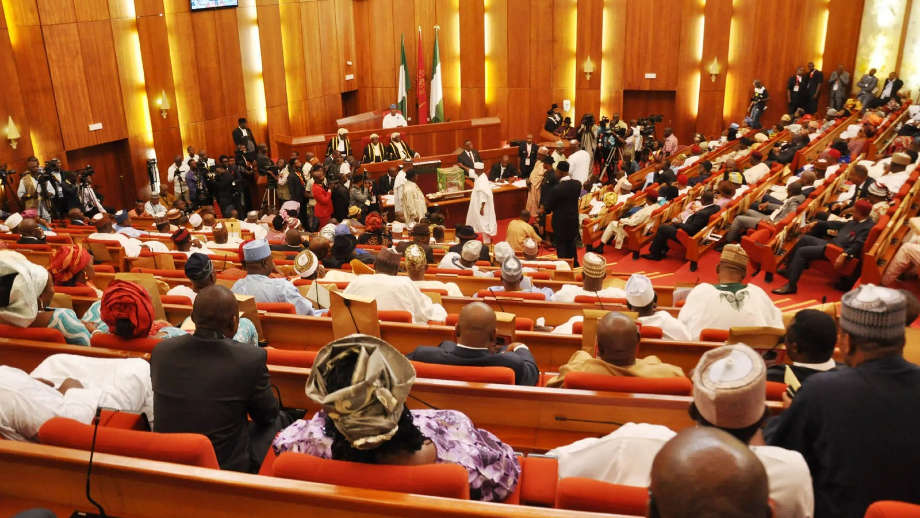
Nigeria's Senate on Thursday passed an amendment to the Electoral Act aimed at ending a practice that has long plagued the country's pre-election legal landscape: the filing of the same dispute in multiple courts across different states in search of the most sympathetic ruling.
The move followed similar action by the House of Representatives, which passed its own version of the bill last Wednesday.
The tactic being targeted involves a party or candidate filing a pre-election case simultaneously in several state High Courts or Federal High Courts, gambling that at least one will rule in their favour.
The resulting pile-up of conflicting judgments has, in past election cycles, created legal chaos that dragged through the courts long after election results had been announced, and in some cases produced contradictory rulings that left courts and electoral bodies uncertain which order to obey.
Under the new framework, disputes over party primaries for governorship and National Assembly seats will begin at the Federal High Court, with the Court of Appeal serving as the final arbiter; no further appeals permitted.
Presidential pre-election matters will be heard first by the Court of Appeal, and only the Supreme Court will have the authority to reverse such rulings.
The architecture is designed to create clarity, finality, and a single chain of authority for each category of dispute, preventing the kind of procedural gridlock that has in the past emboldened losing parties to keep litigating in the hope of a different outcome somewhere in the system.
With the 2027 General Election on the horizon and political activity already intensifying, the timing of the amendment is unlikely to be coincidental.
Both chambers of the National Assembly appear intent on having the new rules in place well ahead of the next primary season.

Comments
Add a comment