

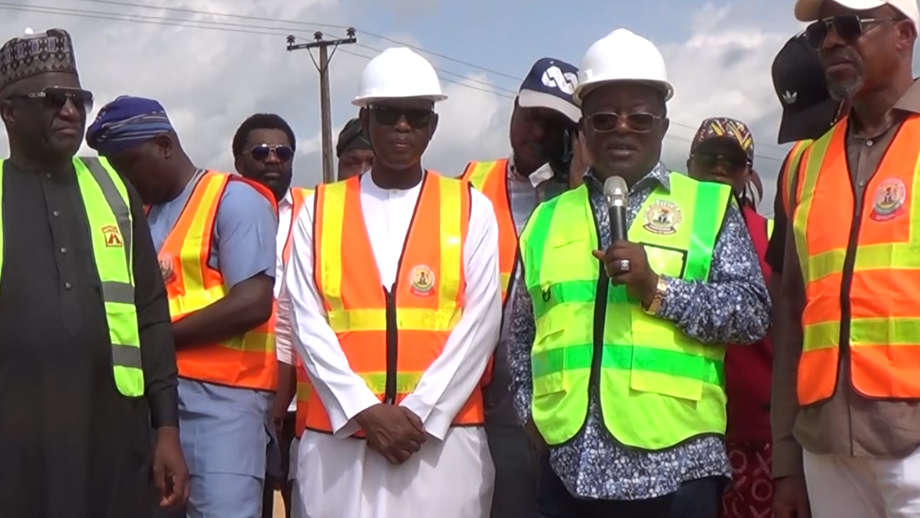
Minister of Works Sen. Dave Umahi on Sunday dismissed claims that the ongoing Lagos-Calabar Coastal Highway triggered recent flooding in parts of Lagos, saying poor urban drainage, blocked waterways and indiscriminate waste disposal, not the federal road project was responsible for the flooding.
Umahi spoke during an inspection of Section 3 of the Sokoto-Badagry Superhighway in Agbara, Ogun State, alongside Chairman of the Senate Committee on Works, Sen. Allwell Onyesoh, Chairman of the House Committee on Works, Rep. Akin Alabi, officials of the Federal Ministry of Works and HITECH Construction Company.
The minister said President Bola Tinubu had directed a technical assessment of the coastal highway corridor and surrounding communities to address public concerns, stressing that the exercise was aimed at providing engineering solutions rather than validating allegations against the project.
"We will evaluate the Coastal Highway and its surroundings—not because the road is causing flooding—but because the President has directed that we technically assess the situation," Umahi said.
He argued that linking the highway to flooding ignored longstanding drainage deficiencies across Lagos.
"You have to ask whether there were legal drainage channels from surrounding communities into the ocean. Lagos State law does not permit surface drains or culverts to discharge directly into the ocean. So it is wrong to conclude that the Coastal Highway caused the flooding," he said.
Umahi said preliminary findings indicated that parts of Lagos State's flood management master plan had yet to be fully implemented.
According to him, blocked drainage systems caused by indiscriminate refuse disposal and illegal developments on waterways have significantly worsened flooding in many parts of the state.
"We found that some designated drainage outlets have not been developed. You can also see the volume of refuse blocking drainage channels and people building on waterways. This country belongs to all of us, and everyone has a responsibility to protect public infrastructure," he said.
He added that the Federal Ministry of Works would collaborate with the Lagos State Government to evaluate existing drainage infrastructure around the highway and recommend appropriate engineering interventions where necessary.
Umahi also defended President Tinubu's infrastructure programme against criticism from opposition figures, saying the administration was executing some of the country's most ambitious road projects in decades.
He cited ongoing construction on the Lagos-Calabar Coastal Highway, Sokoto-Badagry Superhighway, Abuja-Kaduna-Zaria-Kano Road, Benin-Asaba corridor and several strategic road projects across Plateau and Borno states.
"When people reduce governance to comedy and ignore the work being done across the country, it is unfortunate. These projects are visible for Nigerians to see," he said.
The minister said the Ministry of Works had strengthened project monitoring and would continue to sanction contractors who failed to meet contractual obligations.
"The ministry must reset. Contractors who collect public funds without delivering quality work will continue to face sanctions," he said.
Umahi also praised HITECH Construction Company for maintaining consistent construction standards on major federal highways.
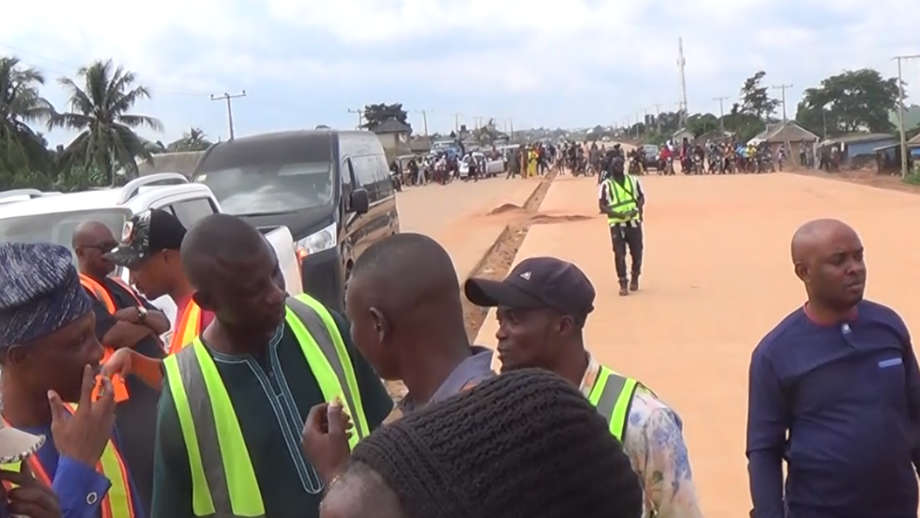
"Whether you go to Sokoto, Kebbi, Lagos, Akwa Ibom or Badagry, you will see the same quality of work. That consistency is commendable," he said.
He disclosed that permanent works on the inspected section of the Sokoto-Badagry Superhighway had reached about 10 percent, describing the pace of construction as encouraging.
Chairman of the House Committee on Works, Rep. Akin Alabi, commended the Ministry of Works for carrying the National Assembly along throughout the planning, procurement and execution of major infrastructure projects.
He said involving lawmakers from the early stages of project implementation had strengthened transparency, accountability and legislative oversight.
"By carrying the National Assembly along from the beginning, the Ministry of Works has made oversight more effective. We are familiar with the procurement process, project costs, materials being used and the progress of these projects," Alabi said.
He urged other ministries, departments and agencies to adopt a similar model of collaboration with the legislature to improve transparency and public confidence in government projects.
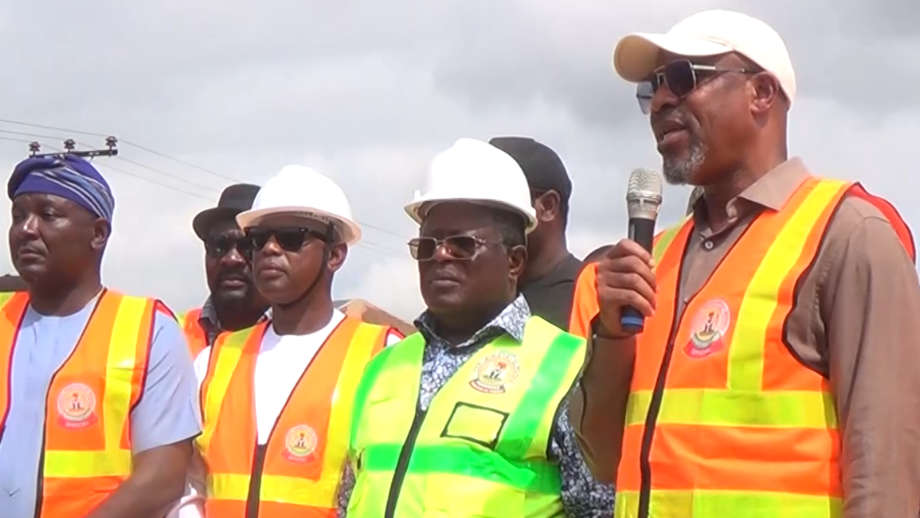
Chairman of the Senate Committee on Works, Sen. Allwell Onyesoh, pledged the National Assembly's continued support for the Federal Government's road infrastructure programme through sustained funding and effective oversight.
Responding to concerns about economic hardship, Onyesoh said although many Nigerians were talking about hunger, investments in road infrastructure remained critical to unlocking economic opportunities, facilitating trade and creating jobs.
"Government may not directly feed the people, but it creates the enabling environment for economic activities to thrive. Road infrastructure allows goods and services to move across the country, creates jobs and supports economic growth," he said.
The senator assured Nigerians that the National Assembly would continue to provide the necessary legislative backing and budgetary support to ensure critical road projects were completed.
Onyesoh also commended President Tinubu and Umahi for what he described as their uncommon commitment to rebuilding Nigeria's road infrastructure, saying the quality and scale of ongoing projects would leave a lasting legacy.
Officials of HITECH Construction Company told the inspection team that construction of Section 3 of the 1,068-kilometre Sokoto-Badagry Superhighway, covering 162.35 kilometres between Lagos and Ogun states, was progressing steadily.
The contractor said approximately 25 kilometres of continuously reinforced concrete pavement had been completed on one carriageway, while about 9.4 kilometres had been completed on the opposite carriageway.
Earthworks have advanced to about 81 kilometres, with vegetation clearance covering roughly 145 kilometres along the alignment.
Despite challenging terrain requiring significant earthworks, bridge construction and additional drainage structures, the contractor expressed confidence that the project would be completed ahead of its 36-month schedule while meeting international construction standards.
The inspection formed part of the Federal Government's nationwide assessment of President Tinubu's legacy road projects, which officials say are designed to improve connectivity, ease the movement of goods and people, and stimulate long-term economic growth.

Comments
Add a comment