

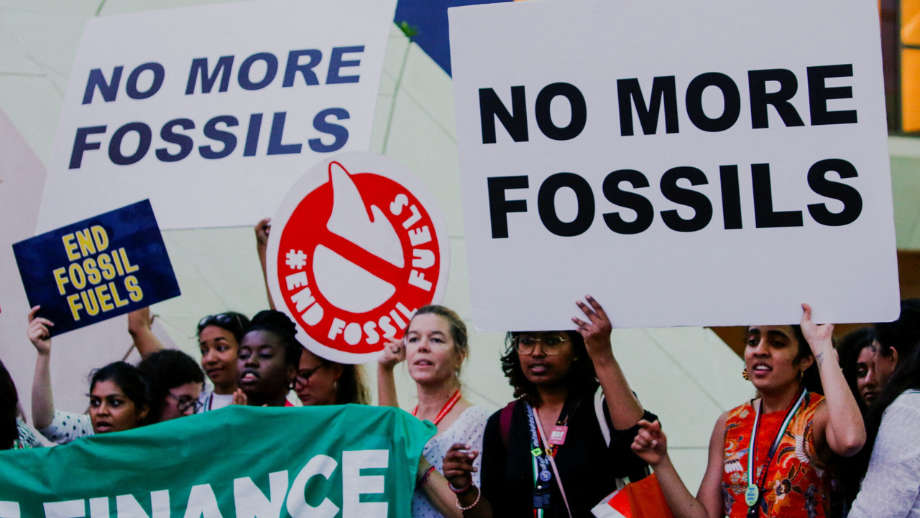
More than 50 countries will meet in Santa Marta, Colombia, next week for a first-of-its-kind conference aimed at accelerating the global phaseout of fossil fuels, amid rising energy insecurity linked to the Iran conflict.
The talks come as disruption in the Middle East has affected oil flows through the Strait of Hormuz, pushing up prices and deepening what the International Energy Agency describes as the biggest oil supply shock on record.
Colombia’s Environment Minister Irene Vélez Torres, a co-host of the meeting with the Netherlands, said the timing has given the summit “greater relevance,” adding that it offers an opportunity for “a more honest space” to confront global dependence on coal, oil and gas.
“We need to bring all cards to the table,” she said. “Nobody is saying that eliminating fossil fuels is easy, but we must have these conversations openly.”
Countries expected to attend include Australia, Canada, Norway, Germany, France and the United Kingdom, along with developing producers such as Angola, Brazil, Mexico, Turkey and Vietnam.
However, major producers including the United States, China, Saudi Arabia and Russia will not attend.
The summit, scheduled for April 28–29, is expected to focus on balancing climate goals with energy security concerns, as some countries weigh increased coal use to stabilize supplies.
Vanuatu Climate Minister Ralph Regenvanu said the crisis underscores the urgency of reducing reliance on fossil fuels.
“It is unequivocally a call to lessen dependence on fossil fuels for everyone,” he said.
Nearly 200 countries agreed at COP28 in 2023 to transition away from fossil fuels, but progress has since stalled amid political divisions and competing economic priorities.
Analysts say the Santa Marta meeting is not a rival to UN climate talks, but an informal effort by willing countries to build momentum toward a voluntary global roadmap for phasing out fossil fuels.

Comments
Add a comment