

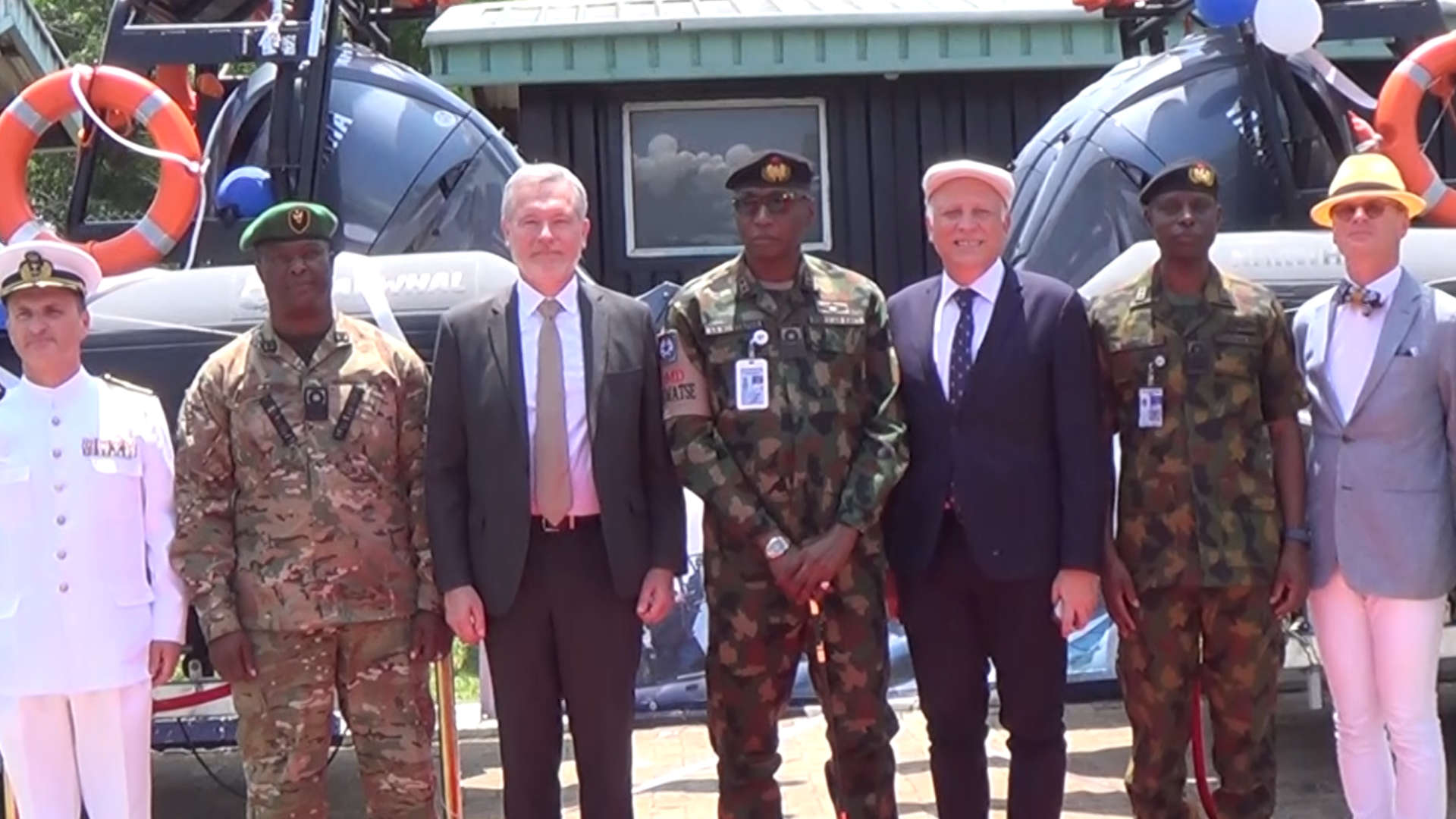
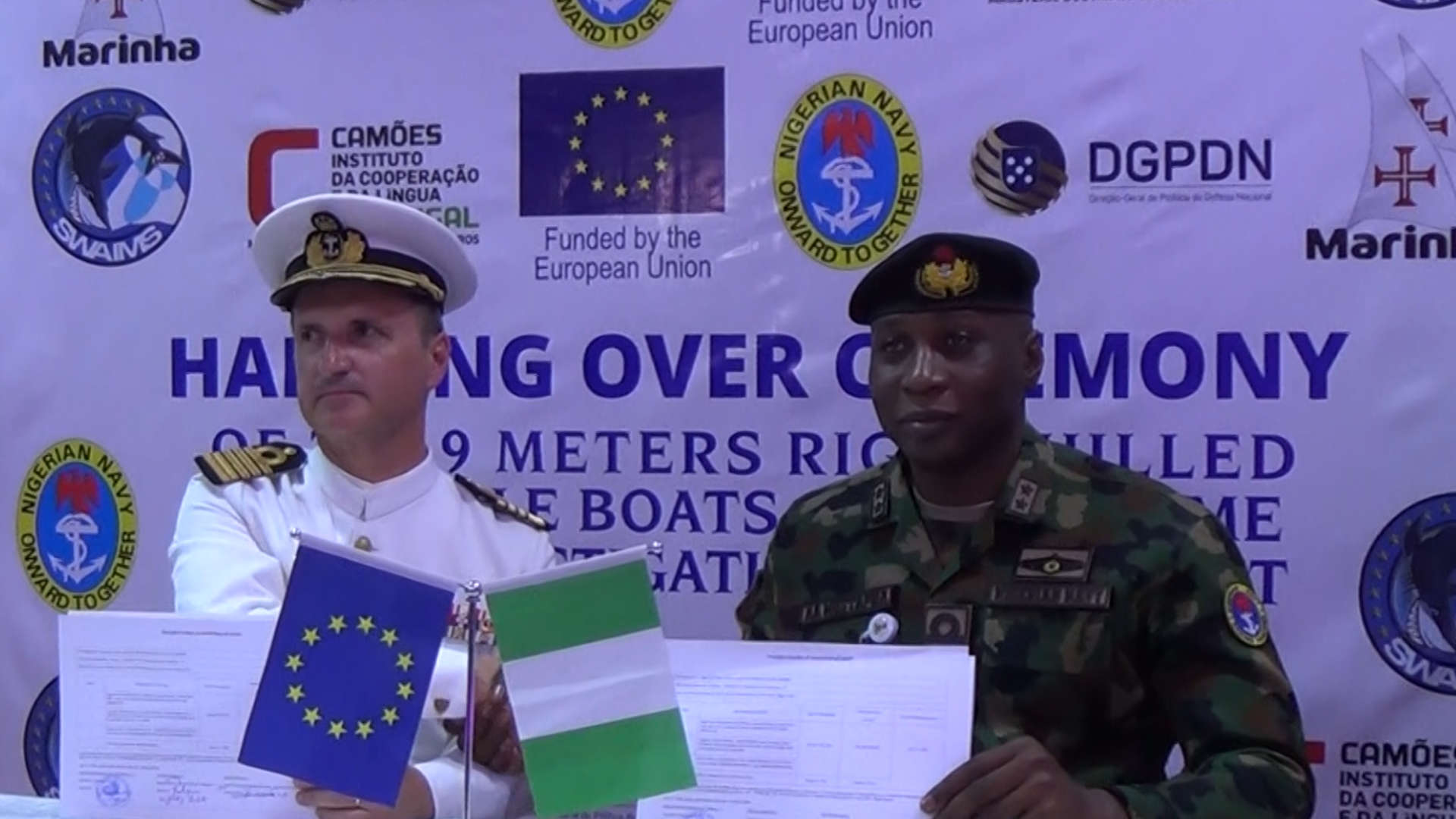
The European Union, in partnership with the Government of Portugal, has donated two 8.9-metre rigid-hull inflatable boats and maritime crime investigation equipment to the Nigerian Navy to strengthen operations against piracy and other crimes in the Gulf of Guinea.
The equipment was formally handed over Tuesday during a ceremony at the Joint Maritime Security Training Centre (JMSTC), Navy Town, Ojo Lagos, under the Support to West Africa Integrated Maritime Security (SWAIMS) project — an EU-backed initiative implemented by Portugal to improve maritime security across ECOWAS member states.
Representing Chief of the Naval Staff Vice Adm. Idi Abbas, the Flag Officer Commanding Western Naval Command, Rear Adm. Abdullahi Abubakar Mustapha, said the new assets would strengthen the Navy's surveillance, response and law enforcement capabilities.
"Nigeria was removed from the International Maritime Bureau's list of piracy-prone countries in 2021 through the Nigerian Navy's sustained maritime presence, surveillance, rapid response capability and law enforcement efforts," Mustapha said, adding that the donated boats and forensic equipment would serve as force multipliers.
"The intersection of our initiatives with those of the European Union will improve the security of the Gulf of Guinea and help sustain Nigeria's gains in maritime security," he said.
Mustapha noted the Navy already operates more than 300 similar patrol boats but said the new vessels would reinforce existing capabilities.
He disclosed that 28 personnel underwent specialized training under the program, covering boat handling, operations, maintenance and maritime crime investigation.
The forensic equipment, he said, would deepen collaboration with the police, Customs, Immigration and the National Drug Law Enforcement Agency on building integrated crime databases.
EU Ambassador to Nigeria Gautier Mignot described the donation as part of the bloc's long-term commitment to maritime security in West Africa.
He said the SWAIMS project is worth 15 million euros, largely funded by the EU and co-funded and implemented by Portugal, benefiting all 12 ECOWAS member states through training, equipment and technical support aimed at improving interoperability among regional maritime agencies.
"The security of the Gulf of Guinea is also key for the security of the European Union," Mignot said.
"Nigeria is a cornerstone because of its strategic location and its extensive maritime capabilities."
On sustainability, Mignot said the partnership includes long-term maintenance support and technical assistance to keep the boats operational throughout their service life.
Portugal's involvement runs through the ceremony as the project's implementing partner, represented at the event by Ambassador Paulo Santos of the Embassy of Portugal in Nigeria, alongside Florbela Paraíba, president of the Camões Institute for Cooperation, and Captain Neves Rodrigues, coordinator-general of the Camões Implementation Unit's SWAIMS Liaison Office — the team responsible for delivering the boats and running the training program that produced Nigeria's 28 newly certified personnel.
Officials at the ceremony described the arrangement as a continuation of naval cooperation between Nigeria and Portugal built through the SWAIMS partnership.
The handover drew a wide diplomatic audience, reflecting the regional stakes of the project.
Attendees included Commodore M.S. Shettima, commander of the Maritime Task Force for the Gulf of Guinea; and Belgian Ambassador to Nigeria Mr. Pieter Leenknegt, underscoring the international interest in securing the corridor.
The donation comes as regional governments intensify joint efforts against piracy, illegal fishing, narcotics trafficking and other transnational crimes in the Gulf of Guinea, one of the world's most strategically significant maritime corridors.
Nigerian naval authorities said the new assets would improve operational readiness while deepening cooperation between Nigeria, the EU, Portugal and other ECOWAS member states in safeguarding the region's waters.

Comments
Add a comment