

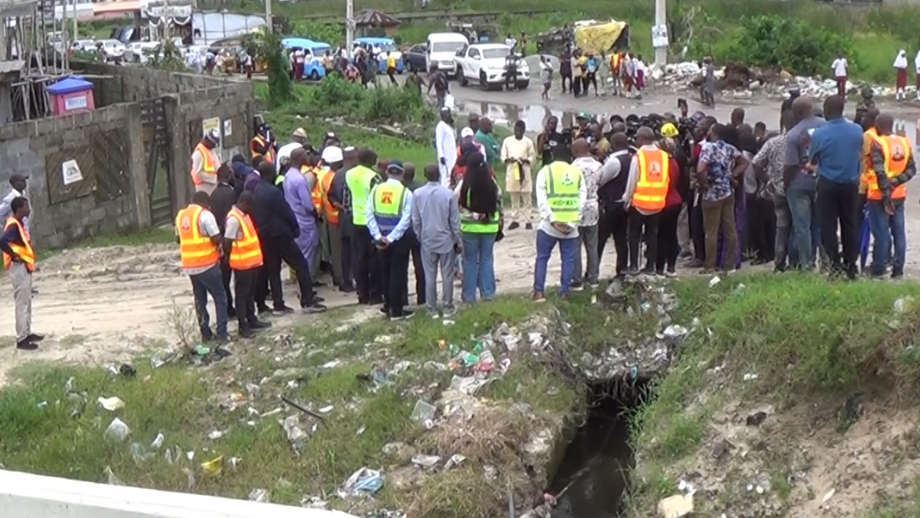
The Minister of Works, Dave Umahi, at a stakeholders' meeting on flooding along the Lagos-Calabar Coastal Highway corridor said the Federal Government will demolish residential buildings within 50 metres of the Lagos-Calabar Coastal Highway and pay affected owners' compensation strictly in line with federally gazetted rates, as authorities moved to address recent flooding across Lagos State.
Umahi said the demolitions were necessary to make way for drainage channels and service lanes running parallel to the highway.
"The buildings that will be less than 15 metres from the foot of the coastal highway, we definitely have to go," Umahi said, adding that landowners would retain the final decision on compensation terms in negotiation with Lagos State.
Umahi said the highway's design was never intended to drain the wider Lagos metropolis, but only the land and buildings directly south of the corridor, with floodwater routed through evacuation channels to the lagoon, in line with Lagos State's own drainage law, which prohibits discharging surface water directly into the Atlantic Ocean.
He said the highway instead functions as a barrier against ocean surge, similar to the Eko Atlantic seawall, and that the flooding predates the project.
"The floods in Lagos has been there before the coastal highway. It was there yesterday. It's there today. It will also be there tomorrow," he said, citing Lagos State Governor Babajide Sanwo-Olu's earlier remarks on the matter.
Umahi directed security agencies to arrest and prosecute anyone found dumping refuse or pouring concrete into drainage channels and manholes along the corridor, describing the obstruction as "a national disaster and economic sabotage."
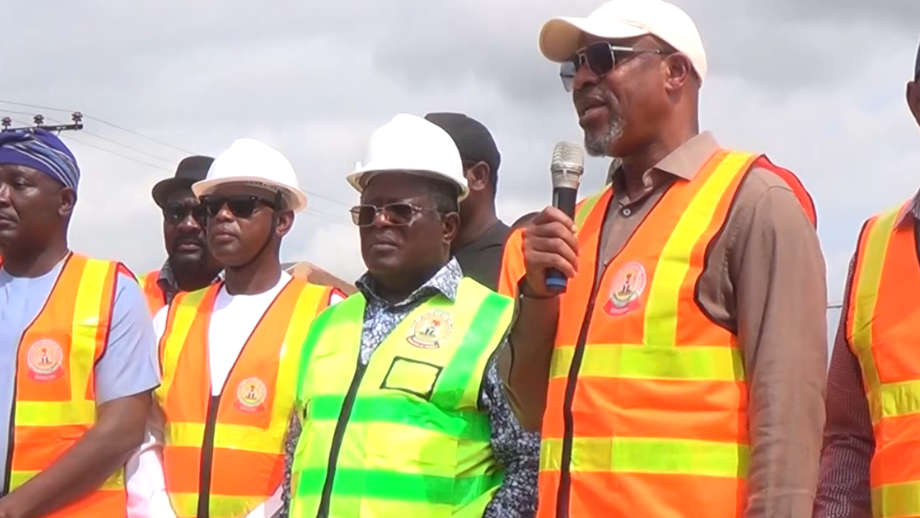
He said the Commissioner of Police and Area Commander for Operations were present and had been instructed to act.
He also called for the completion of all incomplete Lagos State evacuation channels feeding into the coastal highway's drainage network and appealed to residents to abandon waterfront development plans and avoid building across drainage channels without approval.
Responding on behalf of Lagos State, the Permanent Secretary in the Ministry of Environment's Office of Drainage Services, Mahmood Olakunle Adegbite, said the drainage infrastructure of Kuramo Beach was central to protecting low-lying areas.
"It is a very important drainage infrastructure that solves part of the problem within Victoria Island. If we allow Kuramo to be sand filled, half of Victoria Island will also be gone by now," he said.
Adegbite flagged the highway's slip road as an outstanding concern, saying the state had formally requested sectional dimensions for the road but had yet to receive a full response.
He distinguished between natural and human-driven causes of flooding, urging residents and communities not to worsen the problem through blocked drains and unauthorised construction on wetlands.
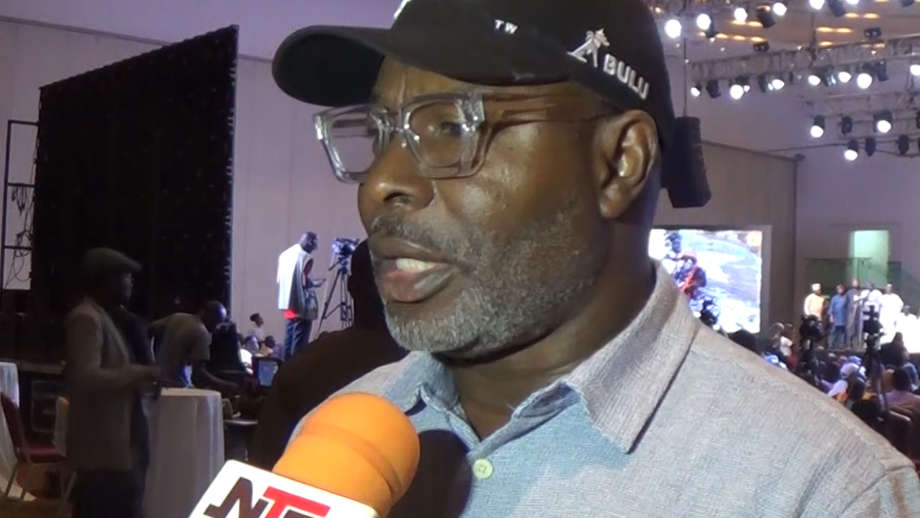
ESIA expert Dr Eugene Itua told the meeting the Lagos-Calabar Coastal Highway project did not bypass environmental assessment requirements, describing it as one of the most detailed Environmental and Social Impact Assessments carried out for a national infrastructure project in decades.
He said site clearing and geotechnical surveys were authorised only after the assessment process.
Itua said newly available Nigerian Meteorological Agency (NiMet) rainfall data supports concerns over rising rainfall intensity in Lagos and pointed to the submerged building at Alfa Beach as evidence the flooding is not an isolated incident.
He reiterated that under Lagos State's drainage design, water must flow into the lagoon rather than the ocean, and blamed the absence of ocean defences, clogged drains and tidal surge for the worsening flood risk.
A separate environmental consultant representing the Federal Ministry of Works told the meeting the Lagos section of the highway runs the full length of the Lekki shoreline, bordered by the lagoon system to the north and the Atlantic Ocean to the south, and argued that clogged channels — not the highway itself — are obstructing the natural gravity-fed flow of floodwater to lower ground.
A representative of the Federal Ministry of Environment, the Director of Environmental Assessment Rofikat Adebukunola Odetoro said the ministry plans a more coordinated assessment with other government agencies to establish the immediate and remote causes of the flooding.
The Oba of Ibeju Lekki on his part, called on authorities to urgently address ocean surge affecting the Ibeju Lekki corridor.

Comments
Add a comment