

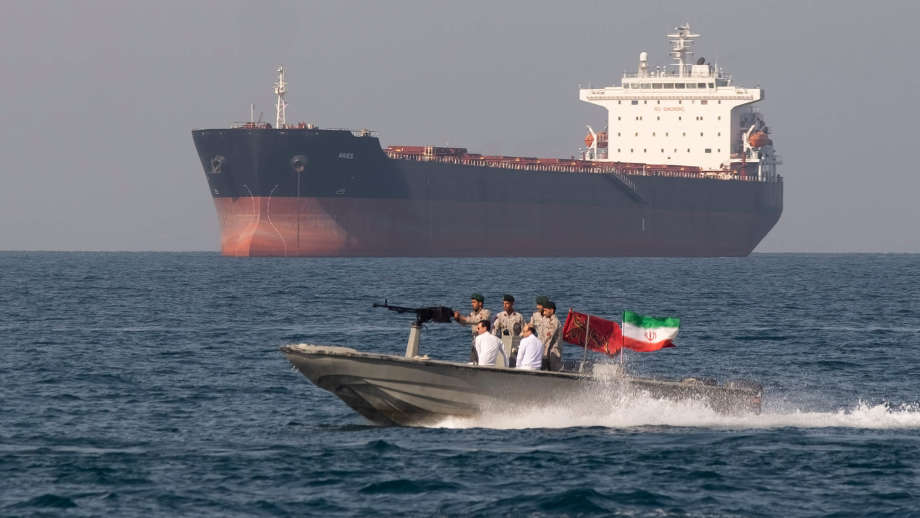
Global oil prices jumped after at least three ships were attacked near the Strait of Hormuz, a key transit route carrying around 20% of the world’s oil and gas, amid escalating strikes by Iran across the Middle East.
The UK Maritime Trade Operations Centre (UKMTO) reported that two vessels were struck, while an “unknown projectile” exploded near a third, though the crew remained safe.
Iran has warned ships to avoid the strait, causing nearly all shipping traffic to halt.
“Because of Iran’s threats, the strait is effectively closed,” said Homayoun Falakshahi of ship-tracking platform Kpler.
“Vessels have anchored in open waters, and insurance costs have skyrocketed.”
In early Asian trade on Monday, Brent crude rose over 4% to $76.16 a barrel, while US-traded oil hit $69.67.
Saul Kavonic, head of energy research at MST Research, told the BBC: “The market isn’t panicking.
Oil infrastructure hasn’t been a primary target. Prices will ease once traffic resumes.”
Some analysts warn that prolonged conflict could push prices above $100 per barrel.
Edmund King, president of the AA, said: “Disruption across the Middle East will inevitably lead to global fuel price hikes, depending on the duration of the conflict.”
The OPEC+ group, including Saudi Arabia and Russia, agreed Sunday to raise output by 206,000 barrels a day to mitigate price spikes, though experts remain skeptical.
Meanwhile, the Iranian Revolutionary Guards claimed three tankers from the US and UK were struck and were burning, while fresh US-Israel-Iran aerial attacks have hit Dubai, Doha, Bahrain, and Kuwait, heightening fears of a wider regional escalation.
Ships, including Maersk container vessels, are rerouting via the Cape of Good Hope as security risks persist, highlighting the fragile state of global oil logistics amid the crisis.
