

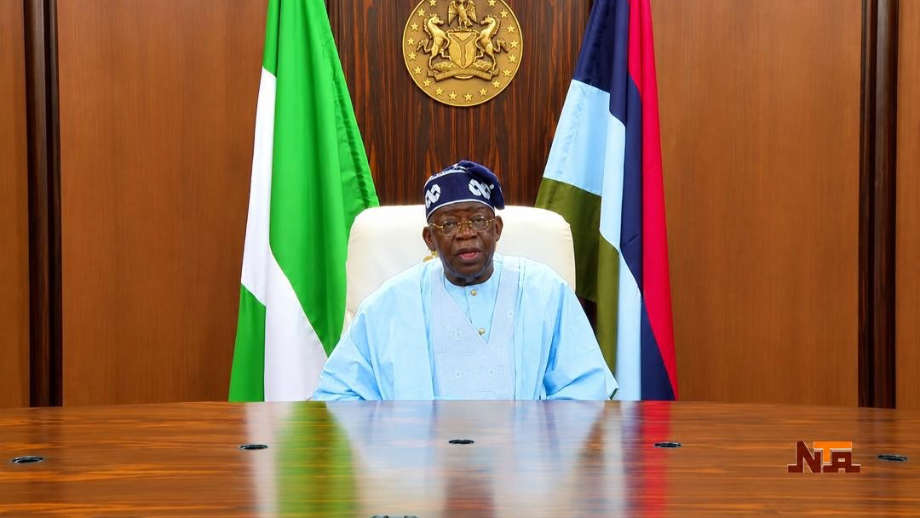
President Bola Ahmed Tinubu has called on Nigerians to look beyond the difficulties of the past three years and work toward what he described as a new “age of prosperity” as the country marks its 66th Independence Anniversary.
In his Independence Day address to the nation on Thursday, Tinubu said his administration’s economic reforms had been difficult and had brought real hardship, but argued that they were necessary to correct what he described as deep-rooted distortions in the Nigerian economy.
The president said Nigeria had for years postponed difficult economic decisions, allowing problems to worsen across successive administrations.
He compared the country’s situation before the reforms to a patient suffering from cancer, saying previous governments had treated the symptoms rather than addressing the underlying problems.
Tinubu said his administration chose a different path after taking office in 2023, acknowledging that the reforms had painful consequences but insisting that they were intended to correct the economy rather than create its weaknesses.
According to the president, Nigeria’s economic outlook has since improved, with the economy growing by more than four percent this year.
He also claimed that oil theft had declined, inflation had fallen substantially from its peak, foreign reserves had been rebuilt and the foreign exchange market had stabilised.
Tinubu said Nigeria recorded more than $6 billion in non-oil export revenue in 2025, describing it as the highest such revenue in the country’s history.
He said the country had now reached a turning point, with the government’s focus shifting from economic stabilisation and reform to what he called “shared and widespread prosperity.”
Speaking about cost of Living, Tinubu identified reducing the cost of living as a major priority for the next phase of his administration.
He said the government would focus on reducing the cost of producing and transporting goods by expanding mechanised irrigation and dry-season farming, improving access to seeds and fertiliser, increasing agricultural mechanisation and investing in storage and transportation.
The president also pointed to ongoing investment in roads, railways and ports, saying better infrastructure would help connect farms and factories to markets and reduce the cost of moving goods.
He said lower production and transportation costs should eventually translate into lower prices for consumers.
Moving on, Tinubu said jobs, enterprise and industrial growth would remain central to government policy, particularly as millions of young Nigerians enter the workforce each year.
He said the government would use Nigeria’s gas resources to power industries, support the revival of factories, expand digital connectivity and invest in skills needed by employers.
The president also said the government would provide businesses with infrastructure and financing needed to expand, while encouraging more Nigerian companies to produce locally and sell their goods internationally.
He said he wanted to see more Nigerian farms supplying cities and factories and more young Nigerians building technology companies and creating jobs.
The president acknowledged that millions of Nigerians continue to struggle with the cost of food, education, healthcare and transportation.
He said the difficulties faced by many families predated his administration and were the result of decades of low productivity, inadequate infrastructure, limited opportunities and weaknesses in public institutions.
The president said the government was strengthening direct support for poorer households and improving the National Social Register to ensure assistance reaches people who genuinely need it.
He also highlighted the Nigerian Education Loan Fund, saying it would help students from low-income families access higher education.
Tinubu said the Consumer Credit Corporation was also providing working Nigerians with access to credit for vehicles, solar systems, digital devices and other essential assets.
He said the Federal Government would continue working with state and local governments to strengthen primary healthcare, basic education and other essential public services.
The president also said salaries and pensions had been paid on time and in full since 2023, while the national pension programme had been reformed to better support retirees and vulnerable Nigerians.
Tinubu said the government’s social programmes were not intended to replace economic prosperity but to support Nigerians on the path toward it.
“Our objective is not to manage poverty more efficiently. We will defeat it,” he said.
He acknowledged that achieving that goal would take time and require sustained economic growth and the creation of millions of productive opportunities.
The president said the government was now working from what he described as a stronger economic foundation after taking difficult decisions to correct the country’s direction.
Tinubu urged Nigerians to remain committed to the country and look toward the future with renewed hope.
He said Nigeria had “corrected its course” and called on citizens to move forward rather than return to the problems that necessitated the reforms.
“The Promised Land before us is a Nigeria of abundance and opportunity,” Tinubu said, describing his vision of a country where prosperity is broadly shared and children can aspire beyond the circumstances of their birth.
“Our destination is in sight. Our foundations are strong. Our direction is clear. So let us go forward. No looking back.”
He ended the address by wishing Nigerians a happy Independence Day and invoking blessings on the country.

Comments
Add a comment