

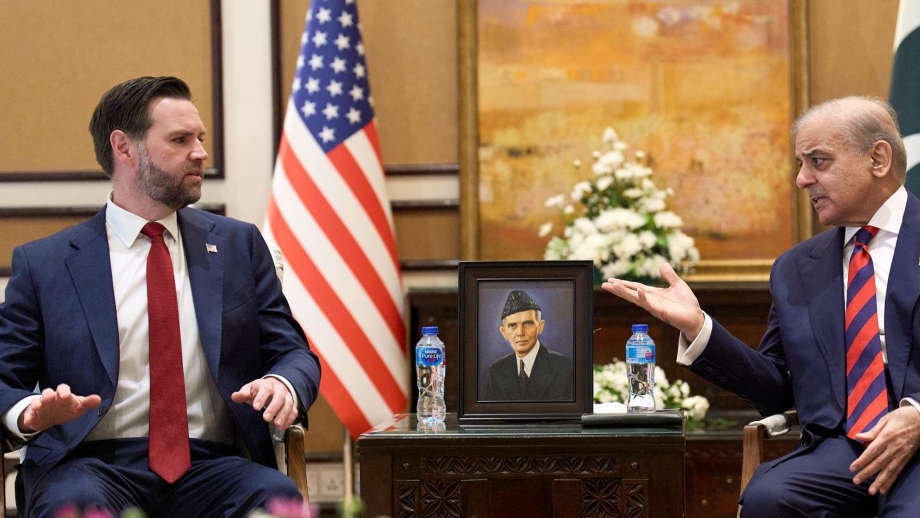
Iran and the United States have failed to reach an agreement to end the ongoing Middle East conflict, with US Vice President JD Vance confirming that negotiations in Islamabad ended without a breakthrough after marathon talks.
Speaking after over 20 hours of discussions in Pakistan’s capital, Vance said Washington had presented what he described as its “final and best offer” to Tehran but noted that the response fell short of expectations.
“We are seeking a fundamental commitment that Iran will not develop a nuclear weapon, but we haven’t seen that,” he said, adding that the US would give Iran more time to consider the proposal.
The high-level meeting—hosted by Pakistan and facilitated by Prime Minister Shehbaz Sharif—marked the most significant direct engagement between the two countries since the 1979 Islamic Revolution.
Iranian state media, however, blamed the deadlock on what it called “unreasonable demands” from Washington.
A spokesperson for Iran’s foreign ministry also downplayed expectations of a swift resolution, noting that it was unrealistic to expect a comprehensive deal after just one round of talks following weeks of war.
The conflict began on February 28 when the United States and Israel launched coordinated strikes on Iranian targets, prompting retaliation from Tehran and escalating tensions across the region.
The war has since disrupted global oil markets, particularly after Iran asserted control over the strategic Strait of Hormuz.
Iran has insisted that any agreement must include the lifting of sanctions, the unfreezing of its overseas assets, and an end to Israel’s military campaign against Hezbollah in Lebanon—conditions the US has largely rejected as outside the scope of the Islamabad talks.
US President Donald Trump, who has maintained a hardline stance, said during the negotiations that Washington had already achieved its military objectives.
“Whether we make a deal or not makes no difference to me. The reason is because we’ve won,” Trump said.
Meanwhile, Pakistan pledged to continue mediating between both sides. Foreign Minister Ishaq Dar urged all parties to respect the temporary ceasefire and remain committed to dialogue.
Tensions remain high over the Strait of Hormuz, a critical global oil route, with the US military claiming it has deployed naval assets to secure the waterway.
Iran, however, denied the presence of American warships and warned it would respond to any incursion.
Complicating matters further is the ongoing violence in Lebanon, where Israeli forces continue operations against Hezbollah despite the broader ceasefire framework.
Israeli Prime Minister Benjamin Netanyahu has ruled out a ceasefire with the group, signaling continued military pressure.
With deep mistrust on both sides and key disagreements unresolved, prospects for a near-term deal remain uncertain, even as diplomatic efforts continue.