
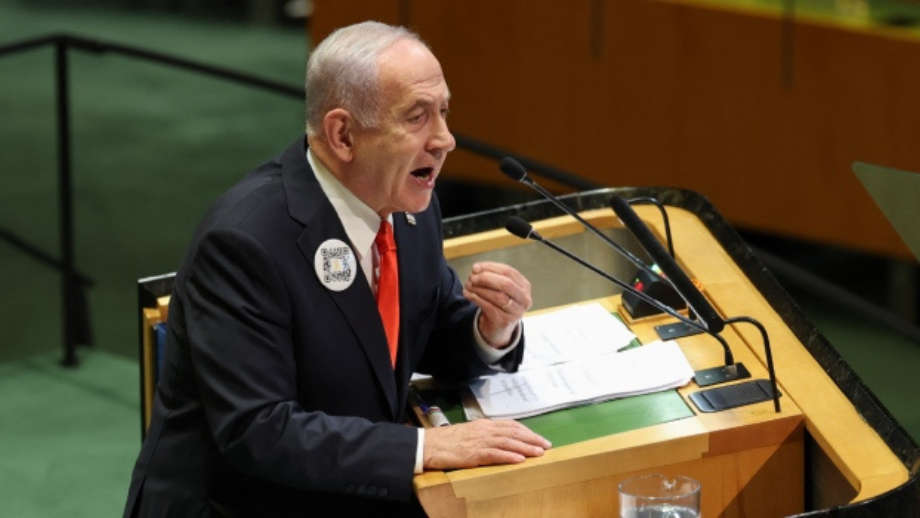
Exit polls from Israel’s general election suggest a political deadlock, with neither Prime Minister Benjamin Netanyahu’s governing bloc nor opposition leader Gadi Eisenkot’s alliance projected to secure a majority in the 120-seat parliament.
Two Israeli broadcasters initially projected that Eisenkot’s Yashar party and three other opposition parties in his Change Bloc would win between 52 and 53 seats, compared with 50 for Netanyahu’s coalition. However, updated exit polls later showed the two blocs tied at 51 seats, while a third broadcaster projected a narrow lead for Netanyahu’s allies.
The results leave the country’s two Arab political parties, projected to win a combined 18 or 19 seats, potentially holding the balance of power in negotiations to form the next government.
Voter turnout reached 77.7% by the close of polls at 10 p.m. local time on Tuesday, the highest recorded at that hour since 1999, according to the Central Elections Committee.
Official results were expected to begin emerging overnight, although about 600,000 absentee ballots, mostly cast by military personnel, were not expected to be fully counted until Thursday.
At the headquarters of Eisenkot’s Yashar party in Tel Aviv, supporters celebrated the initial projections, chanting for Netanyahu to leave office.
Eisenkot said his bloc had made history and pledged to translate voters’ decisions into what he described as a stable government for all Israeli citizens.
Former Prime Minister Yair Lapid, an ally of Eisenkot, described the projections as a major defeat for Netanyahu’s bloc.
However, Netanyahu maintained that his right-wing alliance had a strong chance of forming the next government. Speaking at Likud party headquarters in Jerusalem, he called for a strong right-wing national administration.
Foreign Minister Gideon Saar also cautioned opposition supporters against celebrating prematurely, while National Security Minister Itamar Ben-Gvir urged supporters of his far-right Jewish Power party to pray for a right-wing government.
The United Arab List and the Joint List, which represent Arab political interests, emerged as potentially decisive players in the coalition negotiations. Arab citizens make up about one-fifth of Israel’s population, and reports of strong turnout among Arab voters pointed to possible gains for the parties.
United Arab List leader Mansour Abbas said he hoped his party and the Change Bloc could secure the 61 seats needed for a parliamentary majority. His party previously participated in a coalition government led by Naftali Bennett and Lapid after the 2021 election, although that administration collapsed after about a year.
Joint List chairman Yousef Jabareen said his political grouping could not be ignored in any governing arrangement.
The election was the first since the Hamas-led attacks on Israel on Oct. 7, 2023, and the subsequent wars involving Gaza, Lebanon and Iran.
The campaign focused on security failures surrounding the attacks, the handling of regional conflicts, the distribution of military service obligations, judicial reforms and Israel’s international standing.
The outcome is expected to shape the country’s political direction, including whether it continues under a hard-line, religious-nationalist government or moves toward a different governing arrangement.
Once the final results are confirmed, Israel’s president will consult political parties before asking the leader considered most likely to form a government to build a governing coalition.
The process could take weeks, and another election may be required if coalition negotiations fail.

Comments
Add a comment