

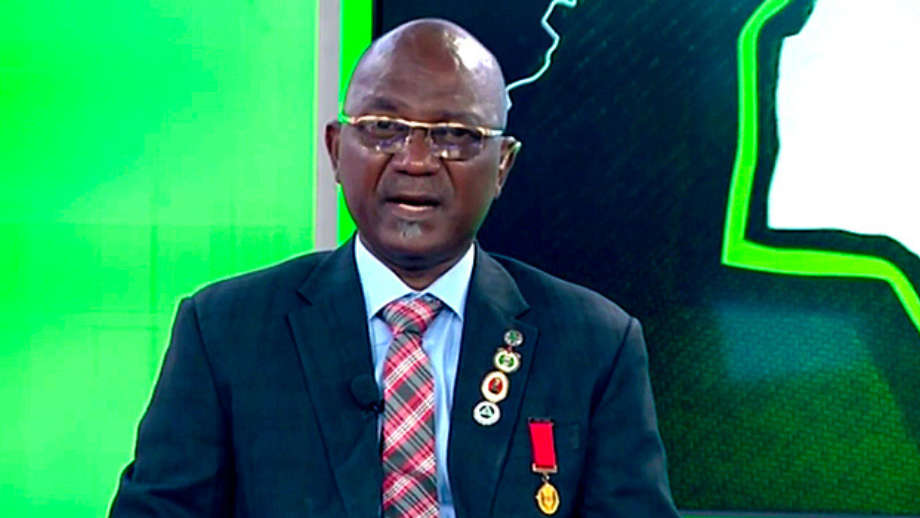
Retired Major General John Enenche, a former Director of Defence Information, has warned that Nigeria is still losing ground in its fight against terrorism and insecurity, despite ongoing military operations across the country.
Speaking during a discussion on national security and counterterrorism efforts, Enenche said the scale of killings, kidnappings and economic losses across the country shows that more decisive action is needed to confront armed groups.
"We have not won any war," Enenche said. "The earlier we begin to fight this menace head-on with all available resources, technology and intelligence, the better for Nigeria."
The retired general spoke against the backdrop of rising concerns over kidnappings and violent attacks in several parts of the country, including the recent abduction of relatives of former Minister of Power Adebayo Adelabu in Oyo State.
While commending the efforts of security agencies, Enenche said the security challenge appears to be overwhelming existing responses.
"I commend my colleagues in active service and all security agencies working tirelessly, but in all sincerity, it is not good enough. We must up our game," he said.
According to him, terrorism, banditry and other forms of violent crime have inflicted severe human and economic costs on Nigeria, affecting virtually every region of the country.
"The numbers tell the story. Tens of thousands have been killed, many more abducted, and entire communities have suffered economic devastation. Personal security is tied to every other form of security, and we are losing in many ramifications," he said.
Enenche argued that armed groups should be treated as enemies of the state rather than as misunderstood actors.
"They are not our friends. They are not our brothers. What kind of brother wants to kill you? We must tell ourselves the truth and treat them as enemies of Nigeria," he said.
The retired officer said he has continued to engage in security research and community-based surveillance initiatives since leaving military service.
He advocated the deployment of technology-driven monitoring systems across the country to improve intelligence gathering and early threat detection.
"We are experimenting with a blanket of surveillance in some communities, and it is helping us identify threats. I believe such solutions can be replicated nationwide," he said.
On the Federal Government's deradicalization and rehabilitation programme for repentant terrorists, commonly known as Operation Safe Corridor, Enenche questioned its effectiveness.
While acknowledging that rehabilitation programmes are recognized internationally, he argued that Nigeria should adopt measures tailored to its security realities.
"Rehabilitation is an international best practice, but where it is not working, we must domesticate our own solutions," he said.
Recalling his interactions with former insurgents, Enenche said some openly admitted they would return to armed groups if released.
"Some told me that even if they were imprisoned and later released, they would go back to join the terrorists. That raises serious concerns about the effectiveness of the programme," he said.
He called for tougher action against armed groups operating in forests and remote hideouts.
"If armed criminals are found in combat situations, security forces should confront them decisively. We must deny them safe havens and disrupt their operations before they strike innocent citizens," he said.
Enenche also stressed the need to identify and prosecute sponsors, collaborators and sympathizers who aid terrorist activities, describing them as critical enablers of insecurity.
His comments add to the growing debate over Nigeria's counterterrorism strategy as authorities continue efforts to curb insurgency, banditry and kidnapping across the country.

Comments
Add a comment