

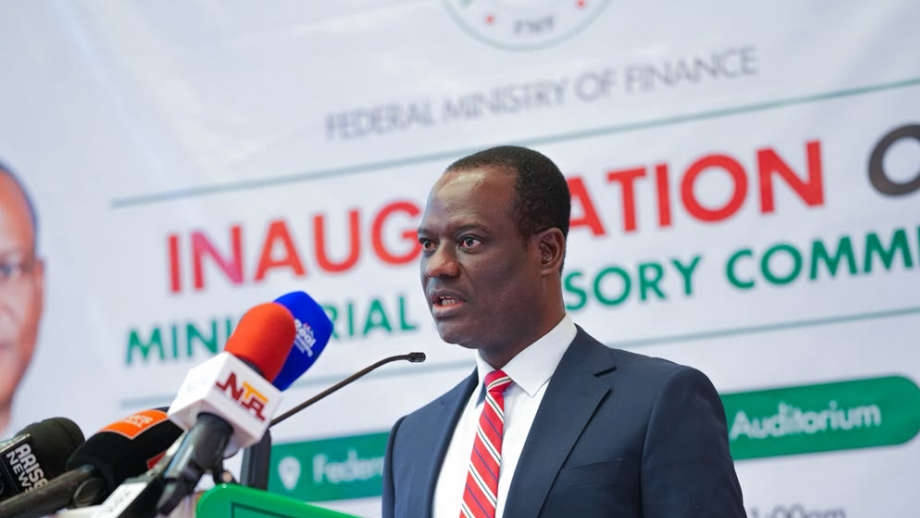
The Federal Government has ruled out restoring fuel subsidies and multiple exchange rates, reaffirming its commitment to economic reforms despite concerns from international investors and development partners.
Minister of Finance and Coordinating Minister of the Economy, Taiwo Oyedele, stated this at a briefing following Nigeria’s participation in the IMF and World Bank Group Annual Meetings in Bangkok, Thailand.
Oyedele explained that the 30-day retail margin discount on petrol announced by the Nigerian National Petroleum Company Limited was a temporary commercial decision to reduce margins and provide relief to Nigerians, not a subsidy funded with public money.
He said the government remained focused on turning economic stabilisation into faster growth, increased investment and decent jobs.
According to him, the economy grew by 4.4 per cent in the second quarter of 2026, while inflation declined for four consecutive months and foreign reserves rose above 35 billion dollars.
The minister also disclosed that Nigeria’s tax-to-GDP ratio increased to 12.5 per cent at the end of 2025, from about seven per cent three years earlier.
He added that private capital inflows had risen from about 300 million dollars in 2023 to nearly six billion dollars in 2026.
Oyedele said the government had identified 65 investment projects worth 78.5 billion dollars under the Project Nigeria initiative.
The projects cover energy, transport, industry, mining, agriculture, health and services, with opportunities for local and foreign private investors.
He noted that investors from Asia and Europe had already expressed interest in the projects, while international partners, including the World Bank, IMF and European Union, had indicated areas of support and cooperation.
However, he cautioned that the commitments should not be mistaken for immediate financial disbursements.
The minister also called for reforms to the global financial system, arguing that developing countries face higher borrowing costs than advanced economies.
He supported the establishment of an African credit-rating agency and urged international institutions to provide more affordable financing.
On employment, Oyedele warned that advances in artificial intelligence could drive economic growth without creating enough jobs.
He said projections suggested that about 1.2 billion young people would enter the global labour market over the next 15 years, while only about 400 million jobs would be created.
He said Nigeria would prioritise skills development and investment in labour-intensive sectors to expand employment opportunities, adding that the ultimate goal of the economic reforms was to translate stability into improved living standards for Nigerians.

Comments
Add a comment