

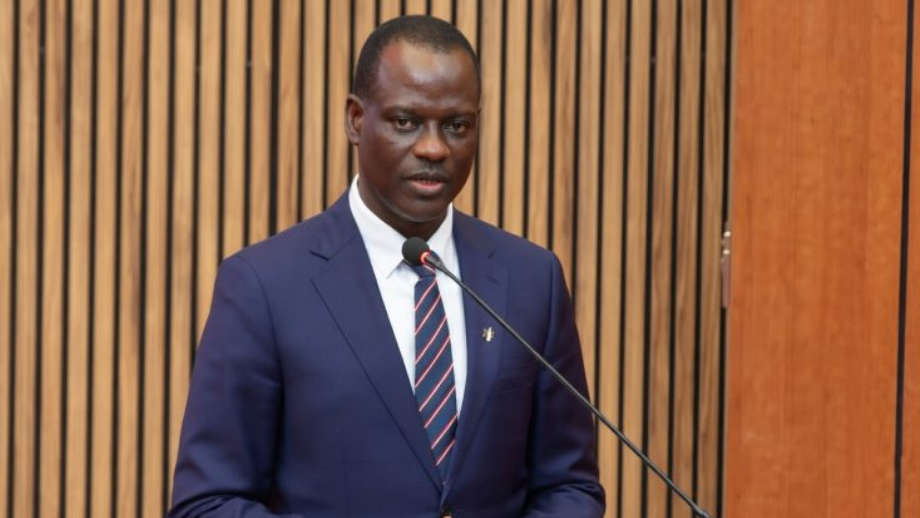
Finance Minister Taiwo Oyedele says the federal government's economic reforms have generated N20.4 trillion in incremental resources and helped prevent a deeper fiscal and economic crisis.
Oyedele made the claim Wednesday while presenting the government's reform scorecard in Abuja, following President Bola Tinubu's directive for the administration to account for the costs, benefits and consequences of its major economic reforms.
He said the presentation was not intended to declare victory but to provide Nigerians with an account of what the reforms had cost, delivered and prevented over the past three years.
The reforms include the removal of the petrol subsidy, which Oyedele described as a system that was “quietly bankrupting the country,” and the unification of the foreign exchange market, which he said had become a source of arbitrage, distortion and corruption.
“Those decisions came at a real cost, and we are not here to pretend otherwise,” Oyedele said.
“Prices rose. The naira adjusted sharply. Households and businesses felt it. And many still do.”
Oyedele said subsidy reforms generated N15.8 trillion in savings for the federation between June 2023 and December 2025.
He said the figure covered not only petrol subsidy savings but also savings from the previous system of subsidising foreign exchange.
According to Oyedele, the federal government's share of the N15.8 trillion was N5.4 trillion, while N10.4 trillion was shared among state and local governments.
He said the government also generated N3.1 trillion in incremental independent revenue during the period, principally through remittances from government-owned entities.
The federal government, he added, also relied on N11.9 trillion in additional borrowing between June 2023 and December 2025.
Oyedele said the borrowing would have been significantly higher and potentially economically destabilising without the fiscal space created by the reforms.
Altogether, he said, the federal government's incremental resources during the period amounted to N20.4 trillion.
Of that amount, 58% came from borrowing, 27% from subsidy savings and 15% from other revenue.
Oyedele said the federal government recorded N30.64 trillion in incremental expenditure during the same period.
He said N9.39 trillion went toward wage adjustments, minimum wage increases and allowances for public servants.
According to the minister, the additional amount spent on higher wages exceeded the entire subsidy savings that accrued to the federal government.
Another N9.37 trillion went toward external debt servicing, which Oyedele said became more expensive in naira terms because of the depreciation of the currency.
He explained that a $1 million foreign debt payment that previously cost about N460 million would require about N1.415 billion at the exchange rate used in his example.
“ When you have debt service to pay, you don't negotiate. You don't delay. You pay,” Oyedele said, warning that delays or defaults would have consequences.
He said N6.5 trillion was also spent on strategic infrastructure, making wage-related expenditure, external debt service and infrastructure the government's top three incremental expenditure lines.
Oyedele said the scorecard contains a detailed breakdown of the spending and that every naira had been accounted for.
He said the figures demonstrated that the reforms were not introduced primarily to raise revenue but to address entrenched corruption associated with the former fuel subsidy and multiple foreign exchange systems.
Oyedele said the scorecard also examined what could have happened if the reforms had not been implemented.
He said 27 states could not reliably pay salaries in May 2023, but that figure had fallen to zero.
Using the pre-reform trajectory, the government's estimate was that at least 30 states would have been struggling to pay salaries by 2026 without the reforms.
Oyedele said the premium between the official exchange rate and the parallel market had fallen from more than 60% to below 5%.
Without the reforms, he said the premium could have exceeded 150%, with foreign exchange largely unavailable to Nigerians and businesses at official rates.
He also said Nigeria's net external reserves were below $3 billion in May 2023 while the country owed more than $7 billion, a situation he described as “bankruptcy.”
Oyedele warned that continued foreign exchange shortages could have created severe fuel scarcity because Nigeria imports refined petroleum products.
He said the Dangote Refinery would also have faced difficulties starting operations under the old subsidy regime because the government would have been unable to sustain the subsidy payments required to sell petrol at about N200 per litre.
He said the legacy Ways and Means balance, which stood at about N30 trillion, had been curtailed instead of more than doubling under the pre-reform trajectory.
Oyedele said the scorecard also acknowledged the economic costs Nigerians had experienced since the reforms began.
He said the monetary policy rate had risen from 18.5% to 26.5%, which the government classified as part of the cost of stabilisation.
Petrol prices, he said, had risen from about N185 per litre to between N1,100 and N1,400 per litre.
Oyedele said the government would not conceal those costs but argued that the counterfactual analysis suggested petrol could have remained nominally cheap while becoming unavailable and traded at much higher prices on the black market.
On food and household welfare, he said the government considered the situation a work in progress rather than a completed success.
Food inflation had fallen from 24.82% to 17.52% as of June 2026, according to the figures he presented, with July data showing a further decline.
However, he said poverty and household welfare recovery remained “unfinished business” on the government's scorecard.
## Inflation, Reserves And Economic Growth Improve
Oyedele said headline inflation had fallen to 15.91% in June 2026 from a baseline of 22.41% in May 2023.
Gross foreign reserves, he said, had risen to $52.5 billion from about $35 billion.
Net reserves had also increased from roughly $3 billion to $34.8 billion, which he described as a more meaningful measure of Nigeria's financial buffer.
He said the Nigerian stock market's capitalisation had risen from about N31 trillion to roughly N150 trillion, creating hundreds of thousands of millionaires in the process.
Real GDP growth, according to the minister, had strengthened to 3.89% from a baseline of 2.31%.
He said the government's no-reform estimate suggested Nigeria could have been stagnant or in recession by 2026 if the previous policies had continued.
Oyedele also said S&P Global upgraded Nigeria's sovereign credit rating to B in May, describing it as the country's first upgrade in 14 years.
He said Nigeria exited the Financial Action Task Force's gray list in October 2025 and subsequently exited the European Union's list of jurisdictions with deficiencies in anti-money laundering and combating the financing of terrorism measures in January 2026.
According to him, the developments restored Nigeria's standing in the global financial system.
Oyedele said the reform scorecard contains 25 indicators grouped into five thematic areas: fiscal sustainability, external stability, investment climate, social impact, and growth and productivity.
The indicators compare Nigeria's position in May 2023, before the Tinubu administration took office, with the latest verified data available in mid-2026.
A third column estimates where the country would have been in 2026 if the reforms had not been implemented.
Oyedele said the “no reform” estimates were based on trends already visible before the reforms rather than arbitrary projections.
He said the scorecard also classifies performance as green for recorded progress and amber for areas still requiring work.
“There is no red,” he said.
The minister said the scorecard consists of four parts: an account of how resources were raised and spent; an assessment of 10 ways the reforms benefited average Nigerians and 10 harms they prevented; the 25-indicator scorecard; and an appendix containing the underlying figures.
He said the supporting data would be published on the Finance Ministry's website to allow journalists, editors and independent analysts to examine the government's calculations and methodology.

Comments
Add a comment