

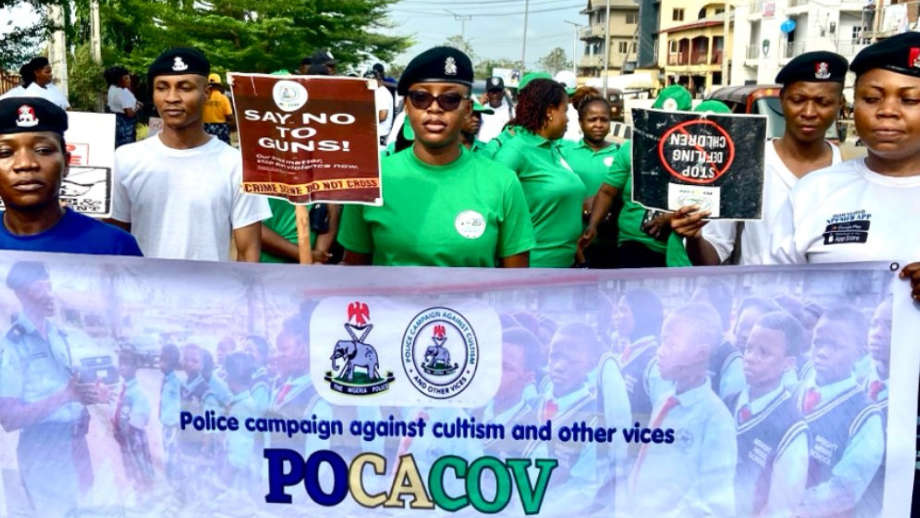
The Nigeria Police Force says it is stepping up preventive efforts to stop youth involvement in cultism and election-related violence ahead of upcoming polls.
The National Coordinator of the Police Campaign Against Cultism and Other Vices, SP Orvenonne Ikwen, disclosed this on Hard Facts, a current affairs programme on Nigeria Info 99.3 FM in Lagos.
Ikwen said the initiative, launched in 2015, focuses on crime prevention rather than enforcement, targeting young people before they are drawn into criminal activities.
“POCACOV is a preventive strategy of the police. We believe prevention is better than cure because many of these vices become irreversible,” she said.
With election activities intensifying, security agencies warn that youths are often recruited for violence, cult clashes and other crimes. Ikwen said early intervention is key to reducing such risks.
“We are campaigning against cultism, cybercrime and drug abuse. It’s better to avoid these vices completely than try to get out of them later,” she said.
The Lagos State Coordinator of POCACOV, SP Olivia Ugochukwu, said the campaign prioritizes schools and community engagement.
“We go to schools to sensitize students, create awareness and run mentorship programmes so they don’t get hooked,” she said.
Ugochukwu added that students increasingly cooperate with the police, providing information and seeking guidance.
“They now see the police differently—not just as enforcers, but as partners helping them make better choices,” she said.
Ikwen stressed that the police cannot tackle the problem alone, calling for stronger involvement from families and institutions.
“Security is everybody’s business. Parents, religious leaders, traditional rulers—everyone must be involved,” she said.
She added that POCACOV works with agencies including the National Drug Law Enforcement Agency, the Economic and Financial Crimes Commission, and government ministries to address drug abuse and cybercrime.
Officials warned that cultism and drug abuse are spreading to younger age groups, sometimes starting at primary school level.

Ugochukwu cited a recent case involving a 10-year-old boy exposed to cult practices through social media content.
“We discovered he learned it online. This shows how early exposure is happening and why awareness is critical,” she said.
She added that drug abuse often leads to long-term health and psychological damage.
“Sometimes the effects are irreversible. That’s why we keep telling young people—don’t start at all,” she said.
The campaign also uses reformed individuals to reach at-risk youths. According to Ikwen, former cult members and recovering drug users now serve as “ambassadors of change.”
“They share their experiences, and that message resonates more with young people,” she said.
She cited a case of a young woman rescued from drug abuse who is now undergoing rehabilitation and participating in outreach efforts.
Police say sustained community engagement, early education and multi-agency collaboration are critical to curbing cultism and preventing youths from being drawn into election violence.
“Our goal is a safer Nigeria,” Ikwen said. “And that responsibility belongs to all of us.”

Comments
Add a comment