
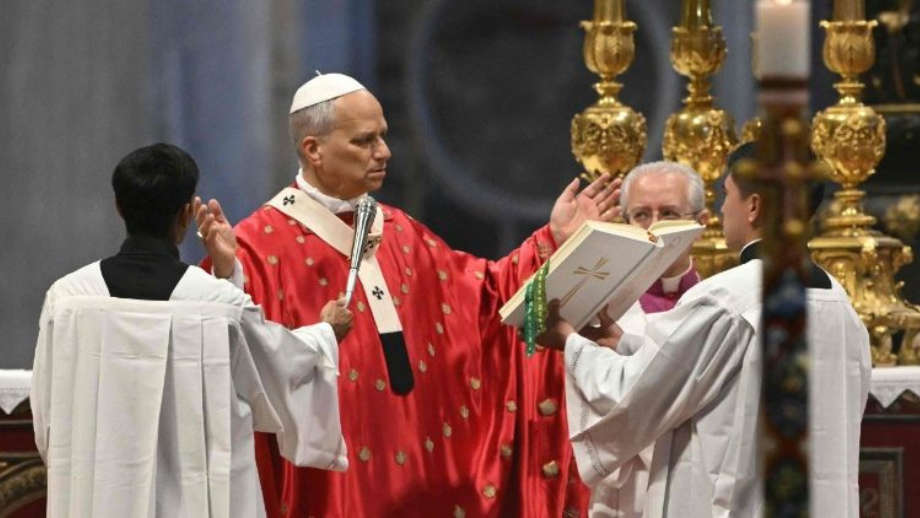
Pope Leo XIV celebrated Pentecost Sunday with a Mass at St. Peter's Basilica, calling on the Holy Spirit to save humanity from "the evil of war" and urging the faithful to see themselves as active bearers of the Gospel not passive guardians of it.
In a homily built around three dimensions of the Spirit peace, mission, and truth the Pope described Pentecost as "a Paschal feast" and "a feast of the Body of Christ, which by grace is all of us," marking the close of the Easter Season with a renewed call to witness in a fractured world.
Drawing on John 20:19–22 in which the risen Christ appears to frighten disciples behind locked doors, speaks peace, and breathes the Spirit upon them Pope Leo reflected on the Holy Spirit's power to overcome fear and division.
"The Lord pours out His Spirit of peace from one end of history to the other," he said, "for he who has redeemed everyone from death excludes no one."
The Spirit of peace, he stressed, is rooted in forgiveness and leads back to forgiveness restoring, through Christ's Paschal Mystery, the broken relationship between God and humanity.
Turning to the Spirit's missionary dimension, Pope Leo challenged believers to move beyond custodianship of the faith toward active proclamation of it.
"Through the power of the Spirit, our proclamation is filled with joy and hope, for we, yes, we ourselves are the newness of the world, the light and the salt of the earth," he said.
He grounded this identity not in human merit but in grace the work of "the Lord, who sanctifies the sinner, heals the leper and transforms the one who denied Him into an Apostle."
"The whole Church is its protagonist, not merely its guardian," he said, adding that all believers are "co-workers of the Gospel," called to bear witness "in every good deed, every act of mercy, and every virtue."
On truth, the Pope warned against forces that obscure the Gospel naming "partisanship, hypocrisy, and fads" as obstacles the Spirit protects believers from.
He acknowledged that not all change brings renewal. "There are changes that do not bring new life to the world, but make it grow old through error and violence," he said. "Nevertheless, the Holy Spirit enlightens minds and instills new vitality in our hearts," transfiguring history and opening it to salvation.
The Church's mission, he said, bears witness to this gift “transforming the world's confusion into communion with God and among ourselves."
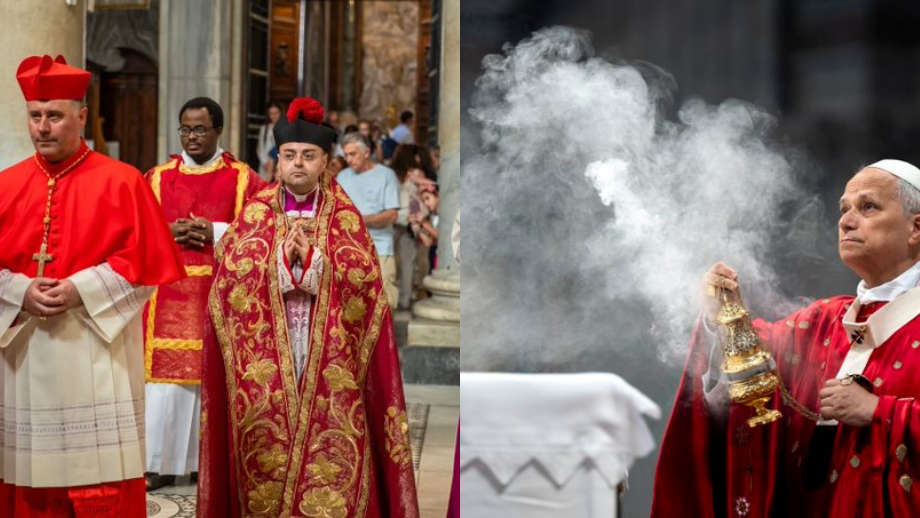
Pope Leo rejected any notion that the Spirit was given once and for all. "Just as the Eucharist is the living presence of Christ, who nourishes us unceasingly, so too does the Holy Spirit imprint his character upon us in Baptism," he said.
He extended this to every sacrament, describing the Spirit as "the dator munerum — the source of holiness who multiplies gifts and charisms through prayer, works of mercy and the study of the Word of God."
Citing St. Paul "To each is given the manifestation of the Spirit for the common good" — the Pope said this is what makes the Church "the one Body that lives in God and serves the world."
The Pope closed with an urgent prayer, asking the Holy Spirit to "save us from the evil of war, which is overcome not by a superpower, but by the omnipotence of love," to "free humanity from misery," and to "heal us from the scourge of sin." He concluded by invoking the intercession of the Blessed Virgin Mary for the courage the Apostles received at the first Pentecost.
The Anglican Communion also marked Pentecost as a celebration of the Holy Spirit and the birth of the Church's mission, pointing to the same Gospel passage in which Christ transforms a room locked by fear into the launching point of a worldwide mission.
Both traditions carried the same message: where there are fear and division, the Spirit opens doors and sends believers out with purpose.

Comments
Add a comment