

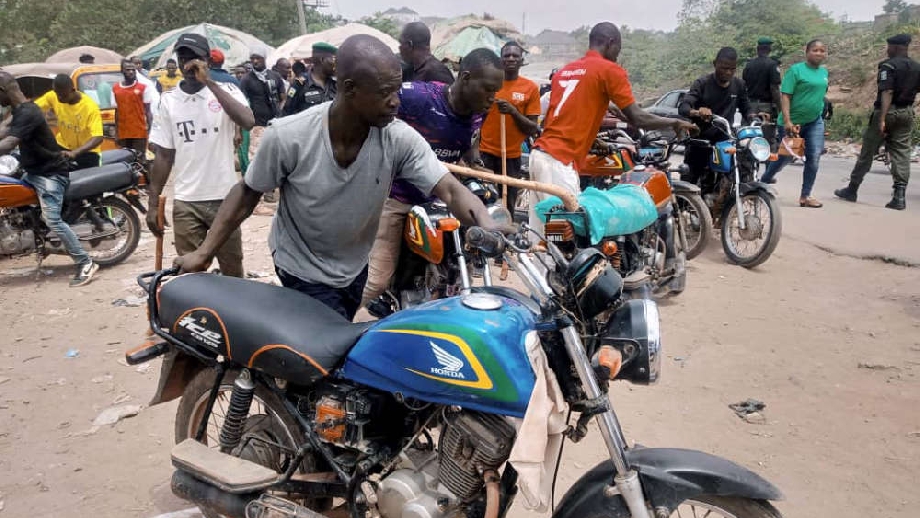
The Rule of Law and Accountability Advocacy Centre has called on the Lagos State House of Assembly to convene a public hearing on the state’s regulation of commercial motorcycles, popularly known as Okada, and the enforcement of existing restrictions.
RULAAC said the hearing was necessary amid persistent controversies, allegations of abuse, violent confrontations and conflicting accounts involving enforcement agencies, motorcycle operators and communities.
The group said the recent controversy over a Lagos State Taskforce operation at Agric Farm Estate in Ojo highlights the need for an independent and transparent review of the law and its enforcement.
The Taskforce has denied allegations that its officers unlawfully entered a private compound during the Aug. 25 operation, saying the exercise followed petitions from four Community Development Associations over Okada operations in the area.
RULAAC said it would not prejudge the competing accounts but argued that the controversy raised broader questions about the scope of enforcement powers and the treatment of motorcycle operators.
The group said its field research documented allegations of indiscriminate seizure of motorcycles, enforcement in areas not covered by restrictions, extortion to recover impounded motorcycles, dangerous pursuits, injuries and the involvement of civilians in enforcement operations.
At the same time, RULAAC acknowledged concerns raised by communities and security agencies over reckless riding, road obstruction, accidents and the alleged use of motorcycles in criminal activities.
The organisation said these competing concerns showed that the issue should not be treated simply as a dispute between enforcement agencies and Okada riders.
RULAAC urged the Assembly to invite the Lagos State Government, Ministry of Transportation, Lagos State Taskforce, LASTMA, police, motorcycle operators, transport unions, community groups, commuters, civil society organisations, human rights groups and other stakeholders to the hearing.
It said the hearing should examine whether the existing restrictions are clear, proportionate and consistently enforced, including the geographical limits of enforcement powers.
The group also wants the Assembly to review procedures for arrests, motorcycle seizures and forfeiture, allegations of extortion, the use of force and accountability for abuses by enforcement personnel.
RULAAC called for greater transparency around enforcement operations, including data on motorcycles seized, arrests and prosecutions, forfeitures, complaints against officers and casualties resulting from enforcement activities.
The organisation also urged lawmakers to examine the socioeconomic impact of the restrictions, particularly in communities where motorcycles remain an important means of transportation and a source of livelihood.
It proposed consideration of alternative regulatory measures, including rider registration and identification, designated operating areas, safety standards, licensing, training and stronger cooperation between communities, operators and enforcement agencies.
RULAAC stressed that legitimate enforcement concerns should not justify attacks on security personnel, while allegations of misconduct by enforcement officers should also be investigated and sanctioned.
The group said Lagos residents should be able to determine from available data whether the restrictions have reduced motorcycle-related accidents and crime and whether the current enforcement model is achieving its intended objectives.
“Public policy should be evaluated on evidence, not assumptions,” RULAAC said.
The organisation also urged the Assembly to clarify whether Lagos operates a total ban on commercial motorcycles or restrictions limited to specified highways, bridges and other areas.
It said if the restrictions apply only to designated areas, enforcement agencies must operate within those legal limits, while any change in policy should be openly debated and backed by clear legislation.
RULAAC Executive Director Okechukwu Nwanguma said a public hearing would not undermine legitimate road safety and security objectives but would provide an opportunity to develop a clearer, safer and more accountable regulatory system.
The group urged the Assembly to use its legislative and oversight powers to review the Okada regulatory framework and ensure that enforcement remains lawful, fair and transparent.

Comments
Add a comment