

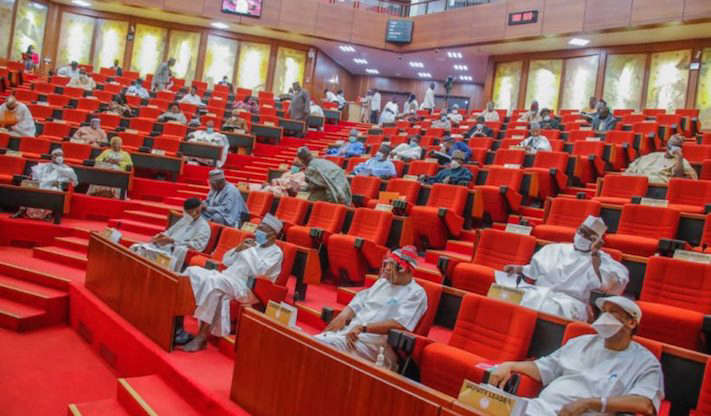
The Nigerian Senate has directed federal regulatory and health agencies to immediately launch a nationwide crackdown on the sources of lead contamination, following reports that the threat of lead poisoning has become a significant public health concern in Ogun and Lagos States.
The resolution, passed during a recent plenary session, mandates federal ministries and agencies to collaborate with state governments to identify and remediate sources of toxic lead exposure, particularly those affecting vulnerable populations like young children. The order follows a ministerial declaration that identified lead poisoning as a public health emergency in Nigeria.
While states like Zamfara and Niger have previously seen massive, deadly lead poisoning outbreaks primarily tied to illegal gold mining activities, the Lagos threat is believed to stem from its dense population, high levels of industrialization, and environmental dynamics.
Experts and recent surveys indicate that key sources of lead exposure in Lagos include:
Lead in Paint: The widespread use of old or illegally imported paints that contain high levels of lead pigments.
Automobile Emissions: Though leaded gasoline has been phased out, the accumulation of lead dust from decades of use and the poor maintenance of old vehicles still pose risks.
Contaminated Soil and Dust: Lead dust from industrial waste, refuse burning, and vehicle exhausts settling in residential soil.
The Senate called on the Federal Ministry of Health and Social Welfare, the Federal Ministry of Environment, and regulatory bodies like the National Agency for Food and Drug Administration and Control (NAFDAC) and the Standards Organisation of Nigeria (SON) to ensure strict enforcement of existing laws on lead content in paints and consumer goods.
The move by the Senate is expected to boost the efforts of a multi-sectoral Inter-Agency Working Group (IAWG) on Lead Poisoning Elimination in Nigeria, which recently commenced preparatory engagements in Lagos.
The national goal Is to eliminate lead poisoning in Nigeria by 2030.
According to public health officials, the focus on Lagos is critical due to its complexity and to create a replicable model for a national response. Lead exposure in children can cause irreversible damage to the developing brain and nervous system, leading to long-term neurocognitive defects and developmental delays.
The Senate’s directive emphasizes the need for a comprehensive, multi-sectoral approach involving health worker mobilization, community awareness campaigns, and the deployment of non-invasive tools, such as the X-Ray Fluorescence (XRF) scanner, to measure lead concentration in the environment.