
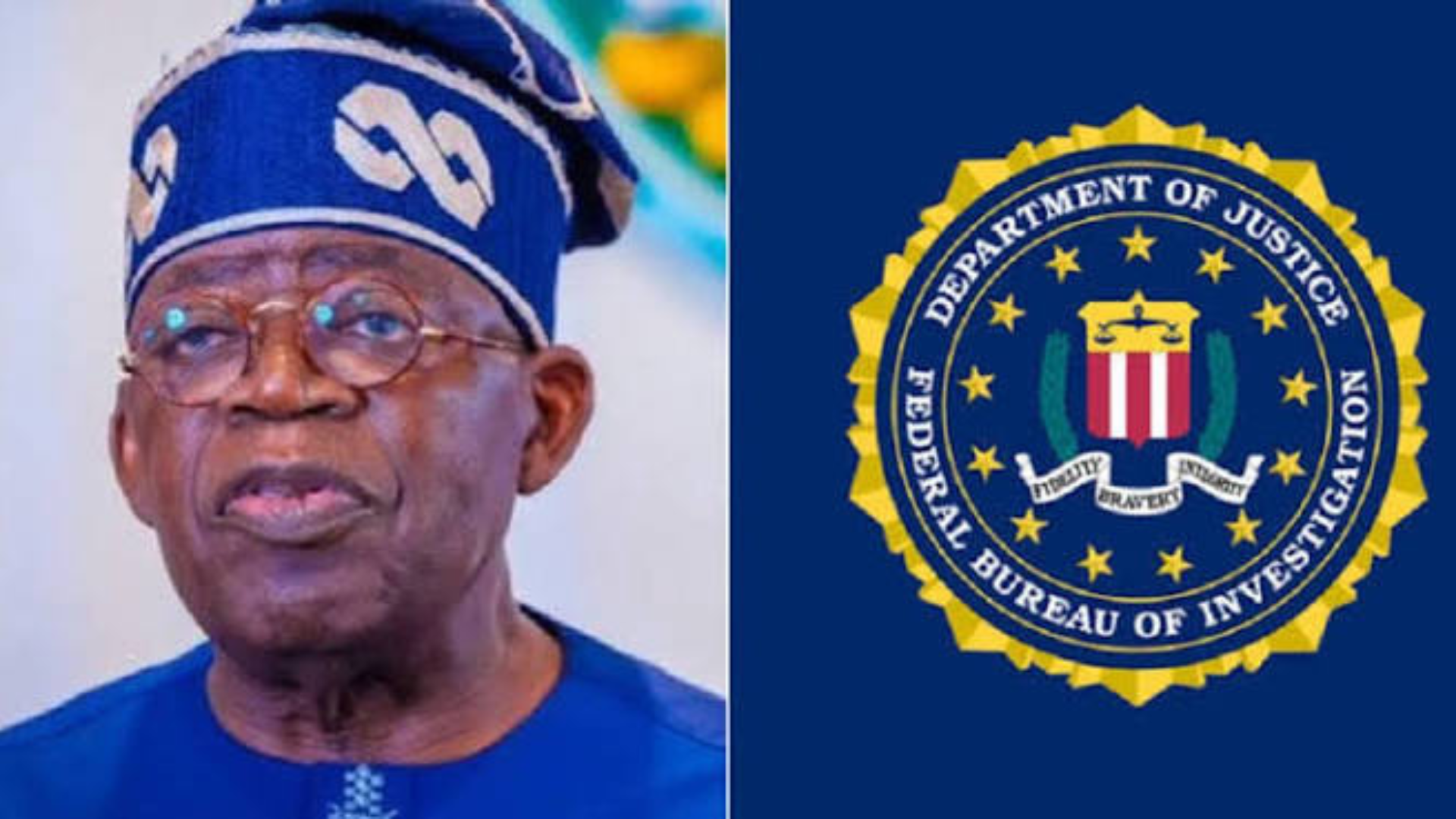
A United States federal court has rejected an attempt by plaintiff Aaron Greenspan to obtain evidence from President Bola Tinubu and political consulting firm DCI Group over alleged cyberattacks on his website, while directing federal agencies to provide further explanations for withholding records sought under the Freedom of Information Act.
In an October 30, 2026, memorandum opinion, Judge Beryl A. Howell of the U.S. District Court for the District of Columbia ruled that the proposed discovery was unrelated to the central issues in Greenspan's lawsuit, which concerns requests for historical investigative records from the Federal Bureau of Investigation and the Drug Enforcement Administration.
Greenspan had sought permission to serve six interrogatories, four requests for admission and one document-production request on Tinubu, alongside a subpoena to DCI Group, in an attempt to establish the source of distributed denial-of-service attacks against his website.
However, the judge held that investigating the cyberattacks would not assist the court in determining whether the FBI and DEA had adequately searched for records or properly justified withholding information.
The court stated that determining the source of the attacks "cannot aid in resolving the adequacy of the FBI and DEA's searches and withholdings" and consequently rejected the discovery application.
The judge also denied Greenspan's request for judicial notice, which was filed in support of the discovery application, and dismissed a separate request by nonparty Karl Von Batten to submit an amicus curiae brief.
However, the ruling did not bring the underlying FOIA lawsuit to an end.
In addressing the substantive claims, Judge Howell denied Greenspan's motion for summary judgment but granted the government's cross-motion only in part.
The court found that the FBI had conducted an adequate search for responsive records and was entitled to withhold information under FOIA Exemption 5.
However, it declined to grant the agencies a complete victory, finding that further explanations were required to justify several other categories of withheld records.
In particular, the judge directed the FBI and DEA to submit additional declarations addressing their reliance on privacy, confidential-source and law-enforcement exemptions, as well as explaining why information already disclosed in public court records could not be separated and released.
The court noted that the historical investigation at the centre of the records request dates back to the early 1990s and that some information concerning Tinubu and other individuals had previously appeared in public court filings.
The judge therefore required the agencies to provide more specific explanations of the potential harm that could result from releasing the remaining information and demonstrate that non-exempt portions of the records could not reasonably be disclosed.
The court also directed the agencies to prepare supplemental declarations promptly, alongside a proposed timetable for expedited further proceedings.
The lawsuit, filed by Greenspan in June 2023, seeks access to historical U.S. law enforcement records relating to a federal investigation into an alleged Chicago-based money-laundering and heroin-trafficking operation in the early 1990s.
Tinubu, who was named in some of the records requests, was allowed to intervene in the proceedings to protect his privacy interests.
The court's earlier decision in April 2025 rejected the FBI and DEA's attempts to neither confirm nor deny the existence of responsive records, citing previous public disclosures in court documents.
The agencies were subsequently directed to search for and process the requested records.
Reacting to the October 30 decision, attorney Christopher W. Carmichael said the ruling reinforced the importance of keeping the proceedings within the proper legal scope, stressing that the FOIA litigation could not be used to pursue unrelated matters.
Attorney Oluwole Afolabi also noted that although the discovery application and other procedural requests had been rejected, the underlying FOIA claims remained before the court.
The latest ruling therefore establishes limits on the evidence and issues that can be considered in the proceedings, while leaving unresolved the dispute over the extent to which the FBI and DEA must disclose the requested historical records.

Comments
Add a comment