

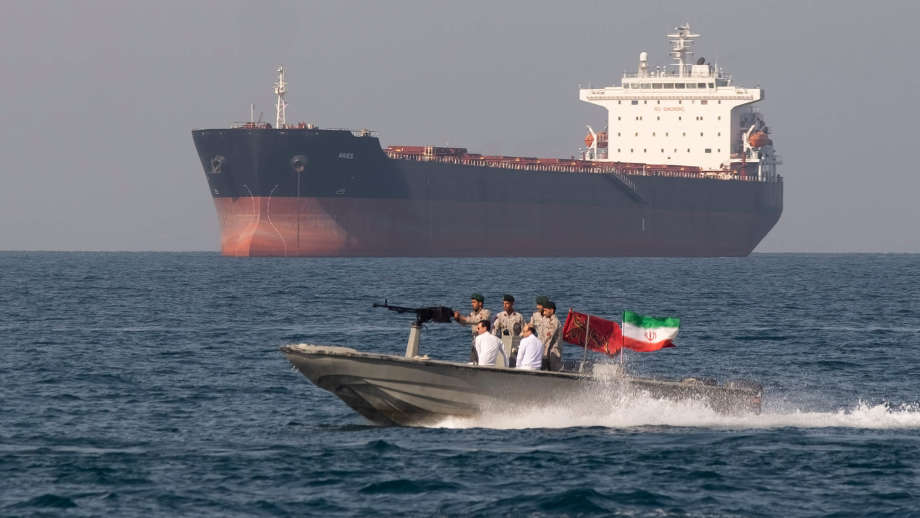
The United States and Iran exchanged fresh attacks on Thursday as fighting over the strategic Strait of Hormuz entered its sixth day, raising concerns about global energy supplies and regional security.
The U.S. Central Command (CENTCOM) said American forces struck Iranian military targets, including sites in the coastal city of Bandar Abbas and on Greater Tunb Island, to degrade Iran's ability to threaten commercial shipping in the Strait of Hormuz.
Iranian state media reported explosions in several parts of the country, including Lorestan, Semnan and areas around Tehran, where air defence systems were activated.
Iran responded by launching drone attacks targeting U.S. military facilities in Jordan, according to state television. Kuwait said it intercepted Iranian drones, while Bahrain activated air raid sirens as Gulf allies reported attacks.
The latest escalation centres on the Strait of Hormuz, a critical route for global oil and gas shipments. Iran had reimposed a blockade of the waterway after renewed hostilities, prompting the United States to restore its own naval blockade of Iranian ports.
The U.S. military also said one of its aircraft disabled an empty oil tanker attempting to breach the blockade.
Despite the continued fighting, diplomatic contacts have not formally collapsed. President Donald Trump warned that the U.S. would target Iran's power plants and bridges next week unless Tehran returned to negotiations.
Iranian negotiator Mohammad Bagher Ghalibaf said Tehran would have no reason to honour the existing memorandum of understanding if it no longer benefited from the agreement.
Maritime data showed shipping traffic through the Strait of Hormuz remained well below normal levels, while oil prices rose following the latest exchanges.
Iran said at least 30 people have been killed in renewed U.S. strikes since last week, while the military reported nine personnel were killed in Wednesday's attacks. State media also said a hospital in Ahvaz was evacuated after nearby airstrikes.

Comments
Add a comment