As UNESCO spotlights “Radio and Artificial Intelligence” for World Radio Day, this piece reflects on the evolution of radio in Nigeria and its enduring national impact. Through the perspectives of a broadcast veteran, Jones Usen and CWIA head of newsroom, Ufuoma Egbamuno, it examines radio’s legacy, professional responsibility, digital pressures, and the role of AI as a tool to enhance human judgment in broadcasting.
The Birth of Radio
Until the invention of radio, it was not possible to transmit information to thousands of receivers at the same time.
Several inventors and scientists contributed to the wireless transmission of information from the mid-19th century to the 20th century in Europe, with the early 20th century seeing the regulation of broadcasting.
The first radio stations emerged from experimental labs, evolving from wireless telegraphy to mass broadcasting.
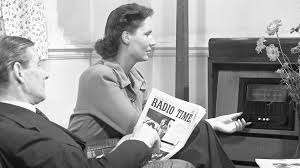
Key pioneers include Charles Herrold’s FN in 1909 (San Jose), KDKA in 1920 (Pittsburgh) for commercial broadcasts, WWJ in Detroit for daily news, PCGG in The Hague as Europe’s first entertainment station, XWA in Montreal for Canada’s scheduled programming, and the BBC in London (1922) as the world’s oldest national broadcaster.
These early stations laid the groundwork for radio’s “Golden Age” (1920s–1940s), when it became the primary source of global news and entertainment before television.
Today, the world has embraced the internet and other information technologies, but radio remains relevant as a medium of information dissemination.
Radio in Nigeria
The Nigerian radio experience began in 1933, not with digital algorithms, but through a colonial relay service known as the Radio Diffusion System (RDS). Listeners gathered around wired loudspeakers in public centers to hear the BBC overseas service.
This is according to history notes by the Federal Radio Corporation of Nigeria.
From that modest wired loudspeaker system, radio in Nigeria began to evolve.
By April 1951, the Radio Diffusion System had transformed into the Nigeria Broadcasting Service (NBS). The first Director-General was Mr. T.W. Chalmers, a Briton and Controller of the BBC Light Entertainment Programme. This marked a shift from a relay service to a more structured broadcasting system within Nigeria.
In April 1957, through an Act of Parliament No. 39 of 1956, the Nigerian Broadcasting Corporation (NBC) was established. Mr. J.A.C. Knott OBE became its Director-General. This era signaled stronger institutional backing and the expansion of broadcasting services across the country.
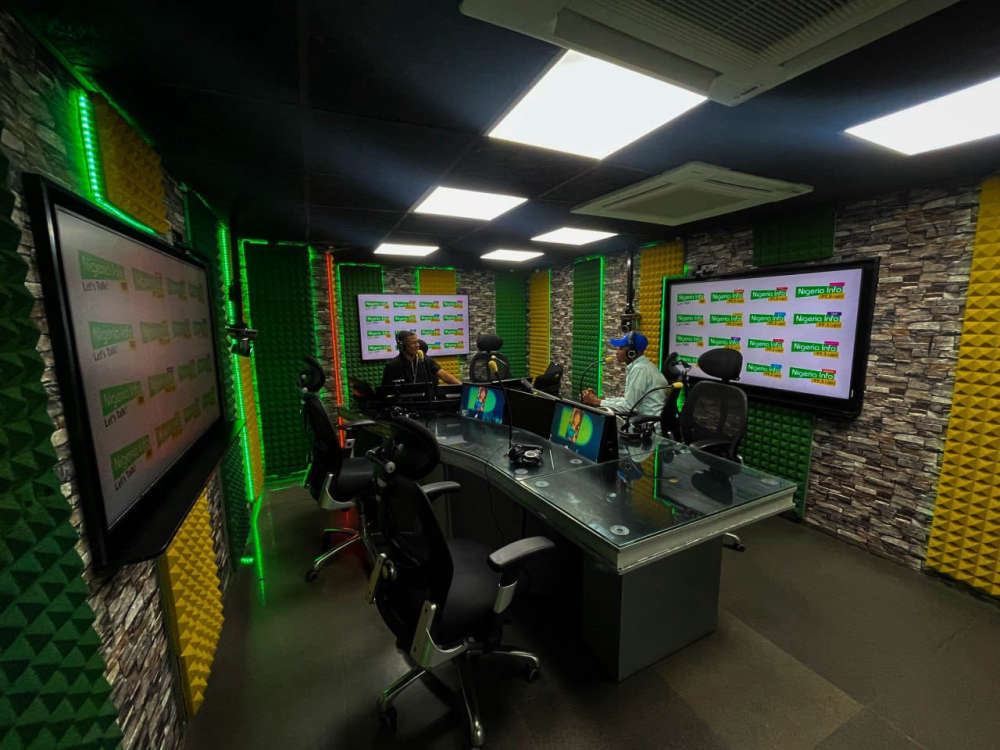
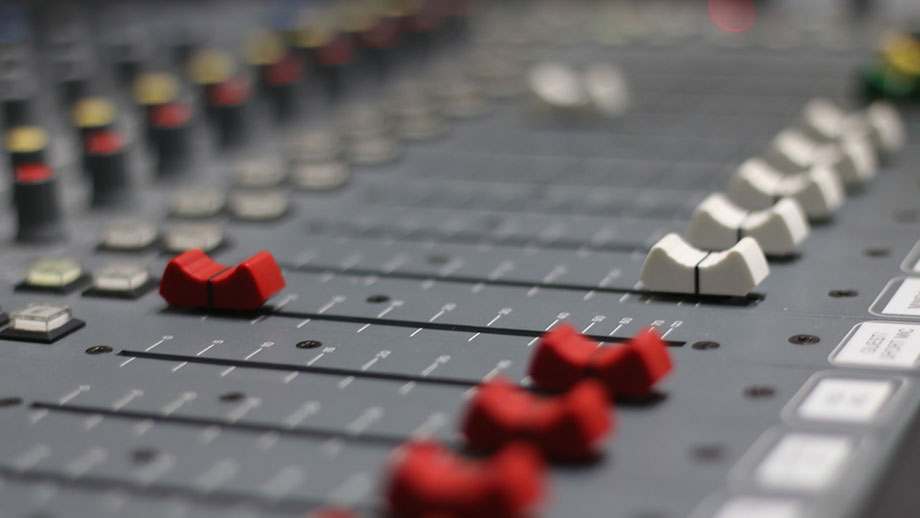
99.3 Nigeria Info FM studio in Lagos
Speaking to Nigeria Info FM, Veteran journalist Jones Usen reflected on 52 years behind the microphone.
When he got into radio in 1974, the airwaves were quieter, and competition was minimal.
“There were not too many FM stations,” he recalled. “Competition was not this keen.”
For Usen and his colleagues, radio was a deliberately chosen lifetime career.
“We elected radio as a lifetime career. And we were properly trained.”
He was among a class of about 11 trainees at the Nigerian Broadcasting Corporation, then known as Radio Nigeria.
“We were trained in the business,” he says. “Many are called, few are chosen.”
Old Frequencies
FM broadcasting officially launched in Nigeria on April 20, 1977, with only a handful of FM stations – OGBC 2, OYO 2 and Radio Rivers 2 – in operation.
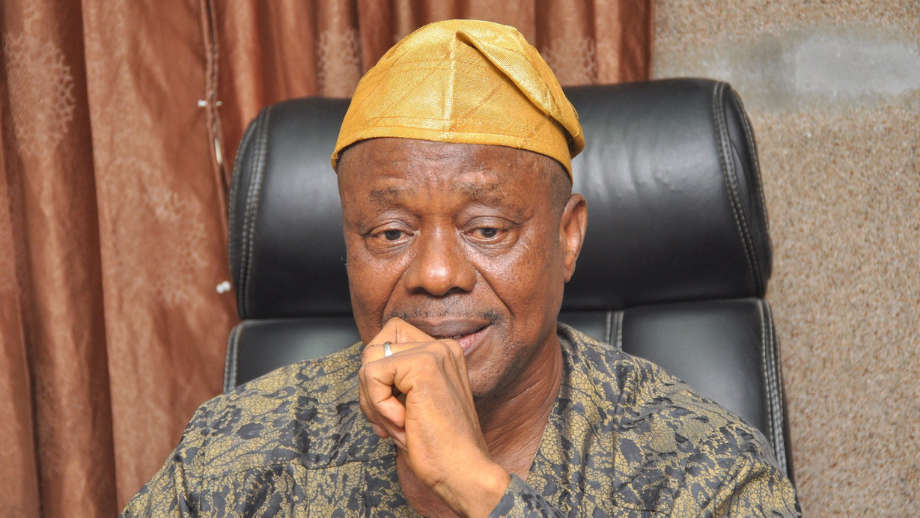
Jones Usen, veteran broadcaster & broadcast trainer
“You cannot separate Nigerian history from the history of radio broadcasting,” said Jones Usen.
Across his 52-year career, Usen has witnessed coups, political upheavals, and national turning points, all announced first on the radio.
He recalls the 1975 coup that led to the death of Murtala Mohammed, and the December 31, 1983, military takeover that brought Muhammadu Buhari to power.
In those earlier decades, a single network, Radio Nigeria, could be seized to announce a coup. Today, with dozens of stations in Lagos alone, such a feat would be far more complicated.
“Radio has the power of immediacy,” he explained, “while print has the power of permanence.” To reach one million readers through newspapers, one million copies must be printed. Through the radio, one voice can reach millions at once. However, that immediacy carries a heavy responsibility.
“If you allow people to say anything on the air, you will set the country ablaze,” Usen warned, referencing the 1994 Rwandan genocide, where inflammatory broadcasts helped incite violence.
Wisdom from the Mic
As Nigeria’s population has grown "in leaps and bounds," so has interest in broadcasting. However, Usen expressed concern over a shifting professional identity.
“These days, they are called on-air personalities,” he said. “But that is no title.” He insists that for any serious practitioner, the correct identity is broadcaster or journalist.
For him, the craft is built on authority, training, and responsibility rather than just the "gift of the gab."
“People go on-air and speak off-script, not authoritatively,” he noted. It is this lack of rigor that he addresses in his current role, lecturing part-time at the Nigerian Broadcast Academy in Lagos. “It is one thing to read mass communication in the university; it is another to understand the dynamics.”
Present Ethics
For Ufuoma Egbamuno, the Head of Newsroom at CWIA (Cool FM, Wazobia FM, Nigeria Info, and Arewa FM), the future of radio is a present-day reality that demands adaptation.
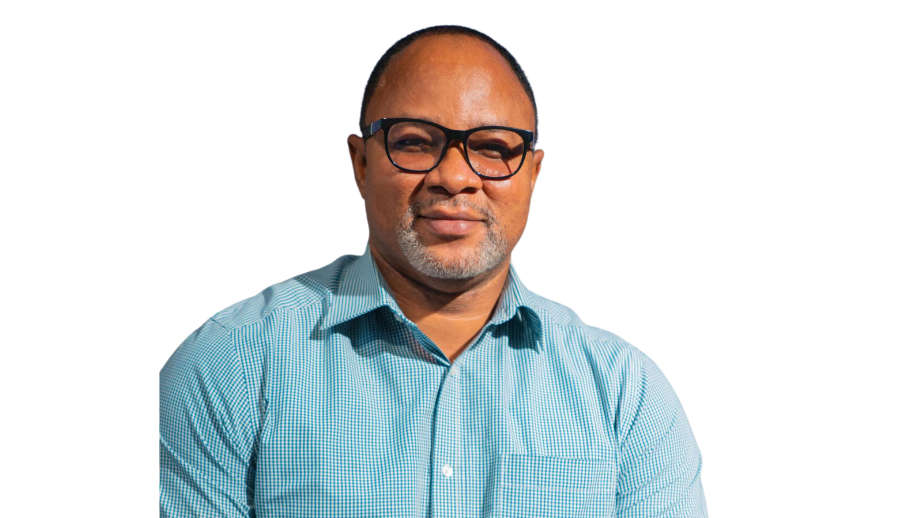
Ufuoma Egbamuno, News Manager, CWIA
“It’s 2026. Any media organization, not just radio, that’s not on the digital train at this moment is really not ready for where we are,” he said. Radio is no longer just competing with other stations; it is contending with social media, streaming services, and music apps that offer free, on-demand content.
The biggest hurdle is the shrinking window for engagement. “Research says the average attention span is about seven seconds. That means you have roughly seven seconds to keep a listener. That’s a tough job.” This leads to a looming demographic question: “The older generation still listens to the radio. But what happens in 15 to 20 years when today’s younger generation becomes the older generation?”
Future Relevance
With UNESCO marking this year’s World Radio Day under the theme “Radio and Artificial Intelligence,” both broadcasters see the technology as an inevitability.
“AI is a tool,” Usen said firmly. “It is not a voice. It is not a source.” He warns against the habit of lifting AI-generated content and reading it on the air without verification, noting that such content is often "fraught with untruths."
Egbamuno agrees that AI should enhance human capacity, not replace it. “AI is the way to go,” he said, noting its efficiency in production, news writing, and advert scheduling. For him, the goal is to embrace the technology to improve operational efficiency while maintaining the human element that makes radio work.
Guarding the Airwaves
Beyond technology, Usen believes ownership influence remains a primary challenge. Many stations reflect the partisan views of their owners, leading to fragmented news dissemination.
“The important thing is to disseminate news,” he said. “You, as a journalist... Your business is to give the news.” He reminds practitioners that the National Broadcasting Commission (NBC) monitors stations around the clock: “If you said something stupid, the NBC will mark it down.”
After more than five decades, Usen’s advice to the next generation remains anchored in the fundamentals: “Enjoy your job. Obey the rules of the training.” His career stands as a testament that while technology may evolve, the broadcaster's responsibility remains constant.