
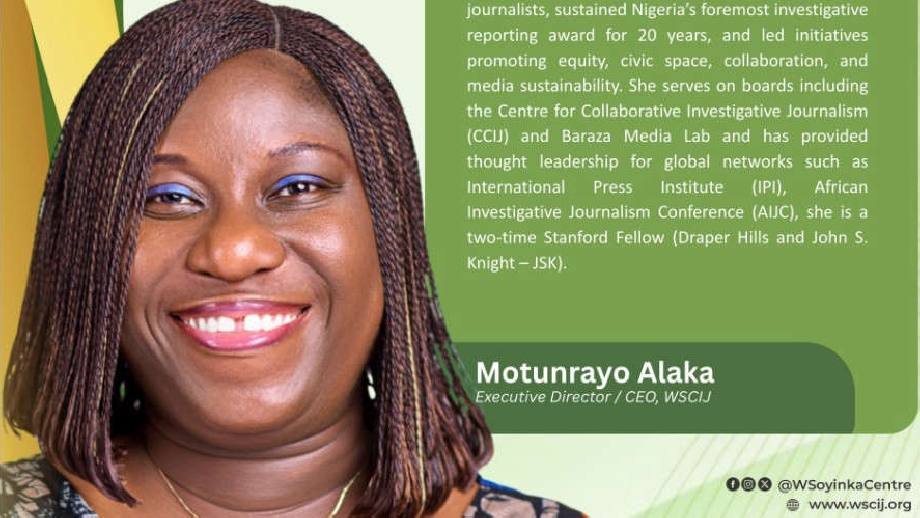
Executive Director of the Wole Soyinka Centre for Investigative Journalism (WSCIJ), Motunrayo Famuyiwa-Alaka, says weak governance continues to undermine the impact of investigative reporting in Nigeria, even as the centre marks its 20th anniversary.
Alaka, speaking at the 20th Wole Soyinka Award for Investigative Reporting (WSAIR), said many of the issues journalists exposed two decades ago remain unresolved.
“We’ve seen impact—schools built, funds refunded, officials punished—but the lives of average Nigerians have not changed because governance itself must work,” she said.
She added that strong institutions, including a resilient media, are needed to make investigations more effective.
Alaka described artificial intelligence as both “exciting and scary,” warning that misinformation now spreads faster than truth.
“Deepfakes and manipulated content make it easy to distort reality,” she said, urging journalists to learn new tools and adapt to younger audiences.
She noted that investigative reporters face rising attacks globally but said the community remains united.
“Truth is under attack, but the global network defending journalism is strong,” she added.
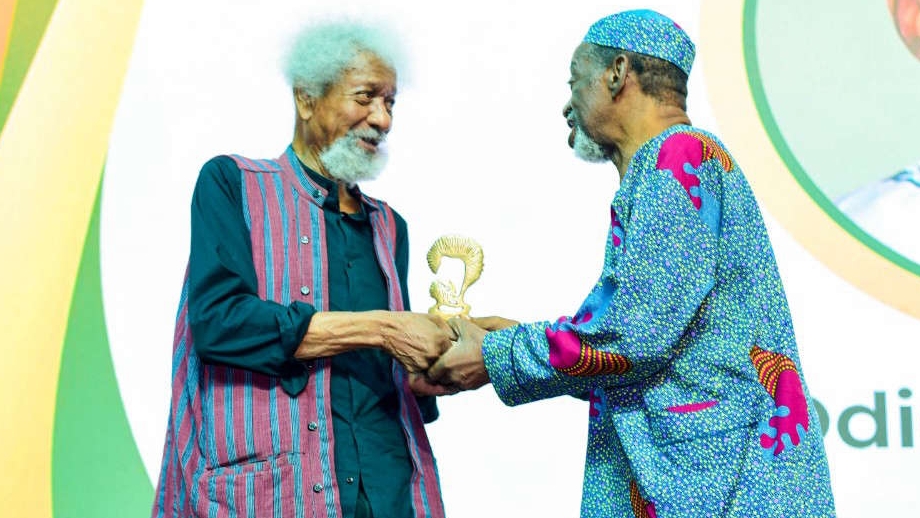
At the anniversary event in Lagos, writer Odia Ofeimun received the Lifetime Award for Journalistic Excellence, while retired justice Ayo Salami was honoured with the Human Rights Defender Award.
The awards cap the two-day Amplify In-depth Media (AIM) Conference, themed “WSCIJ@20 – Investigative reporting and the future of truth.”
Fourteen finalists were shortlisted from 184 entries,
Winners received plaques, cash prizes, and an international study tour.
The WSCIJ award, launched in 2005, has honoured 130 finalists and 31 notable Nigerians for contributions to accountability and human rights.