
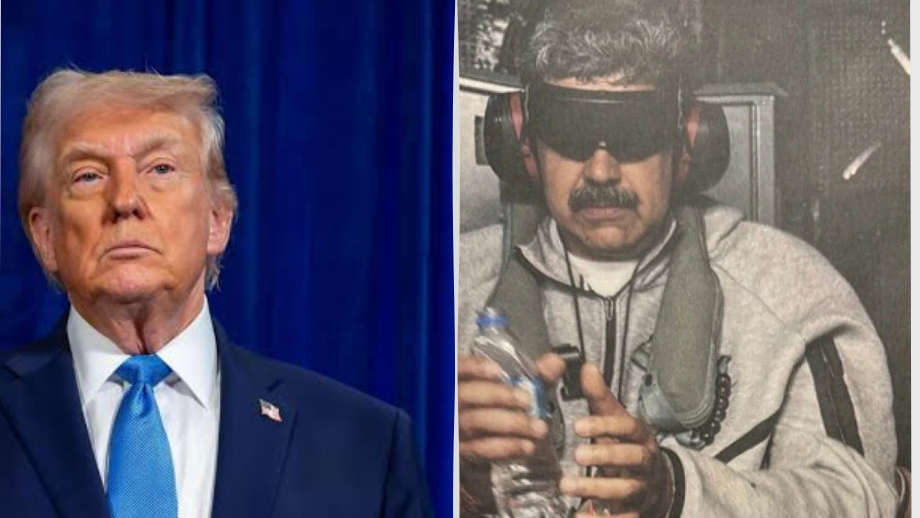
The United States of America under the leadership of Donald J. Trump has rewritten the rules of 21st-century diplomacy and warfare with their latest military actions, dubbed "Operation Absolute Resolve".
This operation, carried out in the early hours of 3rd January 2026, targeted the long-embattled leader of Venezuela, Nicolás Maduro, and kidnapped him from the Venezuelan State House.
The world woke to the stunning image of Maduro handcuffed and blindfolded aboard a USS Iwo Jima, a U.S. warship.
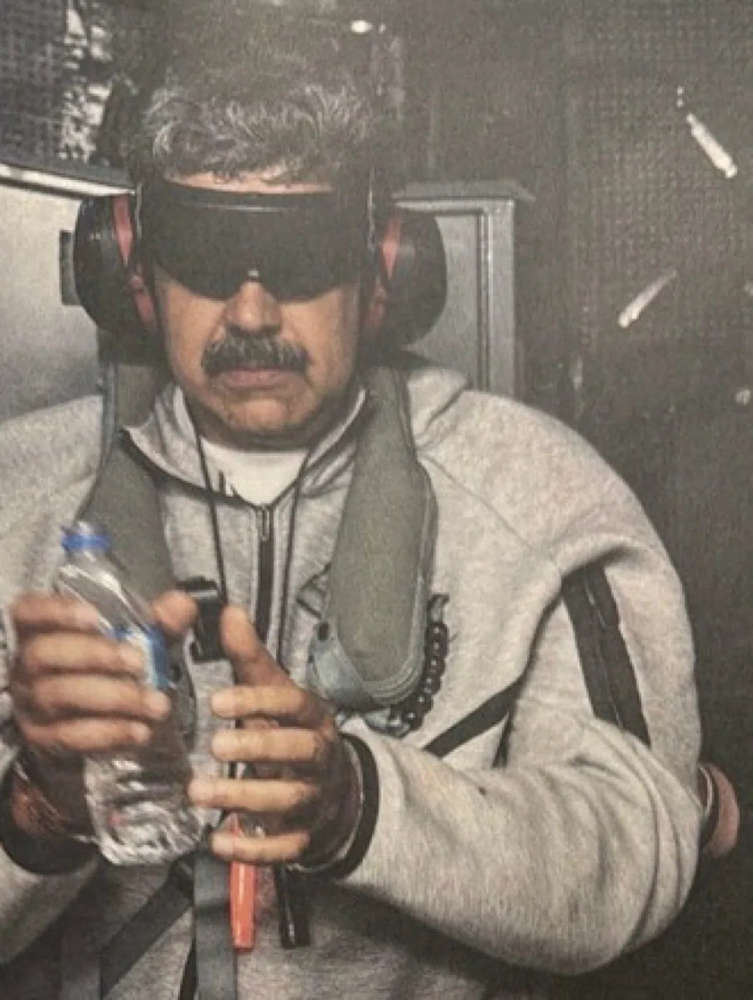
This unprecedented extraterritorial arrest of a sitting head of state has sent shockwaves across the globe, sparking a firestorm of condemnation, celebration, and deep-seated anxiety about the future of national sovereignty.
The Midnight Raid: From Caracas to Brooklyn
The operation was a lightning-fast surgical strike. Utilising the Joint Special Operations Command (JSOC), specifically Delta Force and the 160th Special Operations Aviation Regiment, U.S. forces infiltrated the Fort Tiuna military installation in Caracas under the cover of darkness.
Residents reported power outages and explosions as special operators breached Maduro’s residence. Within five hours, Maduro and his wife, Cilia Flores, were extracted via helicopter to the USS Iwo Jima in the Caribbean, eventually processed at a DEA office in New York, and detained at the Metropolitan Detention Center in Brooklyn — the same facility that once held figures like Sean "Diddy" Combs.
The U.S. justification of this operation is rooted in a massive federal indictment.
U.S. Attorney General Pam Bondi confirmed charges of narco-terrorism conspiracy, cocaine importation, and possession of machine guns against Maduro.
The U.S. government alleges that Maduro led the "Cartel of the Suns," using the Venezuelan state apparatus to flood American streets with drugs.
Beyond the legal charges, President Donald Trump has been vocal about "running" the country to fix its broken oil infrastructure and ensure a "safe transition," citing Venezuela's 303 billion barrels of oil reserves as a key factor in regional stability.
A World Divided: The Global Outcry
The reaction from the international community has been swift and polarised.
While some Western leaders expressed relief, the Global South and U.S. adversaries have characterised the move as an act of "international banditry."
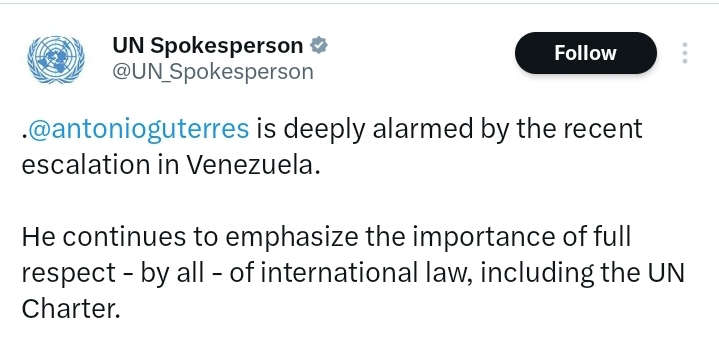
The United Nations Secretary-General António Guterres issued a stern warning from New York, stating he is “deeply alarmed” by the military escalation.
Through a spokesperson, Guterres emphasised that the capture constitutes a “dangerous precedent” and called for a return to the “rules of international law” and the UN Charter.
Venezuela’s Vice President Delcy Rodríguez, speaking on state television, denounced the operation as a “cowardly abduction” and “international barbarism.”
Despite being named interim president by the Supreme Court, Rodríguez remained defiant, declaring Maduro the “only legitimate president” and accusing the U.S. operation of having “Zionist overtones.”
She demanded the immediate release of the President and First Lady Cilia Flores.
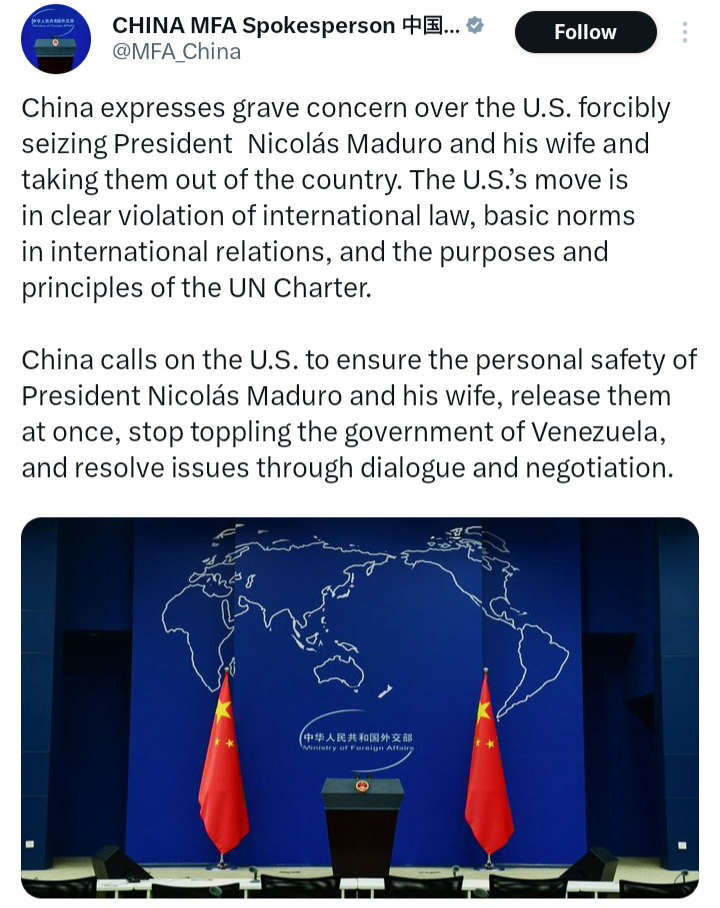
China and Russia, nations that are well known for their aversion to most things USA, issued scathing rebukes.
The Chinese Foreign Ministry called it a "blatant violation of international law" and demanded Maduro’s immediate release. Russia’s Foreign Ministry labelled the capture an "act of armed aggression," calling for an emergency meeting of the UN Security Council.
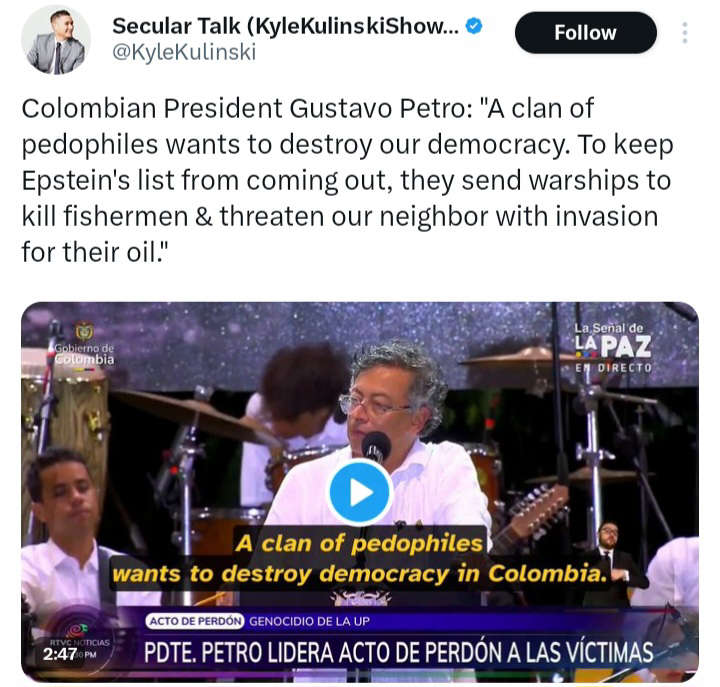
Brazil and Colombia, two nations that have also been referenced by Trump and his global policing statements, also issued remarks against the action.
President Luiz Inácio Lula da Silva of Brazil stated that the U.S. had crossed an "unacceptable line," setting a "dangerous precedent" for the region. Colombian President Gustavo Petro described the strikes as an "assault on Latin American sovereignty."
So did Iran — who Trump recently threatened due to the citizens' protests in their region against the Islamic leadership — and Cuba. Iran condemned the "flagrant violation of territorial integrity," while Cuban President Miguel Díaz-Canel called it a "criminal U.S. attack."
As stated earlier, the move also earned some praise from across the world.
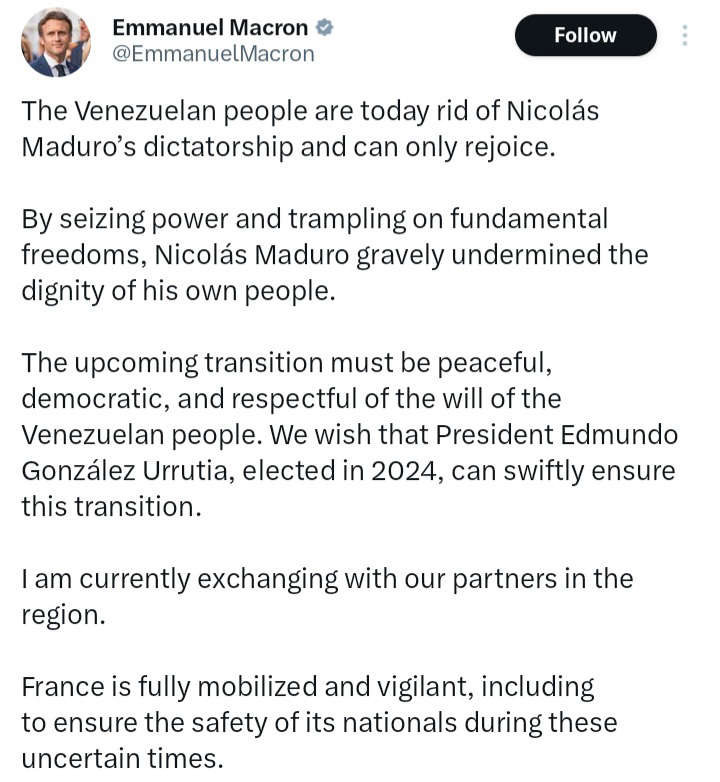
President Emmanuel Macron of France took to X (formerly Twitter), celebrating that the Venezuelan people were finally "rid of a dictatorship."
President Javier Milei of Argentina openly welcomed the operation, stating his readiness to assist in a "transition period" for a post-Maduro Venezuela.
Prime Minister Keir Starmer, while clarifying the UK had no involvement, stated he would "not mourn" the end of the Maduro regime.
The Home Front and the "Nigeria Blueprint"
On social media, the reaction is a blend of euphoria and terror.
The Venezuelan diaspora in Miami and Madrid has flooded Facebook and Instagram with videos of "Day of Freedom" celebrations.
However, inside Caracas, the mood is more sombre. Posts on X from residents describe the "terrifying" sound of American "black hawks" and express fear of an impending civil war.
While many loathe the economic ruin under Maduro, there is a palpable unease about the U.S. declaration that it will "run the country."
This move signals the belief that the U.S. military can and will intervene anywhere drug cartels or "unstable" regimes threaten U.S. interests.
Experts predict the next big move will be the installation of a "Transition Council" backed by U.S. oil giants like Chevron and ExxonMobil to secure the energy supply.
For Nigeria, the Maduro arrest is a chilling "blueprint."
Nigeria has recently faced threats of U.S. military action under the pretext of stopping "Christian genocide" and neutralising ISIS-linked groups.
On Christmas Day 2025, the U.S. already conducted Tomahawk missile strikes in Sokoto.
The precedent set in Venezuela suggests that if the U.S. deems Nigeria's insecurity a "threat to global interests," the sovereignty of Abuja may be no more sacred than that of Caracas.
Conclusion: The New Age of Interventionism
The arrest of Nicolás Maduro marks a definitive end to the post-Cold War era of "soft power."
By physically seizing a sitting president, the United States has asserted a unilateral right to act as the world’s sheriff, judge, and jury.
Objectively, while this may dismantle a regime accused of gross human rights violations and narco-trafficking, it simultaneously dismantles the UN Charter's principle of sovereign equality.
The world now watches a New York courtroom to see if the age of the "Westphalian State" has finally been replaced by a new, more volatile era of global policing.