

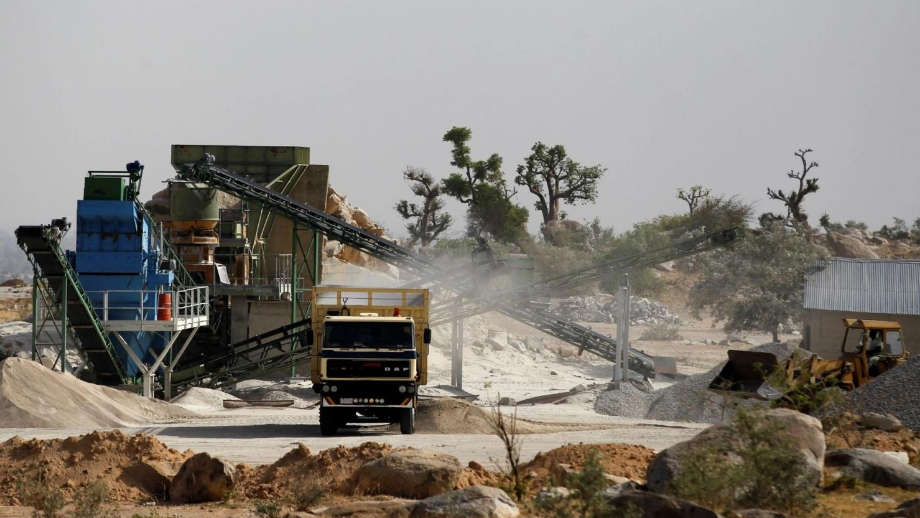
Nigeria has signed a new mineral investment framework with the United States aimed at boosting investment in the country’s solid minerals sector and supporting efforts to diversify the economy away from oil dependence.
Nigeria’s solid minerals sector is estimated to be worth around 700 billion dollars, according to government figures.
The country is believed to hold significant deposits of lithium, gold, zinc, and rare earth minerals spread across several states.
Officials say this vast resource base is a key reason behind renewed interest from international partners, including the United States, as global demand for critical minerals continues to rise.
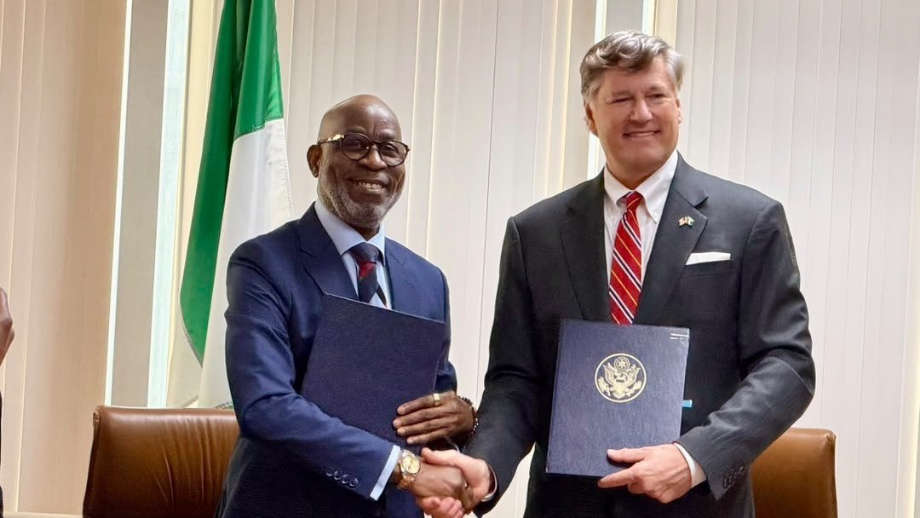
The agreement was signed on the sidelines of the United Nations General Assembly in New York, with Nigeria represented by the Minister of Solid Minerals Development, Dele Alake, alongside senior officials from the ministry and related federal agencies involved in mining policy and investment coordination.
On the United States side, the framework was concluded with government officials involved in critical minerals and investment cooperation, although full details of the signatories have not yet been publicly disclosed.
The deal forms part of the Tinubu administration’s broader economic reform agenda, which prioritizes non-oil revenue growth, foreign direct investment, and reforms in the extractive sector aimed at increasing local value addition.
Under the current reforms, the Solid Minerals Ministry has focused on revoking dormant mining licences, improving regulatory oversight, and encouraging investment in key minerals such as lithium, gold, iron ore, and rare earth elements.
Officials say the new partnership is expected to support geological exploration, infrastructure development, and mineral processing, with the goal of strengthening Nigeria’s position in the global critical minerals market.
Nigeria’s Geological Survey Agency and other technical institutions are also expected to support implementation through data mapping and sector planning, while actual projects are likely to involve partnerships with private sector investors.
The United States has been expanding efforts to secure access to critical minerals used in electric vehicles, defence systems, and advanced technologies, as part of a wider strategy to reduce dependence on China’s dominance in mineral processing and supply chains.
Nigeria, which has significant deposits of lithium, gold, zinc, and rare earth minerals, is increasingly positioned within that global competition for resources.
However, questions have already emerged around revenue sharing, ownership structures, tax incentives, and transparency in the final agreements.
Officials say further details will be released as implementation frameworks are finalized between both countries.
The Tinubu administration maintains that the agreement will prioritize local processing and industrial development, to avoid the historical pattern of exporting raw materials without significant domestic value creation.
Environmental and regulatory concerns have also been raised, including land use, community impact, and enforcement capacity in mining regions.
With China already active in Nigeria’s mining sector, the new agreement with the United States adds another layer to global competition over Africa’s mineral resources.
For now, the framework remains at agreement stage, with its long-term impact dependent on implementation, regulation, and Nigeria’s ability to enforce local value addition policies

Comments
Add a comment