

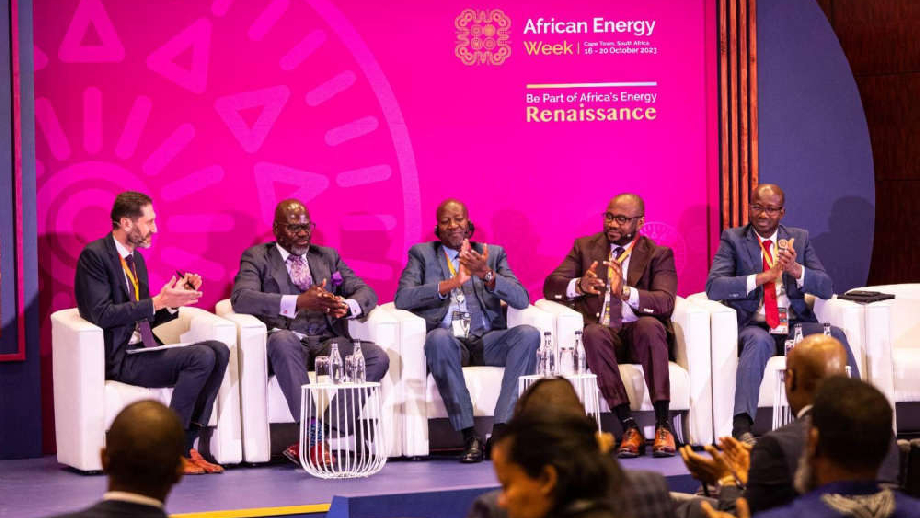
When African Energy Week opens in Cape Town on October 12, the most important conversation may not be about oil prices, gas discoveries or billion-dollar investment projects.
It may be about whether Africans can continue doing business with one another when politics, migration and national grievances threaten to pull them apart.
That question has acquired greater significance as concerns over the treatment of African migrants in South Africa intersect with tensions involving Nigeria and South Africa, two countries whose relationship has long carried consequences far beyond their borders.
Against that background, an obvious question has emerged around African Energy Week 2026: why not move it?
London can host a major energy conference. So can Houston. Dubai has repeatedly demonstrated its ability to accommodate global business gatherings at short notice.
Moving AEW temporarily could therefore be defended as pragmatic.
But the organisers have decided to remain in Cape Town.
The significance of that decision lies less in the city itself than in the principle being tested: if African institutions leave whenever relations between African countries become difficult, how will continental integration ever survive its inevitable crises?
Nigeria and South Africa Have Too Much at Stake
For Nigerians, this is not an abstract question.
Nigeria and South Africa are two of the continent's biggest economies, and their relationship reaches deep into African commerce.
South African companies have built significant businesses in Nigeria. Nigerian businesses and professionals operate across regional markets. Both countries influence African banking, telecommunications, entertainment, energy, finance and investment.
Their relationship has also repeatedly been tested by diplomatic disagreements and concerns surrounding the treatment of Nigerians and other African migrants in South Africa.
Those grievances should not be minimised.
No argument about investment or Pan-Africanism can justify violence or mistreatment directed at people because of their nationality.
But there is another danger: allowing legitimate grievances to escalate into a wider breakdown in commercial and institutional relationships.
That would carry its own cost.
The African Energy Chamber, organiser of AEW, has attempted to draw a line between the two issues. It has condemned violence and mistreatment of African migrants while arguing that political tensions should not shut down dialogue, investment and cooperation.
That may be easier said than done.
But it raises a question Africa will increasingly have to answer.
Can African countries hold each other accountable without economically walking away from one another?
There Is History Behind the Decision
AEW's refusal to leave Cape Town becomes more significant when its origins are considered.
The conference was itself born during a crisis over where Africa's energy conversation should take place.
COVID-19 disrupted international travel and the global conference industry in 2020. Africa Oil Week, one of the continent's established petroleum gatherings, was caught in the upheaval.
For its 2021 edition, AOW moved from Cape Town to Dubai.
There were legitimate reasons.
South Africa was dealing with pandemic restrictions and considerable uncertainty around international travel and large gatherings. Dubai offered greater predictability.
AOW said the relocation was temporary, driven by safety considerations, and that it intended to return to Cape Town.
The African Energy Chamber drew a different lesson from the situation.
In June 2021, it launched African Energy Week and committed to staging the conference in Cape Town later that year.
Its argument was essentially about ownership.
If Africa's oil, gas, electricity and investment opportunities were the subject of the gathering, why should the economic activity surrounding that gathering be exported from the continent?
Why should African ministers and executives travel outside Africa to discuss African resources if the meeting could be held in Africa?
AEW went ahead in Cape Town in November 2021 despite the uncertainties surrounding the pandemic.
Five years later, another difficult moment has revived the same question in a different form.
This Is Not Another COVID Crisis
The comparison has limits.
COVID-19 was a global public-health emergency.
Today's challenge involves migration, political relations, public confidence and how Africans are treated in another African country.
The response therefore cannot simply be: AEW stayed during COVID, so everybody should travel to Cape Town regardless of their concerns.
That would miss the point.
People who fear for their safety deserve answers.
African governments have an obligation to protect foreigners within their borders.
Conference organisers inviting thousands of visitors also have a responsibility to demonstrate that adequate arrangements exist for them.
But recognising those responsibilities does not automatically mean relocation is the only sensible response.
There is a difference between refusing to acknowledge a problem and refusing to abandon engagement because of it.
AEW appears to be attempting the latter.
Africa Cannot Integrate Only When Everybody Agrees
This is where the issue becomes bigger than one conference.
Africa is attempting one of the most ambitious economic integration projects in its history through the African Continental Free Trade Area.
The objective is greater trade between African countries, larger regional markets, stronger African businesses and fewer economic barriers.
But integration is relatively easy to celebrate when relations are good.
Its real test comes when countries disagree.
Europe did not build its economic institutions on the assumption that European governments would never quarrel. Other regional blocs also have mechanisms designed to keep economic relationships functioning through periods of political disagreement.
Africa will need the same institutional resilience.
The continent cannot pursue greater interdependence while simultaneously allowing every diplomatic dispute to produce calls for commercial disengagement.
Nigeria and South Africa offer a particularly important test because of their economic weight.
If two of Africa's most influential countries cannot manage political disagreement without damaging wider continental cooperation, the implications go far beyond Abuja and Pretoria.
Energy Makes the Argument More Urgent
The energy sector illustrates why Africa cannot afford permanent fragmentation.
Hundreds of millions of Africans still lack electricity. Businesses spend heavily generating their own power. Manufacturers struggle with unreliable supply. Hospitals, schools, farms and digital enterprises all depend on energy infrastructure that remains inadequate in many countries.
Solving that problem requires enormous investment.
It also requires cooperation.
Gas produced in one African country may eventually supply industries in another. Regional electricity pools depend on cross-border transmission. Pipelines and infrastructure corridors often require agreements involving several governments.
Banks, engineering companies, oilfield service firms and investors increasingly operate across national borders.
Africa's energy future is therefore becoming more interconnected whether its politics likes it or not.
A continent that needs cross-border infrastructure cannot make cross-border cooperation conditional on permanent political harmony.
Why African Mobility Matters
The controversy also exposes another contradiction.
Africa says it wants greater intra-African trade, but Africans still encounter significant obstacles travelling around their own continent.
That has direct economic consequences.
An engineer cannot work on a regional project without crossing borders. An entrepreneur cannot build a continental business without visiting markets. Investors need to inspect projects. Bankers need to meet clients. Companies need to deploy personnel.
Free movement is therefore not merely a Pan-African slogan.
It is economic infrastructure.
The debate surrounding AEW provides another reminder that the continent's integration ambitions will remain incomplete unless movement becomes easier and Africans can travel with greater confidence.
Cape Town Also Has Something to Prove
AEW's decision to stay should not, however, be treated as unconditional vindication of South Africa.
Staying places greater responsibility on the host country.
If delegates are being asked to maintain confidence in Cape Town, South African authorities must earn that confidence.
Security arrangements must be credible.
Immigration procedures should be efficient.
Visitors who encounter problems need clear assistance mechanisms.
And African delegates must feel as welcome as international visitors arriving from Europe, America, Asia or the Middle East.
This is particularly important because South Africa has spent decades building a reputation as one of Africa's leading destinations for tourism, investment and international conferences.
That reputation carries economic value.
Protecting it requires more than telling visitors they are safe. It requires ensuring that their experience supports the claim.
Walking Away Is Not the Only Answer
There are two easy positions in the current debate.
One is to dismiss the concerns and insist that everything is normal.
The other is to say that AEW should simply pack up and leave.
Neither addresses the larger problem.
Africa will continue to experience diplomatic disputes, migration tensions, elections, economic disagreements and periodic political crises.
If continental institutions can function only when every country is comfortable with every other country, there will be very little continental integration.
A more difficult approach is to confront problems while keeping dialogue alive.
Condemn mistreatment.
Demand protection.
Hold governments accountable.
But preserve the spaces where Africans can continue meeting, investing and negotiating.
That is the significance of AEW remaining in Cape Town.
A Bigger Test Than an Energy Conference
When AEW begins in October, much of the coverage will understandably focus on oil, gas, electricity, investment agreements and the executives and government officials in attendance.
But there is another story underneath all of that.
In 2021, AEW was created partly around the argument that Africa should remain the home of its own energy conversation even when circumstances made staying difficult.
In 2026, that principle faces a new test.
This time, the issue is not whether Cape Town can physically host an energy conference.
It is whether Africans can continue sitting around the same table when political circumstances give them reasons to leave it.
That is a much larger question.
Nigeria and South Africa will have disagreements again. So will other African countries. Continental integration cannot depend on eliminating those disagreements.
It must depend on building institutions capable of surviving them.
AEW's decision to remain in Cape Town will not resolve Nigeria-South Africa tensions. But it may demonstrate something equally important: Africa can confront its differences without allowing every disagreement to become another reason to walk away from one another.

Comments
Add a comment