

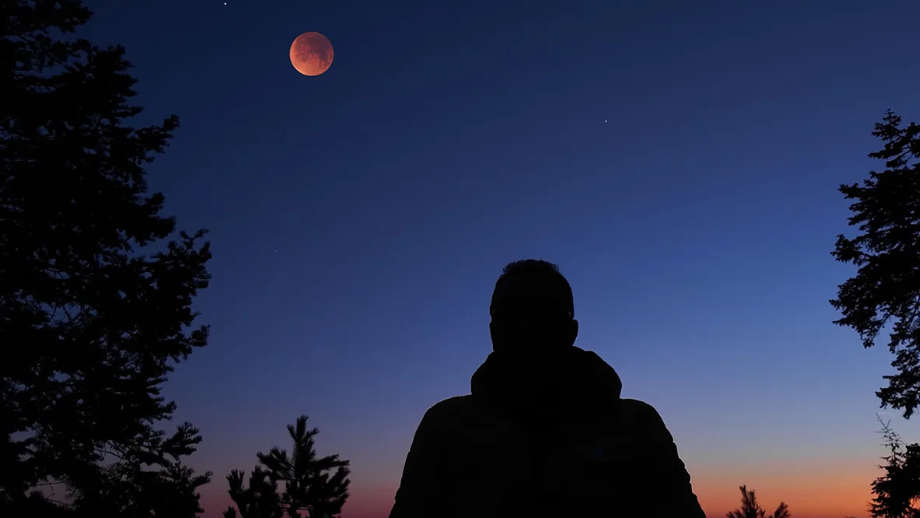
A total lunar eclipse, often called a “blood moon,” was seen across parts of Asia, Australia and North America on March 3, 2026.
The eclipse peaked at 10:57 UTC, with the Moon completely covered by Earth’s shadow for about 56 minutes.
During that time, the Moon turned a deep red color.
Astronomer Fred Espenak said the red color appears because Earth’s atmosphere bends red sunlight into the shadow while blocking most of the blue light.
The eclipse began with a faint shadow at 08:32 UTC. A partial eclipse followed at 09:27 UTC. Totality lasted from 10:29 to 11:25 UTC.
People in eastern Asia and Australia saw the entire event, while in western North America the Moon rose already partly eclipsed.
The Virtual Telescope Project streamed the eclipse live, allowing millions to watch online.
Unlike a solar eclipse, a lunar eclipse is safe to watch with the naked eye.
Telescopes and binoculars can help people see more details, but they are not required.
This eclipse is part of a cycle known as Saros series 133, which repeats about every 18 years.
The next total lunar eclipse will happen on December 31, 2028.