

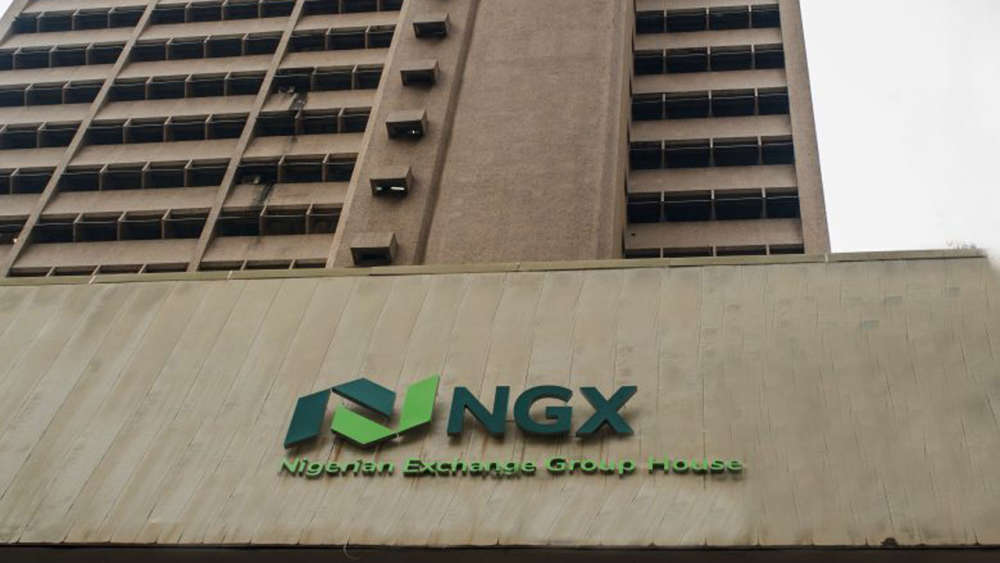
The Nigerian Exchange closed Tuesday on a strong note, with the All-Share Index staging a sharp recovery after Monday's decline, as investors returned in force to push market capitalisation above ₦147 trillion.
The All-Share Index rose to 228,579.80 points, up from 223,602.29 at Monday's close, representing a day-on-day gain of roughly 2.23 percent.
Total market capitalisation correspondingly climbed from ₦143.97 trillion to ₦147.17 trillion, adding approximately ₦3.2 trillion.
Tuesday's gains were broad-based but uneven.
Most indices gained, but banking stocks struggled, with the NGX Banking Index slipping to 2,226.77 from 2,257.95 on Monday.
UBA Punishment Enters Second Day
United Bank for Africa led the equity losers' chart, closing Tuesday at ₦44.55, down from ₦49.50 the previous day, its second consecutive 10 percent decline.
Investors are unhappy with the bank's decision to withhold its final dividend for the 2025 financial year, which continued to drive one of the most dramatic sell-offs seen in the banking sector in recent memory.
The back-to-back losses are no coincidence.
UBA stock opened the week at ₦49.50, down from its Friday closing price of ₦55.00, after investors punished the bank for its decision to withhold dividends from the 2025 financial year, a reaction that wiped approximately ₦34.7 billion off the paper value of chairman Tony Elumelu's combined stake in the lender before Monday's morning session was done.
What made the rebuke particularly sharp was the context: UBA posted ₦404.7 billion in profit after tax for the full year 2025, yet chose not to hand shareholders a final dividend.
The only payout declared was a ₦0.25 per share interim dividend, already distributed in July 2025, and representing a 95 percent reduction from the ₦5.00 per share shareholders received in the prior year.
The financial results tell a more complicated story.
The bank's pre-tax profit fell 47 percent to about ₦423 billion, down from ₦804 billion recorded in 2024, a decline the bank's Group Managing Director, Oliver Alawuba, attributed largely to a one-off provision of about ₦331 billion for bad loans.
This follows a Central Bank of Nigeria directive requiring lenders to exit the loan forbearance window.
The NGX 10% Rule
The successive 10 percent drops are themselves a function of how the Nigerian Exchange manages price volatility.
The NGX operates a daily price movement limit, commonly referred to as the price circuit breaker, that caps the maximum gain or loss any listed equity can record in a single session at 10 percent of its previous closing price.
The rule is designed to prevent panic-driven free falls or speculative spikes from distorting the market in a single day.
It means that for a stock under intense selling pressure, like UBA this week, the losses are metered out across multiple days rather than absorbed in one.

Comments
Add a comment