

What began as an awkward overlap between the WPC Energy Congress and African Energy Week has evolved into a wider argument about institutional respect, conference diplomacy and whether Africa can protect the platforms it creates.
At first, it looked like a calendar problem. By August, it had become something considerably bigger.
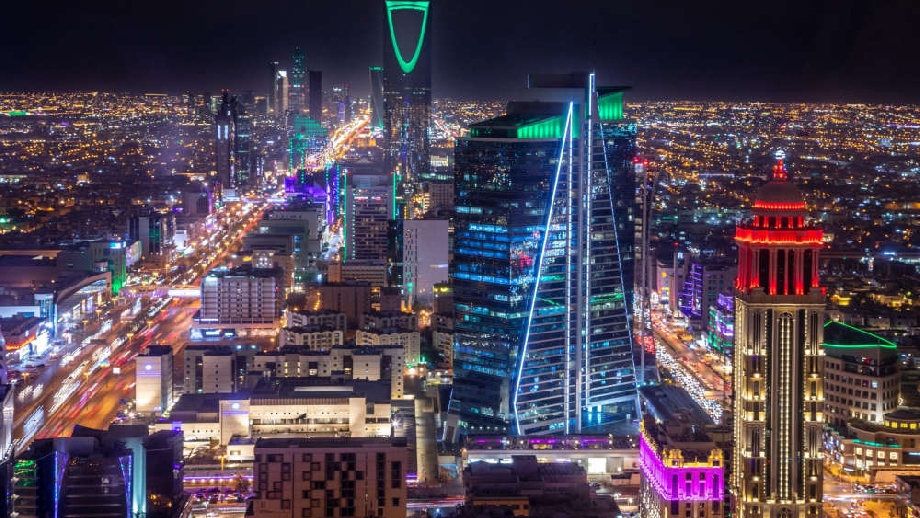
The 25th WPC Energy Congress is scheduled to take place in Riyadh, Saudi Arabia, from October 11 to 15, 2026. African Energy Week will open in Cape Town on October 12 and run until October 16.
Four days overlap almost completely.
WPC Energy itself describes October 11–15 as the Congress’s “rescheduled dates.” AEW, meanwhile, has publicly fixed its Cape Town gathering for October 12–16.
Those simple facts have generated an increasingly complex argument.
Across a series of reports and analyses in Nigerian, Ghanaian and pan-African media, the controversy has moved through several distinct phases: first logistics, then competition, then questions of fairness, Saudi Arabia’s role, Africa’s institutional standing and, finally, an uncomfortable question about the continent itself.
If Africa believes its institutions matter, who is responsible for defending their place on the international calendar?
Stage One: Two Conferences, One Audience
The earliest concern was practical.
The WPC Energy Congress and African Energy Week are not identical events. WPC is a long-established global gathering, while AEW has developed as an Africa-focused platform connecting governments, national oil companies, investors, operators, financiers and service companies.
Yet their constituencies substantially intersect.
A petroleum minister from an African producer may have compelling reasons to attend both. So could the chief executive of a national oil company, an international operator active in Africa, an investment bank financing African projects or a global oilfield-services company.
The 2026 calendar makes that extremely difficult.
WPC’s welcome reception is scheduled for October 11, its inaugural session for October 12, and its main programme runs through October 15. AEW begins in Cape Town on October 12.
This is not a morning meeting in Johannesburg competing with an evening reception in Cape Town.
Riyadh and Cape Town are separated by thousands of kilometres.
Executives cannot meaningfully participate in the central programmes of both conferences.
That was the first X-Ray finding: the clash forces choices.
But the story quickly moved beyond travel logistics.
Stage Two: The Question Became Who Loses
Once the overlap was examined more closely, another question emerged.
When two major events compete for the same ministers, corporate executives, financiers, sponsors and international media, the consequences are unlikely to be evenly distributed.
WPC describes its Congress as a premier global energy gathering and brings considerable institutional history to Riyadh. The 2026 Congress will also be the first staged in Saudi Arabia and only the second in the Middle East in WPC’s 90-year history.
AEW is considerably younger.
It was established in 2021 and has built its identity around putting African energy priorities—investment, hydrocarbons, electricity, local content, infrastructure, industrialisation and energy poverty—at the centre rather than at the margins of an international conference.
That difference changed the significance of the clash.
A conflict between two equally entrenched global institutions might merely split attendance.
A conflict between an established global institution and a newer African platform raises the possibility that the African event bears the greater cost.
The calendar therefore became a question of institutional asymmetry.
Stage Three: Riyadh Entered the Story
The next stage of the coverage moved beyond WPC itself.
The host is Saudi Arabia, one of the world’s most consequential petroleum powers and an increasingly important diplomatic, investment and commercial partner for African states.
That created a contradiction worth examining.
Saudi Arabia has been expanding its political and economic engagement with Africa. Yet the Riyadh energy programme now falls almost directly across a major African-organised energy gathering.
The issue was therefore no longer simply whether WPC had chosen inconvenient dates.
It became whether the ambitions of a major external partner were being pursued with sufficient regard for institutions already operating on the continent.
That produced the sharper question reflected across subsequent coverage: Can a country court Africa economically while helping host an event that competes directly with one of Africa’s own major energy platforms?
The answer is not straightforward.
There is no publicly demonstrated evidence that Saudi Arabia or WPC deliberately selected the dates in order to damage AEW. Responsible analysis cannot convert suspicion into fact.
But neither does absence of evidence of hostile intent erase the consequences of the decision.
The clash exists regardless of motive.
Stage Four: Partnership Became the Test
That distinction—between intention and impact—became central to the argument.
Modern energy diplomacy is saturated with the vocabulary of partnership.
Countries speak of cooperation, South-South relations, investment, inclusion and allowing emerging markets a greater voice in shaping global energy policy.
The Riyadh–Cape Town collision provides an unusually concrete test of that rhetoric.
Partnership is not only measured by investment announcements or diplomatic communiqués.
It can also be measured by whether institutions recognise one another’s space.
If an established African gathering can be placed under intense competitive pressure by a substantially larger international event without meaningful accommodation, Africans are entitled to ask how seriously their institutional infrastructure is regarded.
That is why one strand of the coverage increasingly described the confrontation not simply as conference competition but as conference diplomacy.
Calendars distribute influence.
Who gets the minister?
Who gets the chief executive?
Where is the investment announcement made?
Where do journalists congregate?
Which conference becomes the location where the year’s dominant narrative is established?
Those are questions of power as much as scheduling.
Stage Five: The Lens Turned Back on Africa
But repeatedly criticising Riyadh or WPC eventually produces another problem.
It risks allowing Africa to occupy the role of permanent victim.
That is where the story now enters a more difficult and more useful phase.
If African Energy Week has become strategically important to governments, companies and institutions on the continent, responsibility for protecting it cannot rest solely on expectations that outsiders should avoid its dates.
Africa must also build sufficient institutional weight around its own platforms that disregarding them carries consequences.
That means governments treating African gatherings as policy infrastructure rather than optional conference appearances.
It means national oil companies, regulators, development banks, industry associations and corporate leaders coordinating their international calendars more deliberately.
And it means African institutions learning that ownership is not secured merely by putting “Africa” in the title of an event.
Institutional power comes from consistency, participation, capital, convening authority and the ability to establish dates that others in the global industry know they cannot casually ignore.
This may be the most uncomfortable lesson produced by the entire dispute.
From a Date Clash to an Institutional Stress Test
What began as an October diary conflict has consequently passed through several layers.
First came the logistical problem: two conferences competing for substantially the same international audience.
Then came the competitive question: which platform is more vulnerable when that audience must choose?
That led to scrutiny of WPC’s decision to hold its rescheduled Congress in virtually the same window as AEW.
Saudi Arabia’s role then widened the controversy into a debate about what partnership with Africa should mean in practice.
The argument subsequently moved into deeper territory: who determines where global energy attention, capital and authority congregate?
Now the final X-Ray points inward.
Can Africa defend the institutional space it says it wants?
AEW describes itself as a platform for policy dialogue, dealmaking and investment around Africa’s energy and industrial future. Its 2026 programme includes discussions spanning investment, local content and international partnerships.
If such platforms are strategically important, they must acquire something more durable than visibility.
They need institutional protection.
October 2026 will therefore stage two energy congresses, but it has already produced a third contest before either opens its doors.
That contest is over whether African-created institutions will remain gatherings that fit around the global energy calendar—or become powerful enough to help determine that calendar themselves.
Riyadh versus Cape Town exposed the problem.
What Africa does with that revelation is now the more consequential story.

Comments
Add a comment