

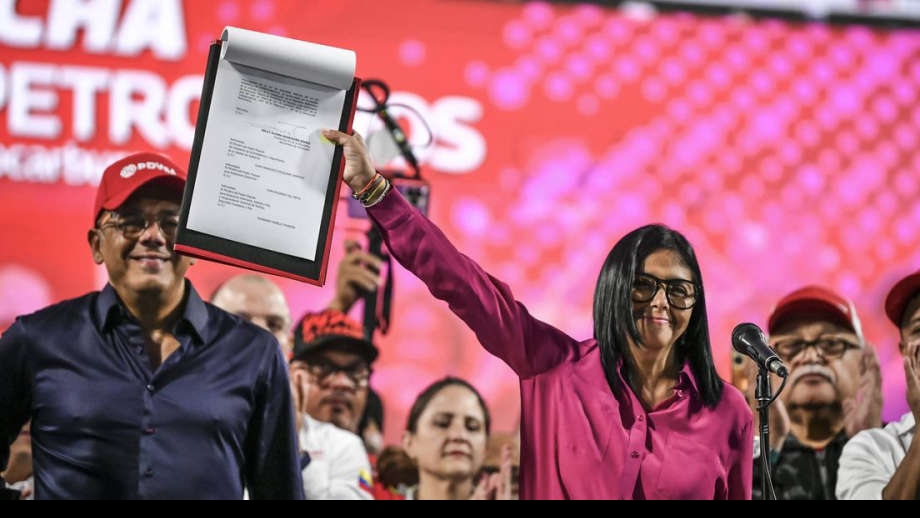
Acting Venezuelan President Delcy Rodríguez has signed a landmark oil sector reform into law, marking a dramatic shift in policy by opening up the country’s long-state-controlled oil industry to greater private and foreign participation.
The move comes as Venezuela seeks to revive its struggling economy and attract much-needed investment after years of production declines and international sanctions.
The reform, approved by Venezuela’s National Assembly on Jan. 29, 2026, loosens decades-old government dominance over the oil sector.
Historically managed by state oil company Petróleos de Venezuela SA (PDVSA) under the socialist policies of former President Hugo Chávez.
The new law allows private firms, including foreign companies, greater control over oil production and sales, along with the option to resolve disputes through independent international arbitration.
Under the changes, extraction taxes and royalty rates will be more flexible, with a cap set around 30% and the executive branch given discretion to set rates on a case-by-case basis to encourage investment.
The legal overhaul also eliminates requirements for disputes to be heard only in Venezuelan courts, a long-standing concern for international investors.
The legislation was passed less than a month after the capture of former President Nicolás Maduro during a U.S. military operation and comes amid efforts by the Trump administration to reintegrate Venezuela’s vast oil reserves into the global market.
Washington has begun easing sanctions on Venezuelan oil and signaling support for U.S. energy firms to re-engage with the country’s resources.
Officials in Caracas hope the reforms will restore confidence among major international oil companies that have largely stayed away for years, partly because of strict state control and hostile legal environments.
Some U.S. firms, such as Chevron, have maintained limited operations under special licenses, but others exited in previous decades under former policies.
With the bill now signed into law by Rodríguez, attention will turn to implementation and how quickly foreign and domestic companies can begin new operations or expand existing ones.
The reform represents one of the most significant changes to Venezuela’s energy policy in decades and could have broad implications for the country’s role in global oil markets.