
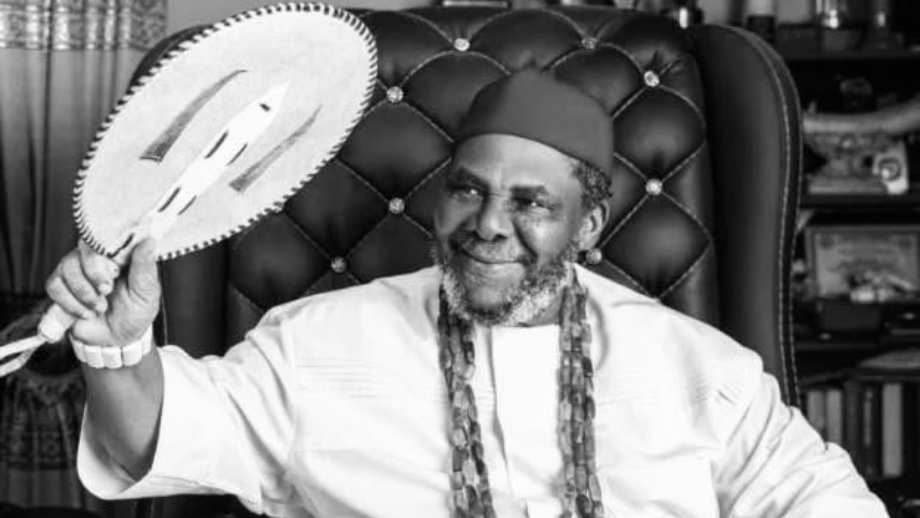
Veteran Nigerian actor and broadcaster Pete Edochie, whose commanding voice, memorable performances and mastery of traditional African storytelling made him one of Nollywood’s most respected figures, has died at 79.
Edochie died at 12:30 a.m. Wednesday, Nov. 25, 2026, in Enugu, following a prolonged battle with prostate cancer.
His death was announced in a family statement titled “An Iroko Has Fallen,” shared on Instagram by his son, Chief Leo Pete Edochie, on behalf of the family.
“With profound sadness and hearts bowed in total submission to the will of Almighty God, we announce the passing of our beloved husband, father, brother and kinsman, Chief Dr. Pete Edochie, MON (Ononenyi), a retired broadcaster and veteran actor,” the statement read.
The family said Edochie hailed from Akamnato, Ifite Nteje, in Anambra State.
He is survived by his wife, Barrister Josephine Edochie, his children, siblings and other relatives.
Funeral arrangements will be announced later.
Born March 7, 1947, in Zaria, Kaduna State, Edochie built a career that stretched across broadcasting, television and the Nigerian film industry.
Before becoming an acting legend, he worked as a broadcaster, joining the Eastern Nigerian Broadcasting Corporation in 1967 as a junior programmes assistant.
He steadily rose through the ranks, eventually becoming Director of Programmes and Deputy Managing Director of the Anambra Broadcasting Service.
His experience in broadcasting helped develop the confidence, voice control and communication skills that would later distinguish his acting career.
His breakthrough came in the 1980s when he played Okonkwo, the central character in the Nigerian Television Authority's adaptation of Chinua Achebe's celebrated novel, Things Fall Apart.
The production introduced Edochie to a much wider audience and remains one of the most important television performances in Nigerian entertainment history.
His portrayal of the proud, respected but troubled Igbo warrior earned him national recognition and attracted international attention, including interest from the British Broadcasting Corporation.
The role also helped establish the screen identity that followed him throughout his career: a stern, authoritative man whose words carried weight and whose presence commanded respect.
As Nollywood grew, Edochie became one of its most recognisable faces, appearing in several popular productions, including Igodo, Rituals, Billionaire's Club and Lionheart, Genevieve Nnaji's 2018 directorial debut.
In Lionheart, he played Chief Ernest Obiagu, the head of a family-owned transport business.
The film became Nigeria's first Netflix original, introducing his work to an even wider international audience.
Although he played different characters, Edochie became particularly associated with traditional rulers, wealthy businessmen, community leaders and family patriarchs.
His deep voice, deliberate delivery, expressive facial movements and frequent use of African proverbs became trademarks.
He brought an unmistakable authority to his characters, often making even ordinary conversations feel like important lessons in leadership, family and responsibility.
Beyond acting, Edochie received several honours for his contributions to entertainment.
In 2003, former President Olusegun Obasanjo conferred on him the national honour of Member of the Order of the Niger (MON).
He also received the Africa Magic Viewers' Choice Awards Industry Merit Award, a Lifetime Achievement Award from the Africa Film Academy and the African Film Legend Award in 2020.
Away from the screen, Edochie was married to Josephine Edochie, a lawyer.
Their children include actors Yul and Linc Edochie.
His death brings an end to a remarkable career spanning nearly six decades across broadcasting and entertainment.
For generations of Nigerians, Pete Edochie was more than an actor.
He was a familiar voice, a symbol of authority and one of the performers who helped give Nigerian storytelling a distinctive identity.
His portrayal of Okonkwo ensured that his name would remain closely connected to one of Africa's most celebrated literary works, while his extensive body of work secured his place among Nollywood's greatest actors.
The iroko has fallen, but his legacy will live on.
Comments
Add a comment