

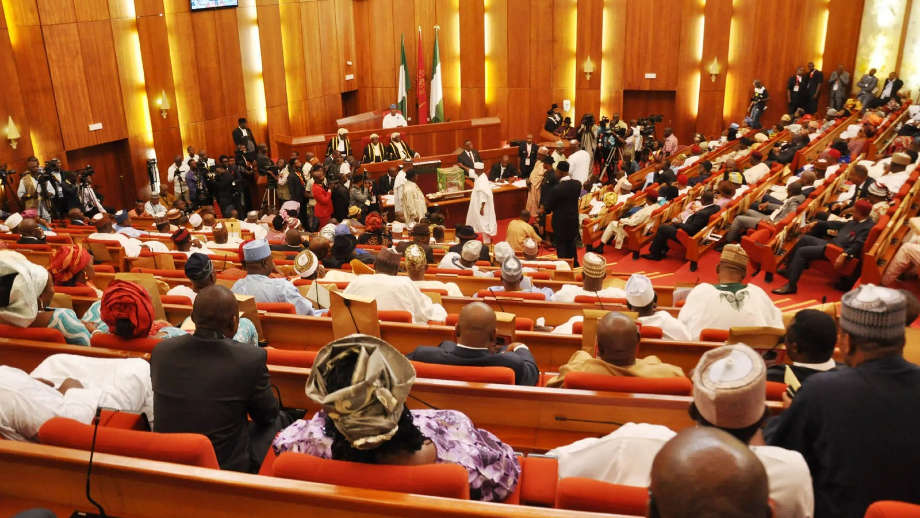
The Nigerian Senate has assured the public that it is not opposed to peaceful protests and criticism over its handling of the Electoral Act Amendment Bill and has promised to resolve the contentious issue at an emergency plenary sitting scheduled for today.
Senate spokesperson Senator Yemi Adaramodu said the upper chamber acknowledges Nigerians’ right to express their views on the ongoing controversy, particularly around the amendment of provisions relating to electronic transmission of election results.
The controversy stems from the Senate’s amendment to the Electoral Act, in which it removed the phrase “real-time” from the clause on electronic transmission of results.
This decision that has drawn criticism from civil society groups, youth activists and leaders who argue it weakens transparency safeguards ahead of the 2027 general elections.
Across Abuja on Monday, demonstrators gathered outside the National Assembly under the banner “Occupy the National Assembly”, calling for the restoration of mandatory real-time electronic transmission of polling unit results.
The Protesters were joined by prominent figures, including former presidential candidate Peter Obi.
Security was heightened around the assembly complex as groups continued to demand clarity and accountability from lawmakers.
Responding to the backlash, the Senate convened an emergency plenary on Tuesday, intended to review the votes and proceedings of the recently passed amendment and address the public’s concerns.
Senate President Godswill Akpabio had earlier directed lawmakers back to the chamber as pressure mounted nationally.
Ahead of the sitting, Senator Abdul Ningi said the Senate may also make public how lawmakers voted on the contentious electronic transmission clause as part of efforts to boost transparency.
The emergency session comes amid intense debate over the wording of the amended law.
Critics argue that removing “real-time” could undermine electoral transparency, while supporters of the Senate’s position maintain that the change provides flexibility to accommodate infrastructure and network challenges in parts of the country.
The Senate was expected to clarify its position and possibly consider adjustments to the bill to address public concern and facilitate harmonisation with the House of Representatives before the legislation is finally transmitted for presidential assent.
Observers say the outcome of the emergency sitting will be closely watched, as any revisions or reaffirmations could influence public trust in Nigeria’s electoral framework and shape discourse around electoral integrity ahead of future polls.