

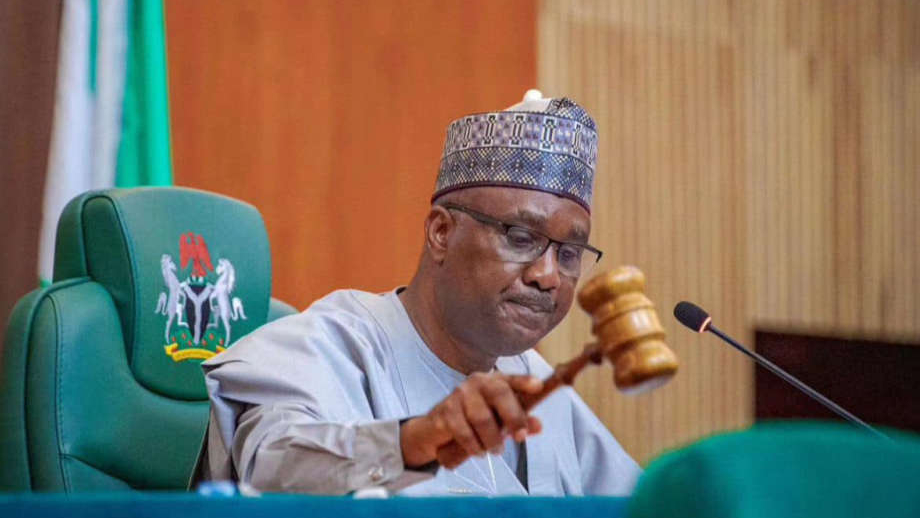
The Speaker of the House of Representatives, Tajudeen Abbas, has called for tougher action against drug traffickers and increased support for people struggling with drug dependence, warning that drug abuse poses a serious threat to Nigerian society.
Abbas spoke Saturday at the close of a three-day sensitisation programme on drug abuse and domestic violence in Kaduna, organised in collaboration with the National Orientation Agency as part of his constituency outreach.
“We must punish those who profit from drugs. We must also treat those who have become trapped by them. The dealer needs the law. The dependent person needs care,” Abbas said.
He said tackling drug abuse requires coordinated action involving families, schools, communities, law enforcement agencies and other stakeholders.
“Parents must watch for sudden changes in conduct. Schools must provide counselling and report warning signs. Pharmacists and medicine vendors must reject the unlawful sale of controlled substances,” he said.
The Speaker also urged traditional and religious leaders to speak openly about addiction and domestic violence, while calling on neighbours, market groups and transport unions to report suspicious drug-related activities.
He urged young people to reject peer pressure and seek help when necessary, while encouraging victims of domestic violence to seek safety, obtain medical care, preserve evidence and report abuse.
“Victims should seek safety, obtain medical care, preserve evidence, and report abuse. Communities must protect them, not punish them with blame or shame,” Abbas said.
Abbas linked drug trafficking to Nigeria’s wider security challenges, particularly banditry and kidnapping in the North-West, saying criminal networks use proceeds from drug trafficking to support other illicit activities.
“Drugs can impair judgement, increase aggression, and deepen poverty. But drugs never excuse violence. Every person remains responsible for his or her actions,” he said.
The Speaker also described domestic violence as abuse rather than discipline or culture, saying it harms victims, frightens children and weakens communities.
He said drug trafficking could provide criminal networks with funds and facilitate the movement of other illicit commodities and criminal elements.
“Drugs do not explain every crime, but they are part of Nigeria’s wider security challenge,” Abbas said.
According to him, disrupting drug supply chains is therefore an important part of efforts to tackle violent crime.
“Every shipment stopped can deny criminals money for weapons and recruitment,” he said, adding that “every person rescued from addiction is one less person exposed to violent groups.”
Abbas said drug control should form part of broader security efforts in the North-West, where communities continue to face banditry and kidnapping.
“Security forces may clear the camps. Communities must help cut the supply lines,” he said.
The Speaker summarised the approach as enforcement to stop drug shipments, education to reduce demand, treatment to help people recover from addiction and community vigilance to protect neighbourhoods.
Abbas recalled that the previous edition of the programme, held in February 2025, preceded a four-month campaign across the North-West.
He said the organisers had pledged to take the campaign beyond conference halls by engaging traditional rulers, religious leaders, teachers, parents, young people and community organisations.
According to him, the latest programme demonstrated that the commitment had been sustained, with the National Orientation Agency taking the campaign into streets and communities across Kaduna.
Abbas said NOA officers had engaged market leaders, transport workers, youth groups and traditional institutions, stressing that prevention begins with access to accurate information.
He commended the Director-General of the National Orientation Agency, Lanre Issa Onilu, and his team for their efforts, while also appreciating the National Drug Law Enforcement Agency, Nigeria Police Force, Nigeria Immigration Service, Federal Road Safety Corps, Nigerian Correctional Service, National Youth Service Corps and relevant state agencies.
The Speaker also commended President Bola Tinubu for retaining Brigadier-General Mohammed Marwa (retd.) as NDLEA director-general and supporting enforcement, international cooperation, public education and treatment initiatives, including a new 50-bed rehabilitation centre in Maiduguri.
Abbas said the National Assembly had also taken steps to strengthen Nigeria’s response to drug abuse and related violence.
He said the House in 2024 called for a preventive drug testing programme in secondary schools and directed the National Orientation Agency and NDLEA to expand student awareness.
The Speaker said the House had also moved against the indiscriminate sale of prescription medicines, calling for illegal outlets to be shut and stronger joint enforcement by relevant agencies.
He added that the House had considered bills to strengthen the NDLEA Act and in 2025 called for faster investigation and prosecution of femicide, homicide and related violence.
Abbas said the National Assembly would continue to fund enforcement and treatment, close gaps in the law and demand results through legislative oversight.
He urged Nigerians to play their part in preventing drug abuse, tackling domestic violence and protecting vulnerable members of society.

Comments
Add a comment