
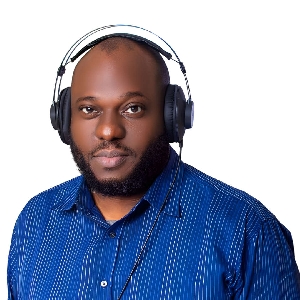
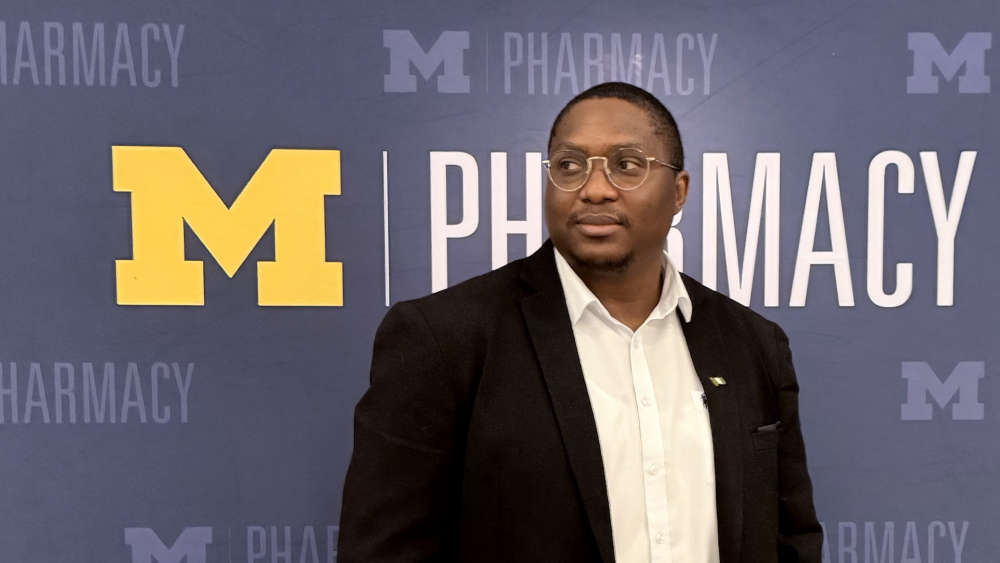
For Raphael Onuku, the search for better medicines is not only a scientific challenge. It is also a deeply human one. It sits in the space where illness, uncertainty, and hope meet.
It is there in the child whose malaria treatment must work the first time. It is there in the patient whose infection no longer responds to familiar antibiotics. It is there in the family facing a diagnosis like glioblastoma, where the odds are often harsh, and the available treatments are still not enough. Onuku’s research life has grown around these realities, and that is what gives his work its weight.
His journey began in Nigeria, where he built his academic foundation before moving to Taiwan for graduate study under the Taiwan Government Scholarship. There, he distinguished himself academically and later received the Ministry of Education Outstanding Graduate Award. From Taiwan, his scientific path carried him to the United States, where he is now pursuing doctoral research in medicinal chemistry at the University of Michigan. Across these stages, one thing has remained constant. He has continued to ask how science can be used to discover and develop better treatments for diseases that continue to challenge medicine.
That question matters because the world is still burdened by infectious diseases on a massive scale. The World Health Organization reported that there were an estimated 263 million malaria cases and 597,000 malaria deaths globally in 2023, with the African region bearing most of that burden. Antimicrobial resistance has also grown into one of the gravest threats in modern medicine. WHO says bacterial antimicrobial resistance was directly responsible for 1.27 million deaths in 2019 and associated with 4.95 million deaths overall. These numbers are not distant abstractions for an African scientist. They speak to realities that shape families, hospitals, and public health systems across the continent.
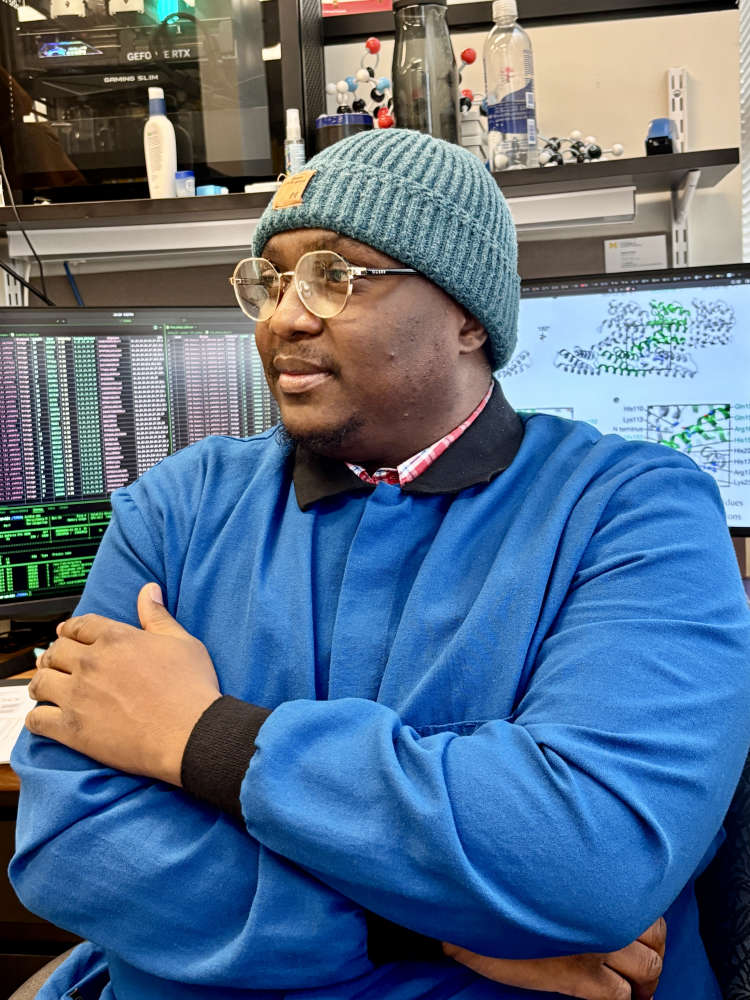
Onuku’s work belongs to the field of drug discovery and medicinal chemistry. In everyday language, that means studying how molecules can be designed, tested, refined, and moved closer to becoming useful medicines. His research brings together computational methods and laboratory-based evaluation so that the search for new treatments can become more deliberate and more informed. The value of that approach is clear. Drug discovery is often costly, slow, and full of failure. Anything that helps scientists identify better candidates earlier can save time, reduce wasted effort, and improve the chances of finding compounds worth developing further.
His publication record already shows the range and seriousness of that effort. In one study published in the Journal of Biomolecular Structure and Dynamics, he co-authored research on sulphonamide-peptide hybrid molecules designed against methicillin-resistant Staphylococcus aureus, or MRSA, a bacterium that has become notoriously difficult to treat because of resistance to important antibiotics. The study combined computational analysis with biological testing and identified compounds that could help restore susceptibility in resistant isolates, opening the door to further anti-MRSA optimization.
In another study published in Scientific African, he contributed to research on inhibitors of the SARS-CoV-2 main protease, an important enzyme in the life cycle of the virus responsible for COVID-19. That work used structure-based virtual screening and molecular dynamics simulations to examine thousands of compounds and identify promising antiviral leads for future development. It reflected the kind of research that becomes especially important when the world is confronted with an emerging health emergency and the need for new treatment options becomes urgent.
His scientific range is not limited to infectious disease. During his master’s training in Taiwan, he was also involved in glioblastoma research, an area that speaks to another difficult frontier in medicine. In a study published in Advanced Science, he contributed to work showing how prostaglandin E2-induced neuronal excitation can promote drug resistance in glioblastoma, one of the most aggressive and treatment-resistant brain cancers. The study also reported a novel blood-brain barrier-crossing celecoxib derivative, compound 11, which reduced tumor growth and improved survival in preclinical models. This was important not only because of the disease itself, but because it showed his involvement in work that moves beyond theory into mechanism-based therapeutic development.
Taken together, these contributions show a researcher whose work is connected by more than a list of diseases. What ties them together is a larger commitment to improving how medicines are found. Whether the problem is malaria, a resistant bacterial infection, a viral threat, or an aggressive cancer, the scientific challenge is often similar. Researchers must understand the biology, identify the right targets, design better compounds, and test them carefully enough to find what is truly worth pursuing. That is the demanding space in which Onuku is working.
There is also a wider meaning to his story. It shows how African scientists are contributing to some of the most important research questions of this era, not from the margins, but from within serious international scientific spaces. It shows what happens when talent is matched with discipline, opportunity, and a willingness to keep building across borders. For many young people in Nigeria who want to see what a research career can look like, his path offers a clear example that excellence in science is possible, and that it can grow into work with consequences far beyond the laboratory.
In the end, the importance of Raphael Onuku’s research is not only that he studies molecules. It is that he studies them in the service of problems that continue to shape human lives. Better malaria treatments can mean fewer deaths and fewer families broken by preventable illness. Better strategies against drug-resistant infections can mean that modern medicine does not keep losing ground. Better cancer-focused compounds can mean a stronger chance when existing treatment is not enough. This is why his work matters. It stands at the meeting point of scientific discipline and human need, and in a world still searching for better therapies, that is exactly where meaningful research belongs.

Comments
Add a comment