

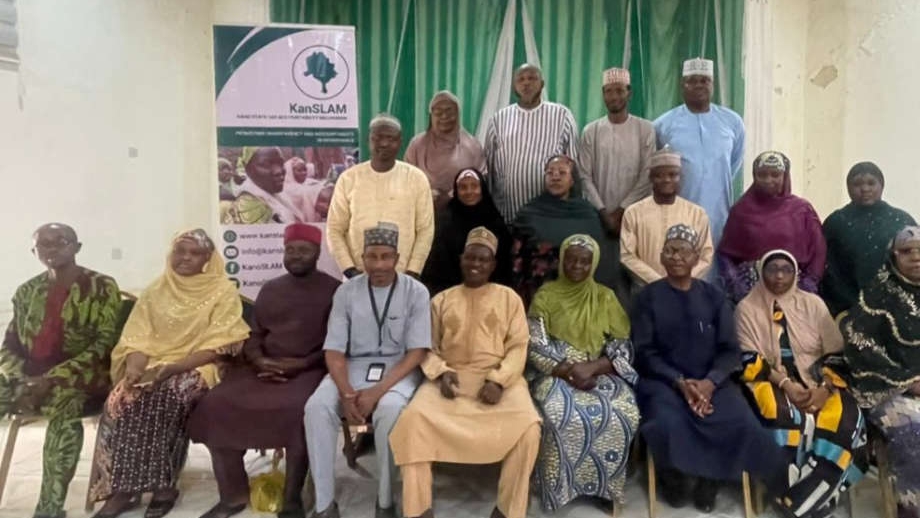
A coalition of civil society organisations, government officials and media practitioners under the Kano State Led Accountability Mechanism (KanSLAM) has raised concerns over the Kano State Government’s failure to release funds allocated to maternal, newborn and child health (MNCH).
The group spoke at a media parley on preventing maternal and child mortality held at the Nigeria Union of Journalists (NUJ) Press Centre in Kano, warning that the delays are worsening health outcomes for women and children.
KanSLAM Co-chair, Pharm. Maimuna Yakubu Muhammad, said inadequate and delayed funding is undermining key services, including child spacing and family planning.
“Funds allocated by the government must be released promptly and used strictly for the purposes they are meant for,” she said.
She commended the state government for meeting the 15 per cent Abuja Declaration benchmark for health sector funding in 2026 but stressed that allocation alone is insufficient.
“Reaching the 15 per cent benchmark is commendable, but timely release and proper utilisation of funds are critical to halting preventable deaths,” she added.
Pharm. Maimuna also urged the media to intensify advocacy and public enlightenment on maternal and child health issues.
She said media organisations should use television, radio, newspapers and digital platforms to raise awareness on the benefits of family planning and the risks of neglecting it.
“The media can help by telling solution-driven stories, correcting misconceptions, and amplifying the voices of healthcare providers and community leaders,” she said.
She further called for improved access to affordable contraceptives, particularly in rural areas, as well as sustained community education to address myths surrounding family planning.
In a presentation, KanSLAM consultant Sulaiman Umar Ismail said improved budgetary allocation to the health sector has not translated into better service delivery due to gaps in funding releases and implementation.
His report, titled Kano State MNCH, Reproductive Health and Family Planning Financing Analysis (2024–April 2026), reviewed allocations, releases and utilisation of funds across key health programmes.
Ismail said the health sector accounted for 13 per cent of the state budget in 2024, dropped to 12 per cent in 2025, and rose to 15 per cent in 2026.
“Despite the increase, inconsistencies in fund releases and low execution of capital projects continue to hinder effective service delivery,” he said.
He noted that MNCH, reproductive health and family planning programmes are embedded within primary healthcare, making it difficult to track funding and assess impact.
The report also identified growing population pressure as a challenge, with women of reproductive age projected to reach between 3.4 million and 3.7 million by 2026.
According to him, the rising population is outpacing available funding, placing additional strain on health services.
Ismail added that much of the health budget is spent on recurrent expenditure and procurement, with less focus on direct service delivery.
He listed other challenges, including inadequate funding for family planning programmes, limited data availability, limited access to information, and reliance on donor support.
To address the gaps, he recommended timely release of funds, population-based budgeting, and ring-fencing of MNCH, reproductive health and family planning funds to improve accountability.
He also called for increased domestic funding and improved transparency to reduce dependence on donors.
Also speaking, the Kano Team Lead of the Task Shifting Task Sharing (TSTS) project at Pathfinder International, Gombe Ibrahim, said stakeholders must hold the government accountable to reduce maternal and neonatal deaths.
“Discussions like this are important to assess progress and identify gaps in government efforts,” he said.