
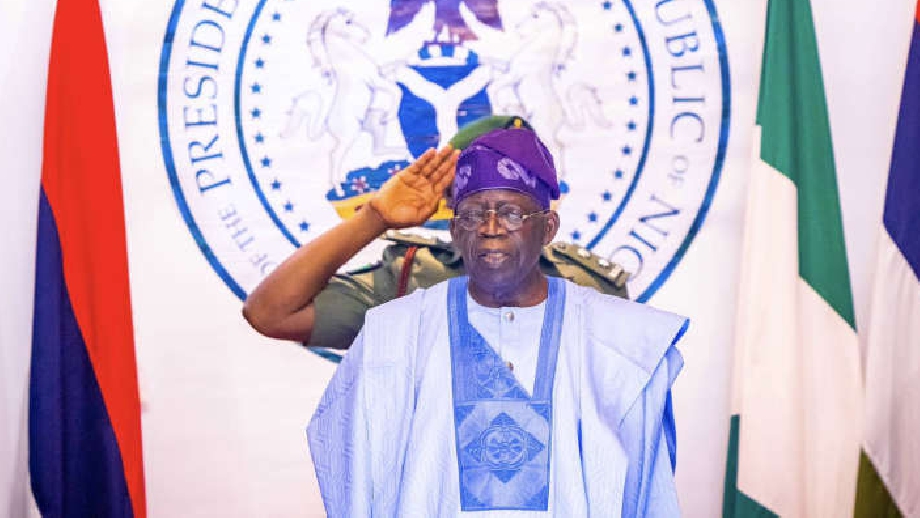
The Federal Executive Council (FEC) on Friday approved the 2026 Appropriation Bill, paving the way for President Bola Ahmed Tinubu to present the budget proposal to a joint session of the Senate and House of Representatives.
At an emergency meeting convened by President Tinubu at the State House, Abuja, the council considered the single-item memorandum on the 2026 budget estimates.
Dr. Tanimu Yakubu, Director-General of the Budget Office of the Federation, briefed journalists, revealing the approved budget sets total expenditure at ₦58.47 trillion—a six percent increase over 2025.
The budget includes ₦4.98 trillion for government-owned enterprises (GOEs), ₦1.37 trillion for grants and donor-funded projects, and ₦4.1 trillion for statutory transfers.
Debt servicing is projected at ₦15.52 trillion, including ₦3.39 trillion allocated for retiring maturing local debts.
Personnel costs, including wages and pensions, are estimated at ₦10.75 trillion, up seven percent from last year, with ₦1.02 trillion designated for GOEs. Overhead costs total ₦2.22 trillion.
Capital expenditure is set at ₦25.68 trillion, 1.8 percent lower than 2025, reflecting a cautious approach that prioritises completing ongoing projects and ensuring value for money.
Key capital allocations include ₦11.3 trillion for ministries, departments, and agencies (MDAs), ₦2.05 trillion for loan-funded projects, and ₦1.8 trillion from the development levy.
Yakubu emphasised the budget balances macroeconomic stability with development goals, relying on conservative assumptions about oil prices, exchange rates, and GOE dividends.
On revenue, the budget forecasts a decline but highlights a significant shift with non-oil revenues now comprising about two-thirds of government receipts.
“Corporate income tax, value-added tax, customs duties, and independent revenues remain the main fiscal anchors,” Yakubu said.
He added that rising expenditure is largely driven by debt servicing, wages, and pensions rather than discretionary spending. The projected fiscal deficit reflects structural challenges, not relaxed fiscal policies.
The 2026 budget aims to sustain economic growth while maintaining fiscal discipline amid evolving domestic and global challenges.
President Tinubu is expected to formally present the budget to the National Assembly soon for legislative approval.