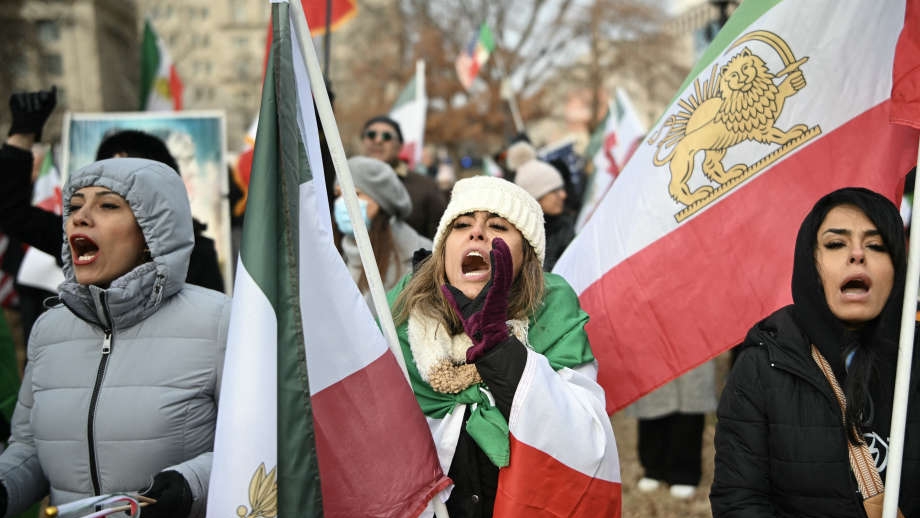
Waves of massive anti-government protests have swept through Tehran and several other major Iranian cities.
Thousands of citizens taking to the streets to voice their frustrations over worsening economic conditions and tightening social restrictions.
Verified videos surfacing on social media on Friday, January 9, 2026, show large crowds marching through central Tehran, chanting slogans against the country’s leadership.
The demonstrations appear to be some of the most significant civil unrest the nation has seen in recent years, sparked by a combination of skyrocketing inflation and a recent crackdown on dissent.
Reports indicate that the protests were initially triggered by a sudden hike in the prices of basic commodities, including bread and fuel.
However, the movement quickly expanded into a broader critique of the Iranian government’s domestic and foreign policies.
In Tehran’s Enqelab Square, protesters were heard shouting “Bread, Work, Freedom,” a refrain that has become a symbol of the growing gap between the ruling elite and the working class.
Similar scenes were reported in Mashhad, Isfahan, and Tabriz, where security forces have reportedly deployed tear gas and water cannons to disperse the crowds.
As the protests intensified, internet monitoring groups reported significant disruptions to mobile data and social media platforms across Iran.
Despite these efforts to stifle communication, activists have managed to bypass restrictions, sharing footage that shows a heavy security presence and clashes between police and demonstrators in certain neighborhoods.
Human rights organizations have expressed concern over the potential for a violent state response.
“We are seeing a massive mobilization of citizens who feel they have nothing left to lose,” said one regional analyst.
“The government’s traditional tools of suppression are being met with a new level of defiance.”
The international community has begun to respond to the unfolding crisis.
While several Western nations have called for the Iranian government to respect the right to peaceful assembly, Tehran has blamed “foreign agents” and “external enemies” for instigating the unrest.
Many businesses in Tehran have closed their shutters, and there is a palpable sense of uncertainty regarding how the government will proceed in the coming days.
