

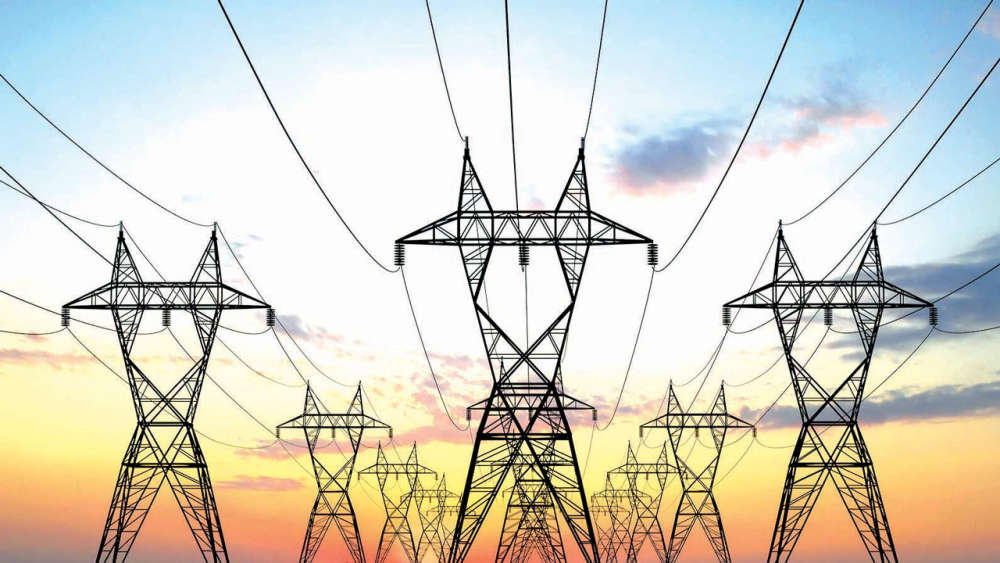
Nigeria's national grid collapsed twice in four days in January.
Generation crashed from 3,825 megawatts to 39 megawatts in minutes — a country of over 200 million people, plunged into darkness, again. If this happened in any serious country, someone would resign. In Nigeria, the Nigerian Independent System Operator called it a "system-wide disturbance" and moved on. Nobody was fired. Nobody was fined. Nothing changed.
This is not an accident. It is a choice, repeated for decades.
Since 2010, Nigeria has recorded at least 222 partial and total grid collapses. Add a dozen more from 2024 and 2025 alone. Electricity was first generated in this country in 1896. That is 130 years of practice, and we still cannot keep the lights on for a full week. Ageing transformers, some over 50 years old, sit rotting on the network. There is no spinning reserve — no cushion to absorb a shock without the whole system crashing. Gas shortages cripple our power plants routinely, and when saboteurs cut a transmission line, as they did on the 330kV Shiroro–Mando corridor, the response is a shrug.
Meanwhile, the people who could actually fund a stable grid are running from it. More than six in ten manufacturing firms have abandoned the national grid entirely. They are not doing this because they hate Nigeria's electricity. They are doing it because it does not work. Manufacturers now spend over ₦45 trillion a year — trillion, not billion — on diesel, petrol and captive generators just to keep their factories running. That is money that should be strengthening the grid. Instead, it is being burned, literally, in generators, while ordinary households are left holding the bag for a grid built to serve industry, not families.
The result? Nearly 19,000 manufacturing jobs lost in the first half of 2025 alone. An estimated ₦10.1 trillion lost every single year to a power sector that cannot deliver power. Ask yourself: how many factories, how many jobs, how many small businesses have to die before this becomes an emergency in Abuja the way it already is in every home that just spent the night in darkness?
And let's be honest about who is failing here. It is not "the sector." It is not "legacy issues." It is a government that keeps announcing new agencies — GAMCO is the latest — instead of fixing the basics: paying gas suppliers on time, holding DisCos accountable for rejecting load, giving NISO the independence the Electricity Act actually promised it. It is a policy establishment that spent the Obasanjo years chasing gas as the silver bullet, and is now chasing solar as the new silver bullet, while the transmission backbone that has to carry either one remains a relic.
Other African countries are not waiting around for miracles. South Africa spent years as the continent's blackout poster child — "load shedding" became a national joke. By May 2026, Eskom had gone a full year, 365 straight days, without a single power cut. Not because South Africa got lucky, but because Eskom ran a disciplined, multi-year recovery plan, published its performance numbers every week for the public to see, and stuck with it even when it was politically inconvenient. Egypt did something similar — tripling its high-voltage substation capacity in a decade, building new control centres, opening the sector to private capital under a clear legal framework. Egypt now exports power to its neighbours. Nigeria cannot reliably power its own capital.
So spare us the excuses about population size, or vandalism, or "legacy infrastructure." Egypt and South Africa have their own versions of every one of those problems. What they had that we don't is a government willing to treat the grid as a national emergency rather than a talking point for the next ministerial press briefing.
Here is what fixing it actually requires, and none of it is complicated: bring industrial consumers back to the grid with real incentives, not slogans. Fund transmission upgrades and spinning reserve capacity like the country's economic survival depends on it — because it does. Make NISO independent in practice, not just on paper. Stop announcing new agencies and start holding the existing ones accountable for outcomes, not press releases.
Every blackout is a decision somebody in government made, by omission, to let happen again. Every factory that leaves the grid is a vote of no confidence in Abuja's power sector management. Nigerians are tired of hearing about reform. We want light. Fix the damn grid — or tell us honestly why you won't.
Adetayo Adegbemle is the Executive Director of PowerUp Nigeria

Comments
Add a comment