
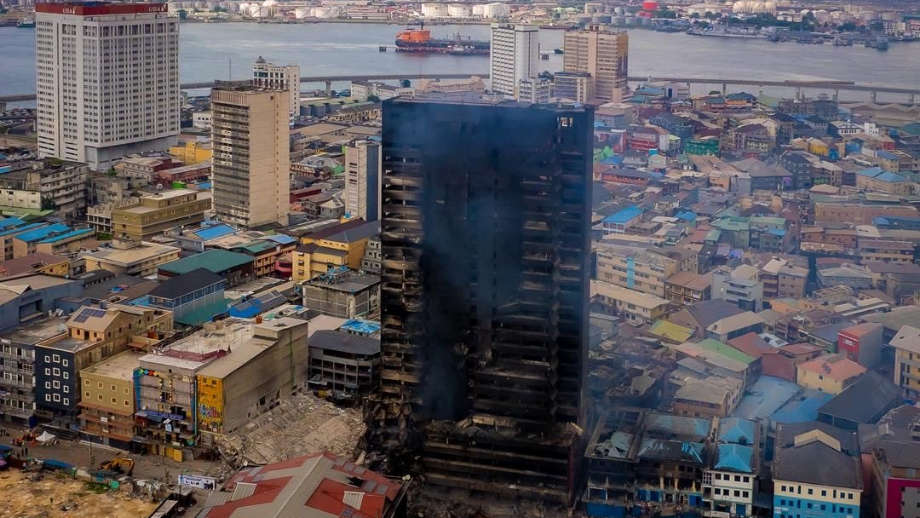
On the 2025 Christmas Eve, a raging inferno ripped through the 25-storey Great Nigeria Insurance (GNI) House on Martins Street, Lagos Island, spreading to neighbouring plazas and markets and leaving traders’ goods — many bought on credit for the holidays — in ashes.
Traders who lost everything bitterly described their losses: one widow, Aina Babatunde, recounted to BusinessDay that she had taken a bank loan to stock up for Christmas – and now “goods worth almost ₦25 million” had literally gone “up in flames”.
Another recounted a similar story to Nigeria Info 99.3 FM, stating that “the harsh economic situation of Nigeria plunged many into debt for business sake,” and that he had “less than ₦4,000 on him” following the misfortune, while also calling on the government to reconsider shutting down the entire market stretch because “families still need to feed”.
Officials later confirmed eight casualties and 13 injuries, as well as scores of displaced traders.
Lagos moved quickly to investigate and order emergency measures at the site.
The official figures are still disputed by traders and families of victims.
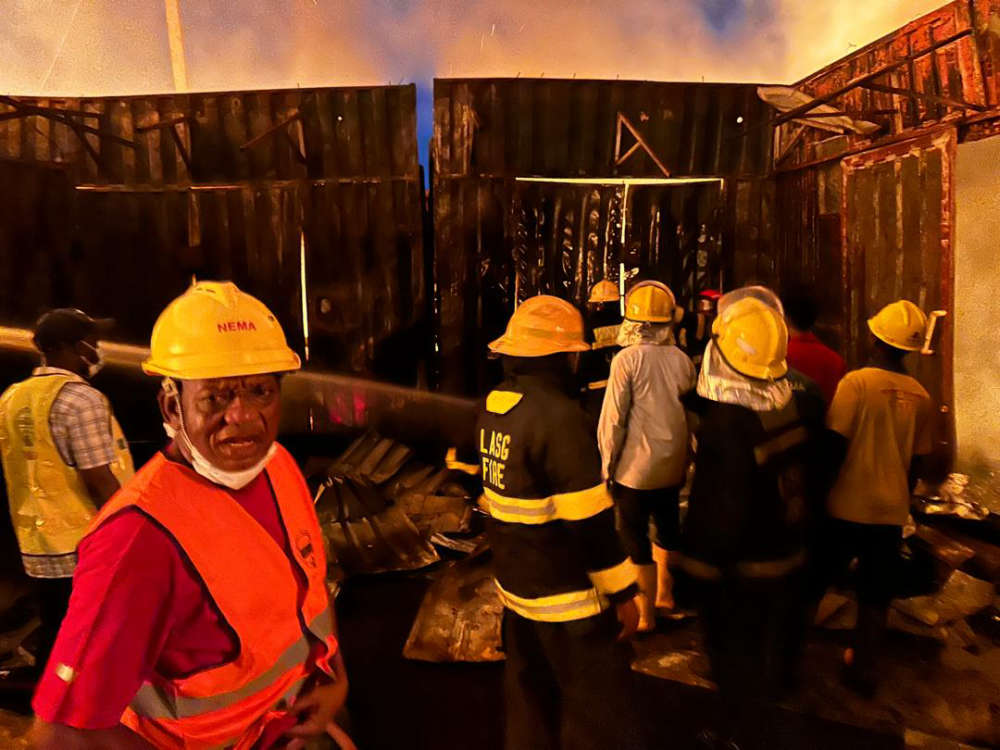
Just days after the GNI fire, on 30 December, another blaze tore through the popular Army Arena Market in Oshodi.
Luckily for citizens, the inferno, which razed up to 20 shops in the market, happened at night when everyone had closed for business.
Traders were left “entering the New Year in agony” as hundreds of thousands of naira in clothes and goods went up in smoke.
A trader told The Guardian: “About 20 shops were burnt… millions worth of goods and money have been destroyed” in the fire.
Others pointed out that a lack of water worsened the damage: “The fire spread so fast because the shops contained clothes.
“A shop owner had just offloaded goods a few hours before the incident and lost everything, including money kept in the shop,” one shopkeeper said.
Days later, as Lagosians returned to work and many others travelled home or on holiday, the state recorded fatal road crashes on New Year’s Day and in the days around it — collisions that killed and injured commuters in high-traffic corridors and on major expressways.
Before those fatal crashes, the Lagos waterways saw a share of the carnage.
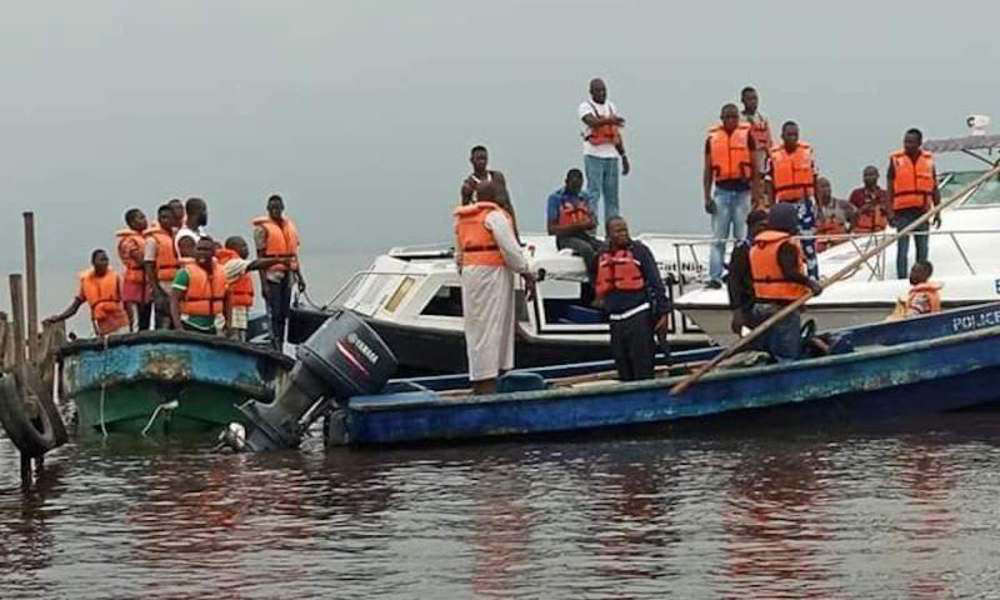
On 31 December, a passenger boat capsized on the Igbologun water channel in the Badagry area.
In a joint statement, the Lagos State Waterways Authority (LASWA) and the Federal Inland Waterways Authority said the incident occurred around 8:35 pm and involved 10 people on board.
By the evening’s end, rescuers had pulled four survivors to safety and recovered six bodies.
And, in the first week of 2026, a one-storey market complex at Ikotun Roundabout caught fire.
Like the Arena Market in Oshodi, the blaze went up at night and razed a block of 24 shops to the ground.
The Acting Director of the Lagos State Fire and Safety Service, Margaret Adeseye, reported that teams from nearby fire stations brought it under control quickly: “The fire was successfully extinguished with no casualties recorded,” she said.
Preliminary checks showed the fire was likely from an electrical surge due to negligence.
The immediate human toll from a single festival fortnight — deaths, injuries, destroyed livelihoods — underscores a pattern that has repeated itself across recent Yuletide seasons: a convergence of fire and road disasters that turns celebration into mourning.
Two Seasonal Crises That Mirror Each Other
The Christmas fires and holiday road carnage are not unrelated phenomena.
They emerge from a shared mix of overcrowding, weak enforcement, unsafe practices, under-resourced emergency services, and economic pressures that push citizens and business owners to cut corners.
In the case of Lagos’ market and high-rise fires, investigators and safety officials point to familiar culprits: illegal or unsafe placement of petrol-powered generators on upper floors, overloaded electrical installations, combustible stockpiling in cramped stalls, and poor access for fire crews in dense commercial corridors.
Lagos business leaders noted how unprotected most traders are in the wake of these tragedies.
The Lagos Chamber of Commerce head, Chinyere Almona, warned that many market-based entrepreneurs “lack[ed] the financial buffers required to restart operations quickly” if a fire wipes them out.
In fairness to the authorities, they underwent fire-prevention campaigns ahead of the season.
But the recurring disasters show that warnings without bite are insufficient.
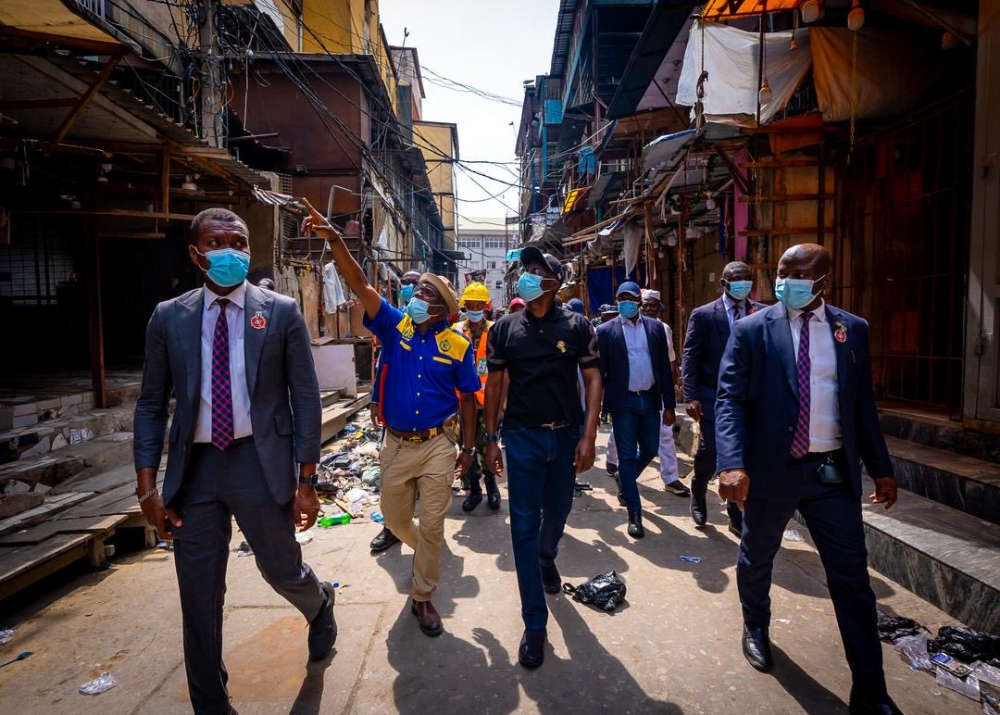
On the roads, the Federal Road Safety Corps (FRSC) and state traffic agencies run “Yuletide” and “Zero Patrol” operations aimed at curbing speed, overload, and drink-driving.
Yet, crashes and fatalities spiked, especially as vehicles are overloaded with passengers and goods.
Roadside emergency capacity is strained.
Even though FRSC figures and seasonal briefings show some improvements in crashes in years where patrols are intensified, fatalities and serious injuries persist — revealing enforcement gaps and deeper infrastructure and behavioural problems.
The Human and Economic Cost
For traders whose stock is wiped out by market infernos, the loss is immediate and long-term: goods bought on loan, destroyed records, and customers suddenly without their suppliers.
For families of crash victims, the consequences are tragic and often final.
The Christmas Eve blaze and the New Year crashes delivered not just loss of life but large, cascading economic shocks for ordinary Lagosians already surviving on thin margins.
There are four overlapping responsibilities that determine whether a Yuletide season ends in joy or tragedy:
1. Citizen and trader responsibility
Individuals must practice basic safety — proper wiring, not keeping highly flammable stock in obstructed spaces, avoiding storing fuel or running generators in confined, upper-floor spaces, and complying with evacuation orders.
Witnesses to recent fires described traders re-entering burning buildings to salvage goods; acts that can cost lives.
2. Business and property management
Building owners and market managers must ensure fire exits, certified wiring, functioning extinguishers, clear access for fire engines, and routine safety audits.
Many of the recent incidents reveal chronic non-compliance and commercial pressure to squeeze more income from inadequate spaces.
3. Road-user behaviour and operators
Commercial drivers, vehicle owners, and passengers share responsibility: avoid overloading, respect speed limits, balance alcohol use and driving, maintain vehicles, and obey traffic officers.
Enforcement campaigns work best when paired with public education.
4. Government and regulatory responsibility (critical)
This is where patterns break or continue. Lagos state actors — the Safety Commission, Fire and Rescue Service, LASTMA and the police — have run sensitisation campaigns, stepped up patrols, and ordered investigations after disasters.
But prevention requires far more than post-incident statements.
There needs to be consistent licensing and certification of high-risk premises, routine inspections with teeth, urban planning that prevents unsafe market densification, investment in fire-fighting hydrants and equipment, mandated safe generator regulations (or reliable grid/inverter alternatives), and well-resourced, year-round traffic safety enforcement tied to improvements in road infrastructure.
Several agencies have pledged steps, but the frequency and scale of this season’s disasters show those pledges must become enforceable policies.
Why Lagos Can’t Treat These as “Seasonal” Problems
Seasons change, but the structural weaknesses that make holiday disasters likely do not.
If fire and road tragedies are predictable outcomes of policy gaps, then calls for “enforcement after the incident” are morally insufficient and economically costly.
Lagos has the institutions, but it needs the political will to convert campaigns into sustained regulation, investment, and accountability.
Recent pledges and emergency orders are but steps; the litmus test of progress will be whether those actions reduce loss of life and livelihoods next Yuletide and beyond.
The holiday season is meant for respite, not rescue operations.
For Lagos and Nigeria, making Yuletide safe means moving from reactive headlines to preventive systems.
This means tougher inspections, smarter urban design, reliable power to reduce dangerous generators, disciplined road enforcement, and social programmes that stop people from choosing risk out of necessity.
Without that shift — and without clear, enforceable government action — these tragedies will keep returning, year after year, like a grim holiday tradition no one wishes to inherit.